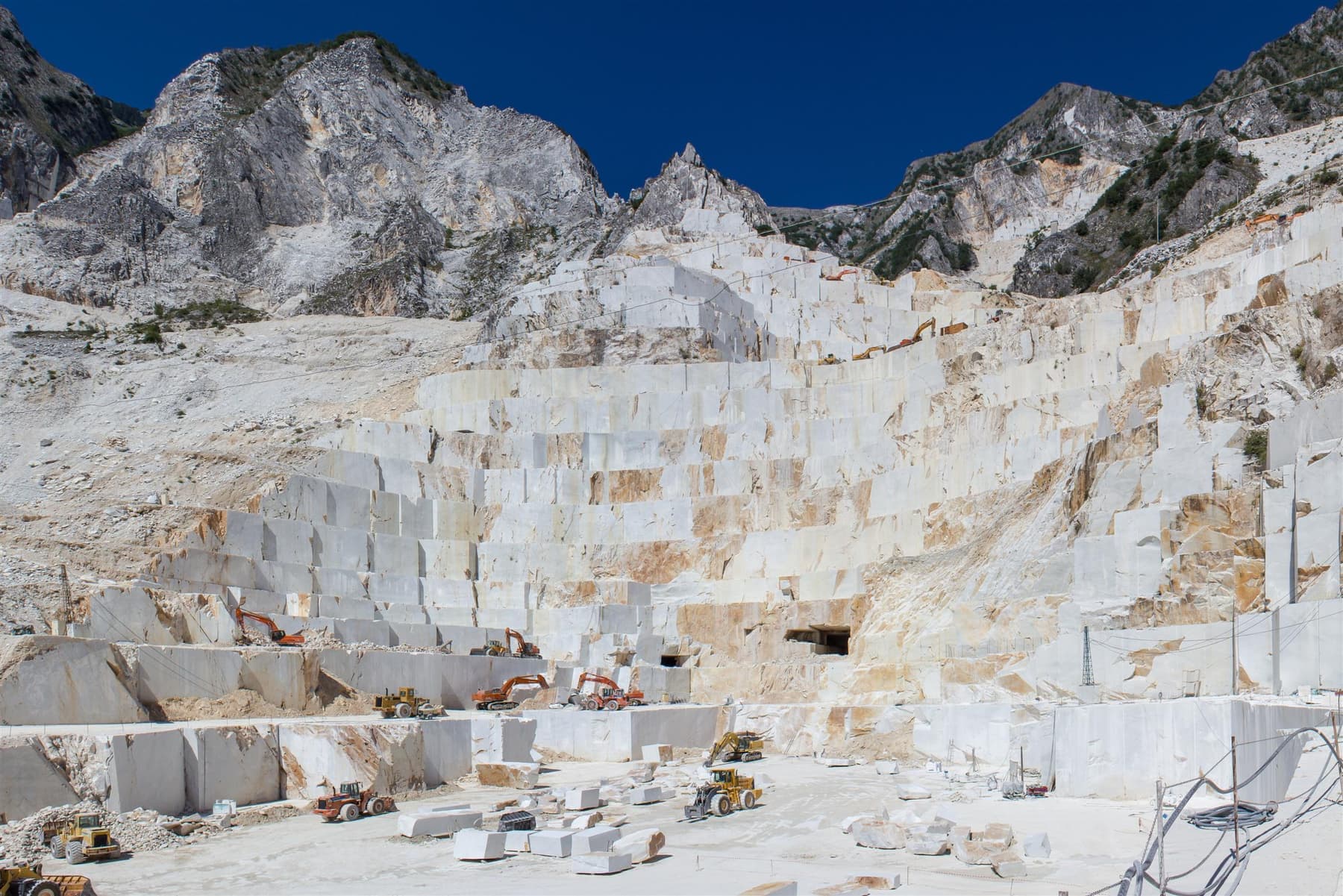
Quarries and Workshop · Apuan Alps · Carrara · since 1956
From the mountain to the workshop
Updated · By Marmi di Carrara srl
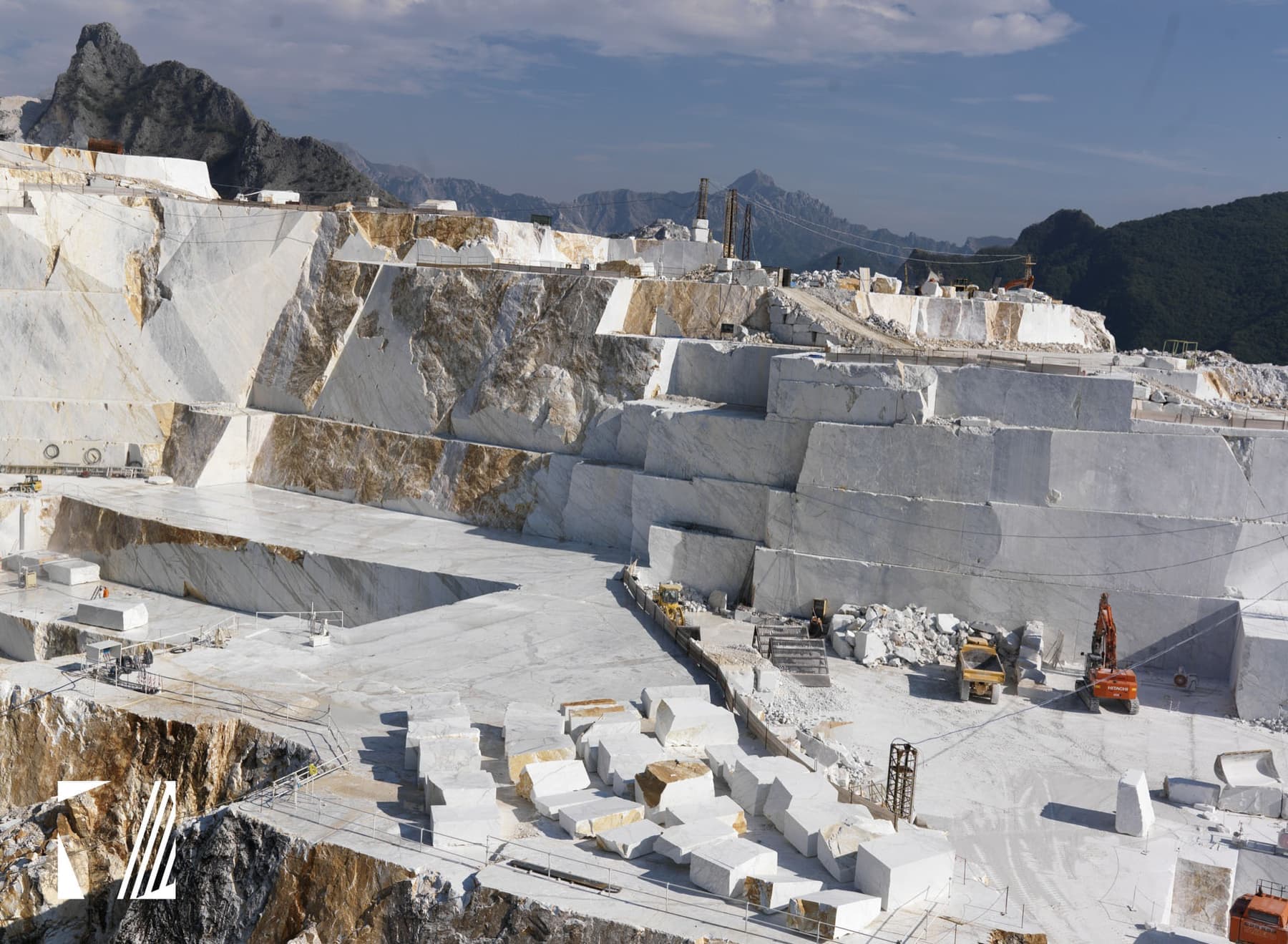
In order, you see: the mountain and the quarry, blocks, the slab, the workshop and finished works.
The basins
Where your marble comes from
Six marble basins of the Apuan Alps. Tap a basin to see which marbles our texts assign to it.
Schematic, not to scale: indicative positions, to be confirmed.
Torano
Marbles declared for this basin
Bianco Carrara C · Calacatta Oro · Calacatta Macchia Vecchia · Statuario · Statuarietto · Bianco Carrara C
Open the basin page →Bianco Carrara C · Bianco Carrara CD · Bardiglio · Bianco Gioia · Venatino · Bianco Carrara C · Bianco Carrara Gioia
Open the basin page →Bianco Carrara C · Bianco Carrara CD · Bardiglio · Venatino
Open the basin page →Arabescato Cervaiole · Statuario · Statuario Altissimo
Open the basin page →Arabescato Corchia · Calacatta Viola
Open the basin page →Arabescato Vagli · Calacatta Vagli Oro · Bardiglio Imperiale · Arabescato Vagli
Open the basin page →
Other quarry names in our texts
How marble is quarried in 5 steps
01
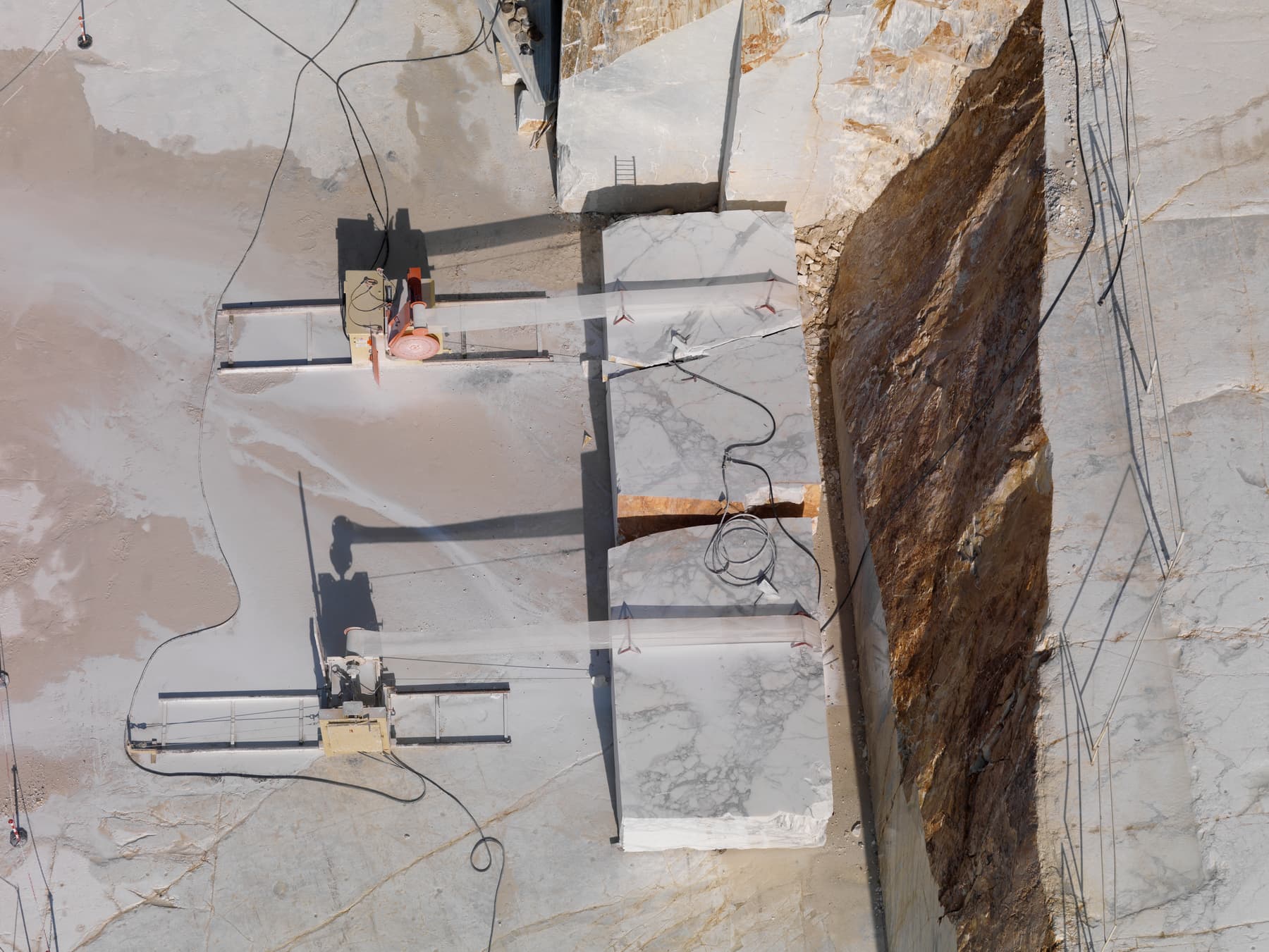
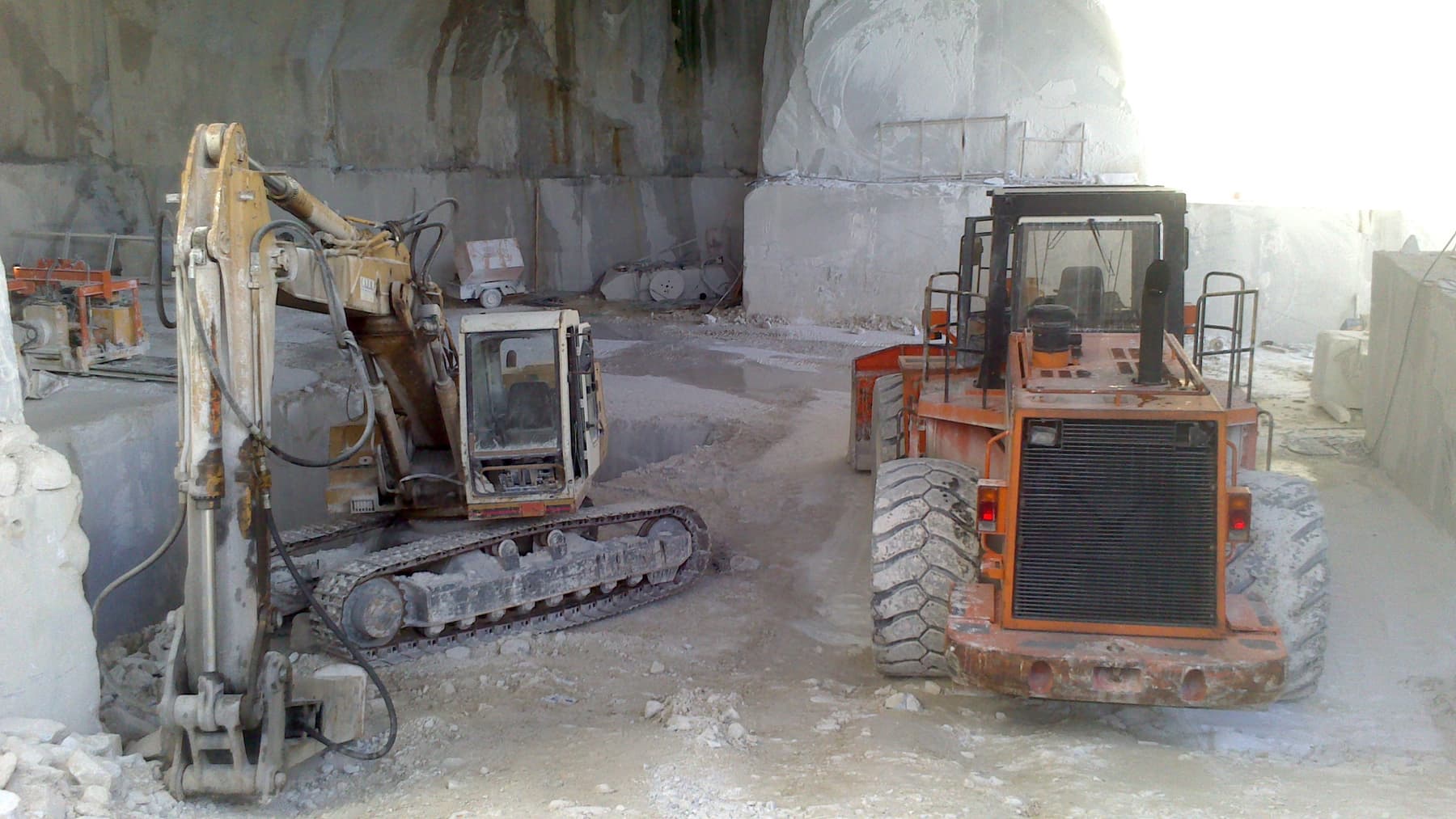
Diamond-wire cutting
A steel wire studded with diamond beads, closed in a loop and pulled by a machine, cuts the rock along planes chosen in advance, cooled with water. The vertical planes and the base plane of the portion of mountain to be detached are cut.
02
Detaching the block
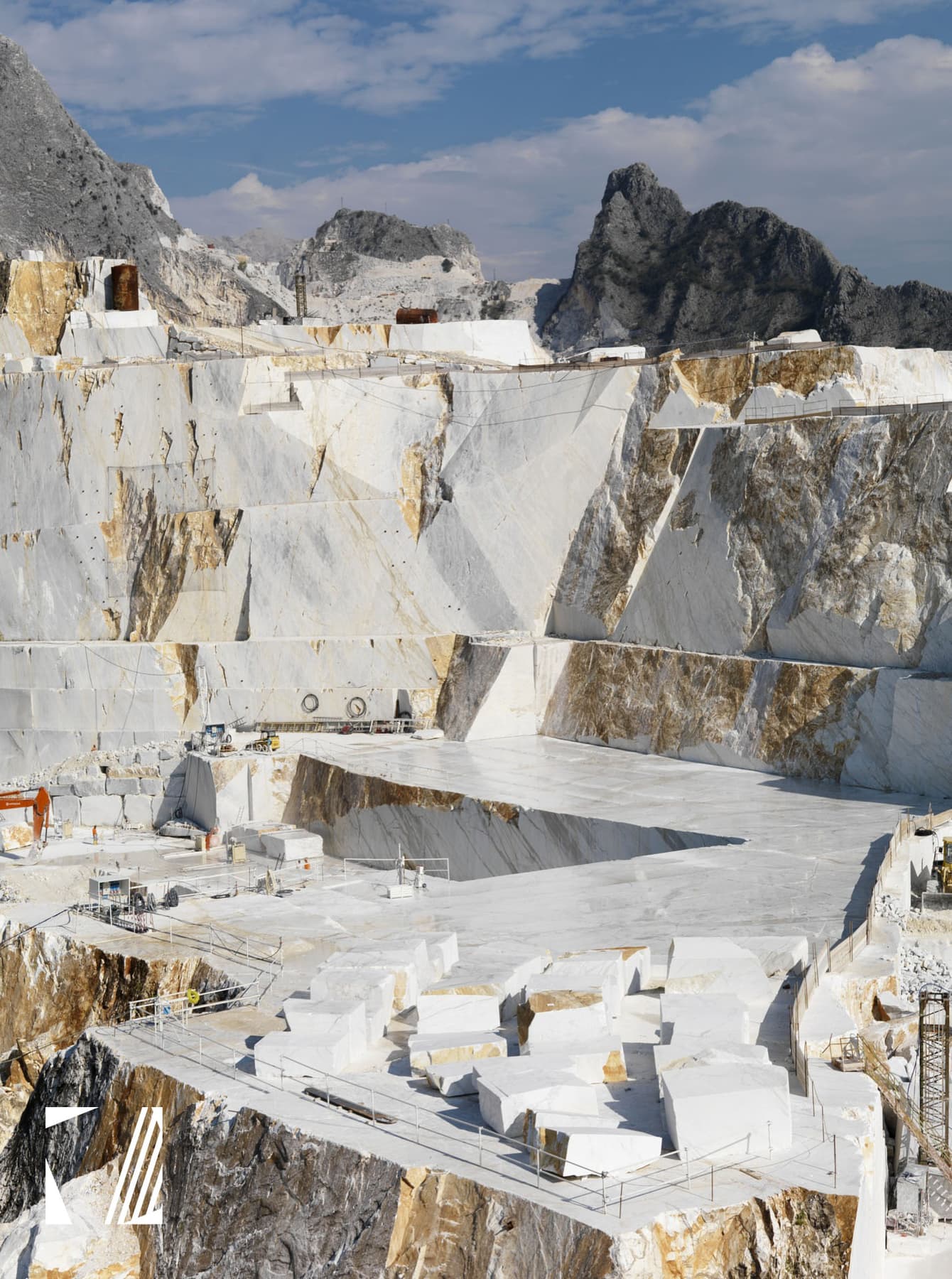
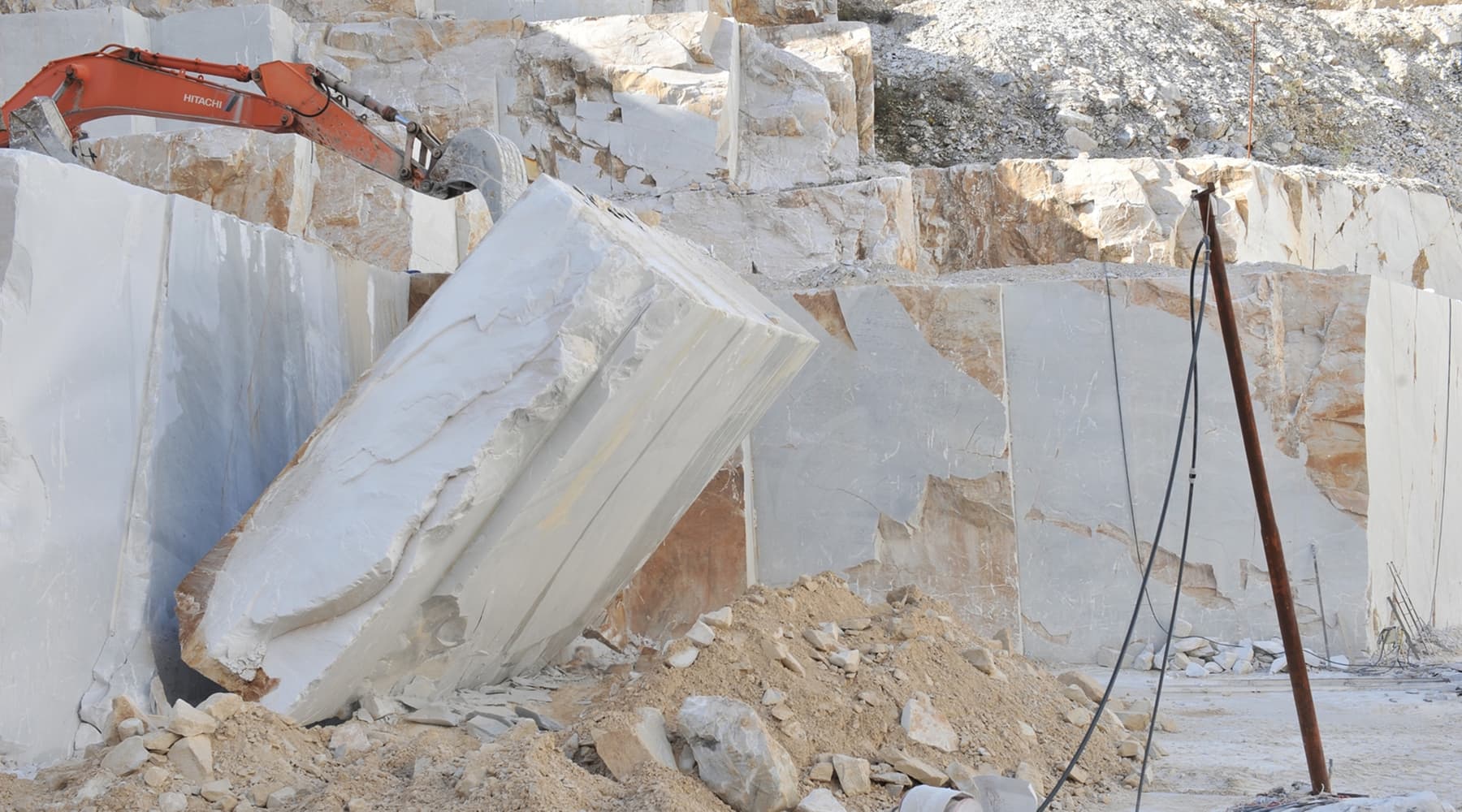
When the cuts are done, the portion of mountain (the “bank”) is free on its sides and base and comes away from the face, pushed forward by air or hydraulic cushions placed in the cuts.
03
Toppling
The bank is toppled to the ground onto a soft bed of material prepared on purpose to cushion the fall and not damage the stone.
04
Squaring
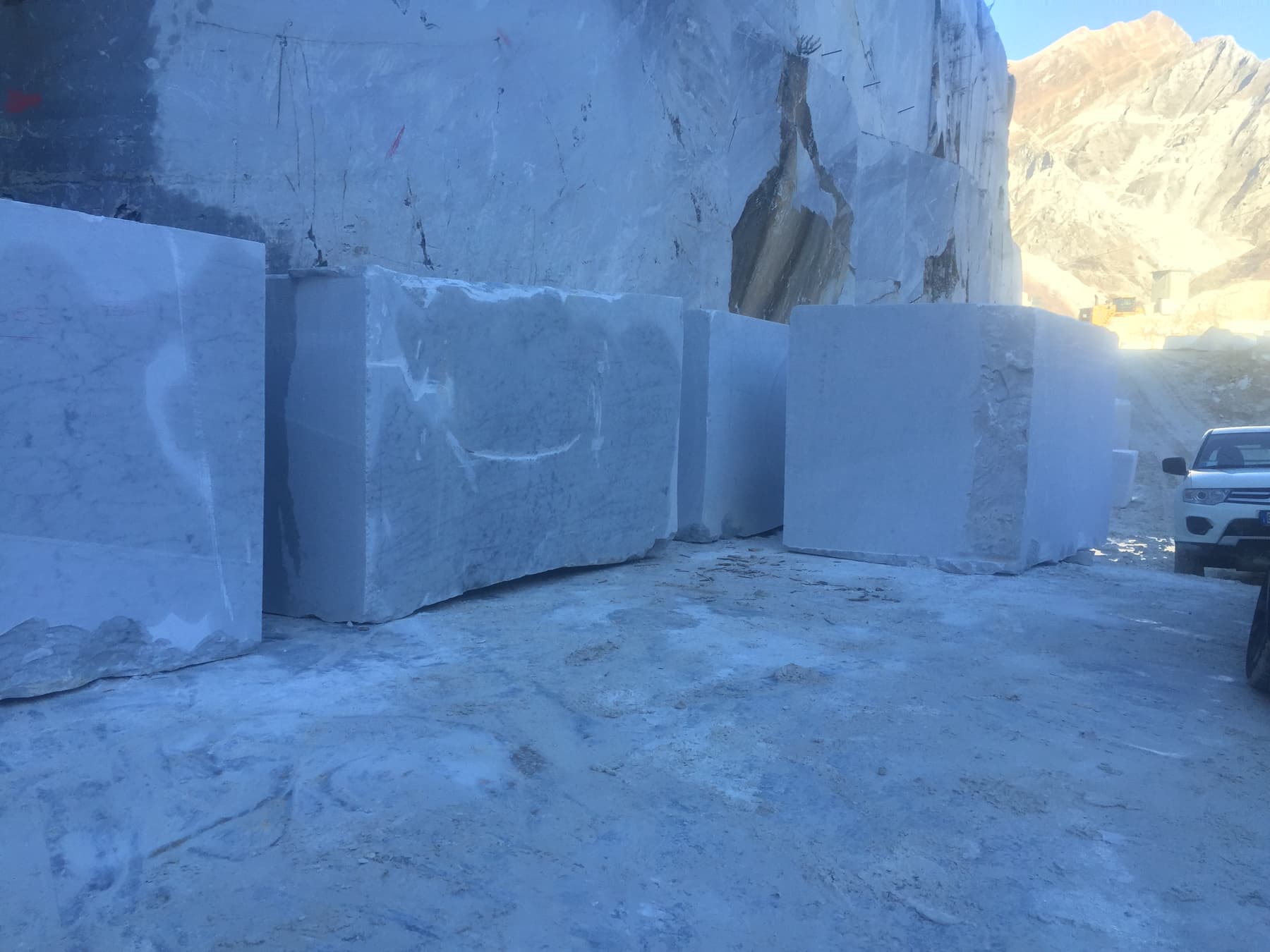
On the ground the bank is divided and squared into blocks of commercial size. Colour and veining are examined before deciding where to cut: this is the moment the block takes its shape.
05
Transport
The blocks come down from the quarry on mountain roads with heavy vehicles and reach our yard in Carrara, where they are checked one by one.
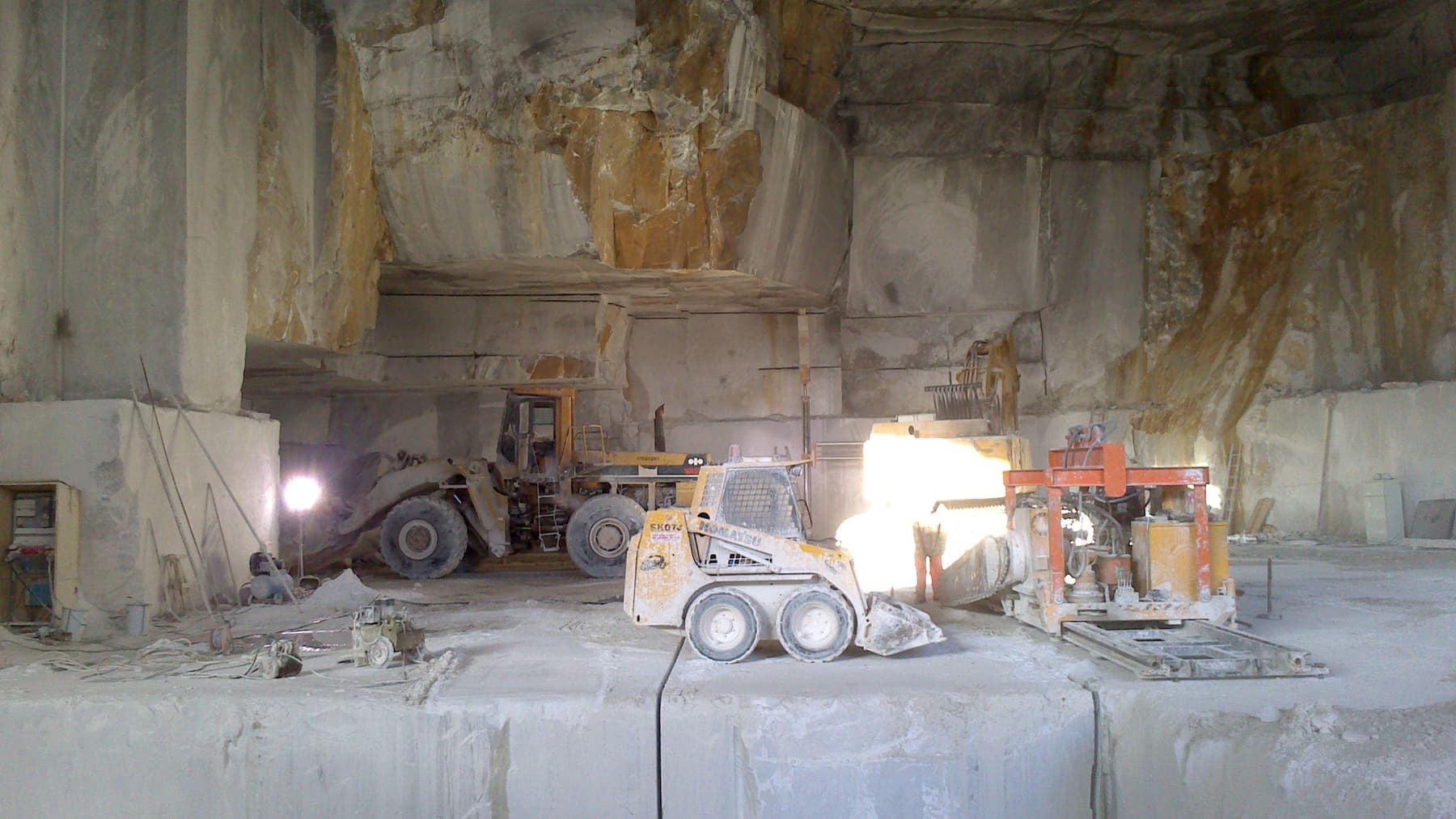
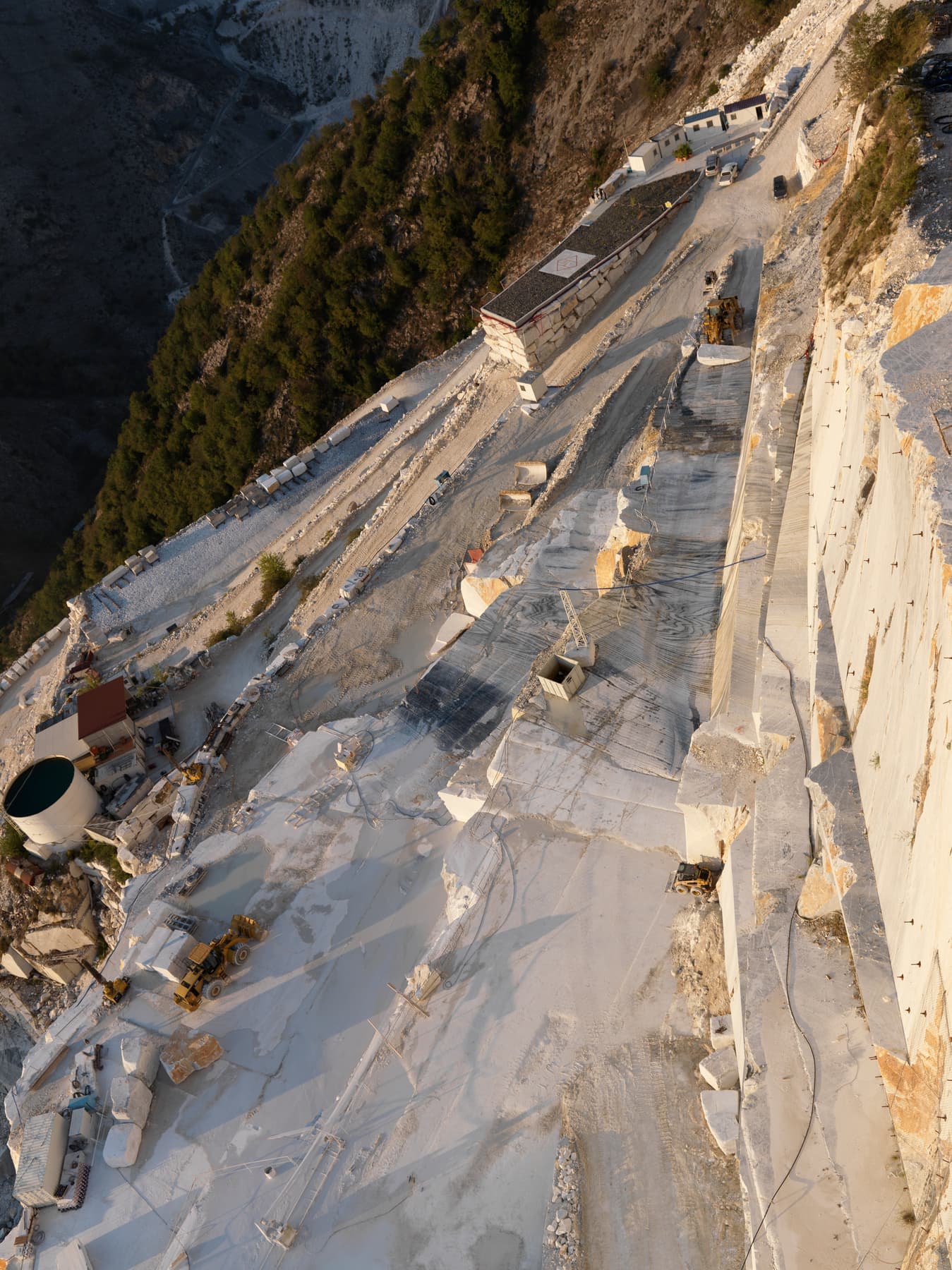
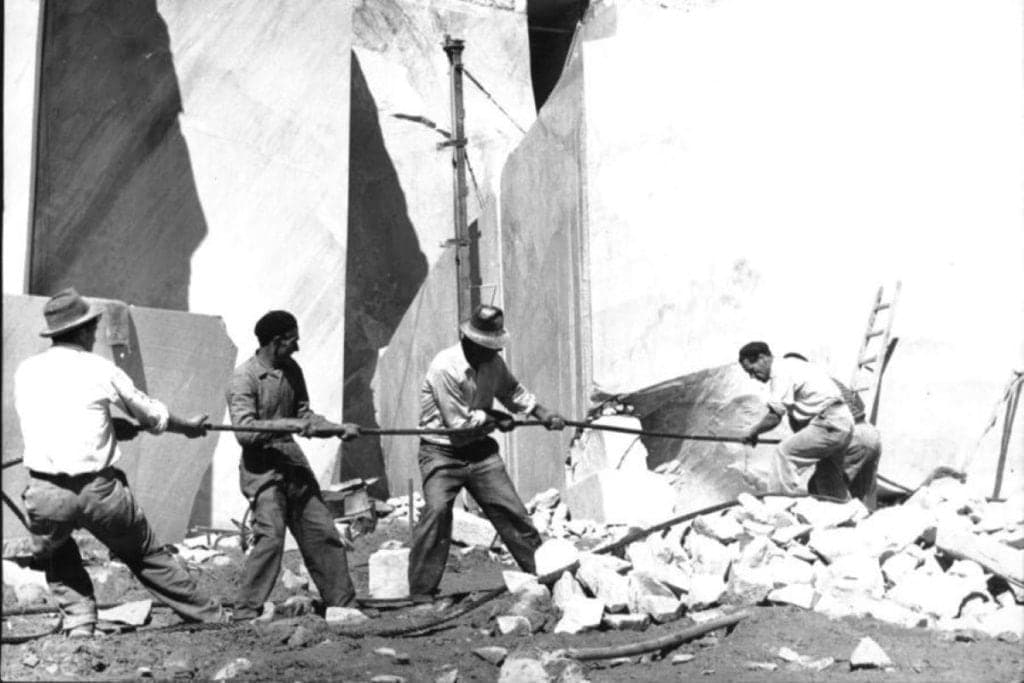
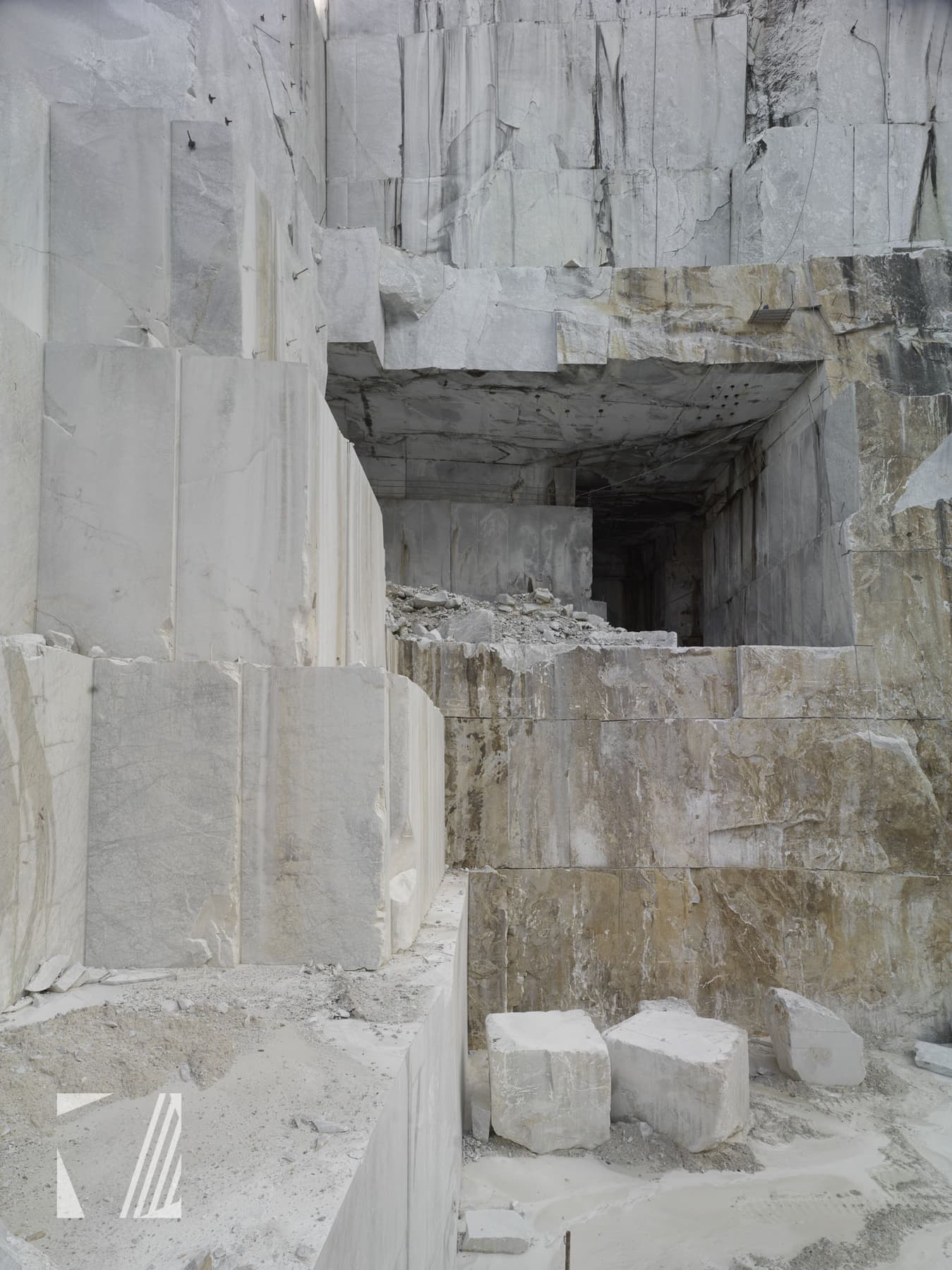
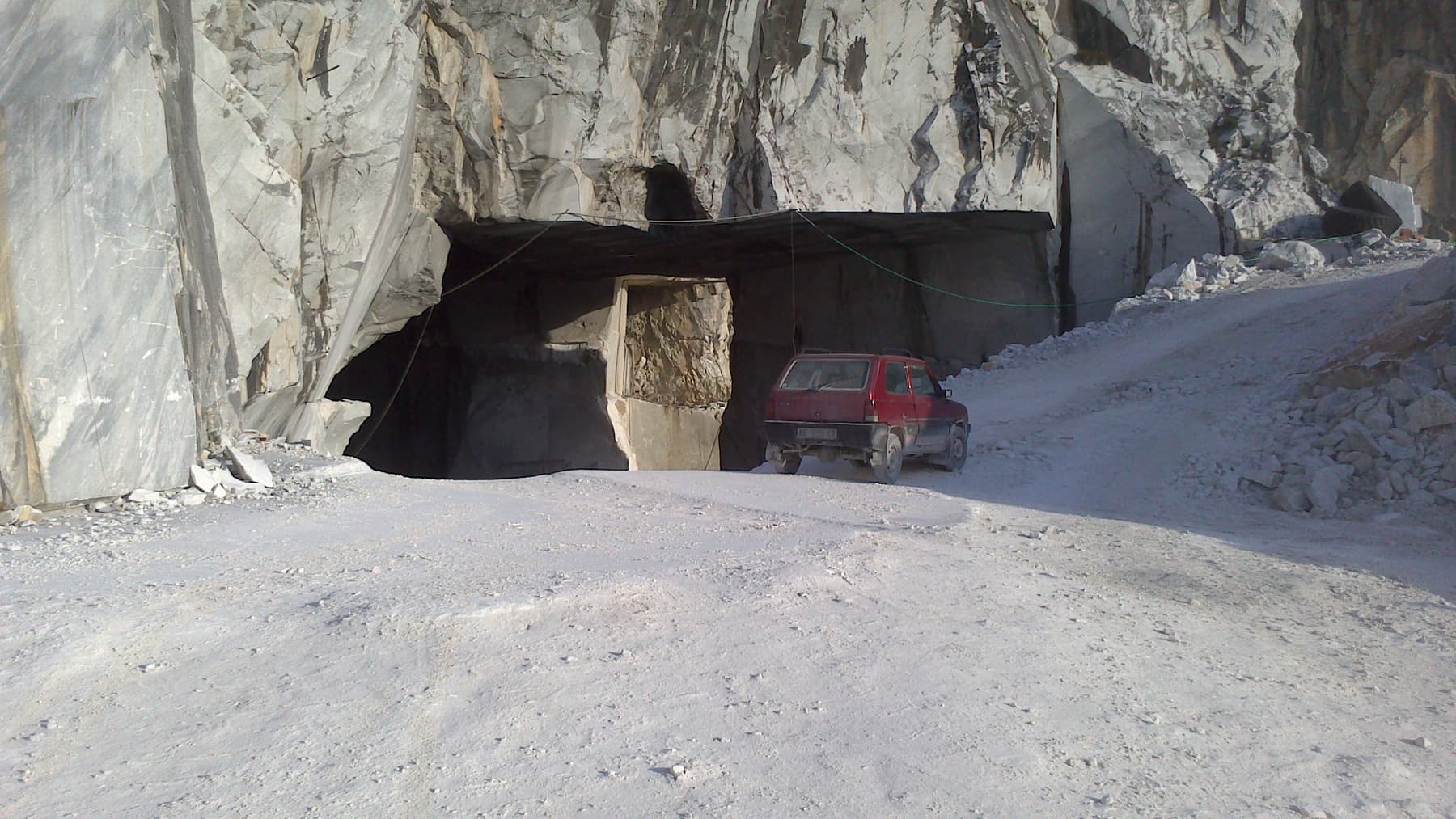
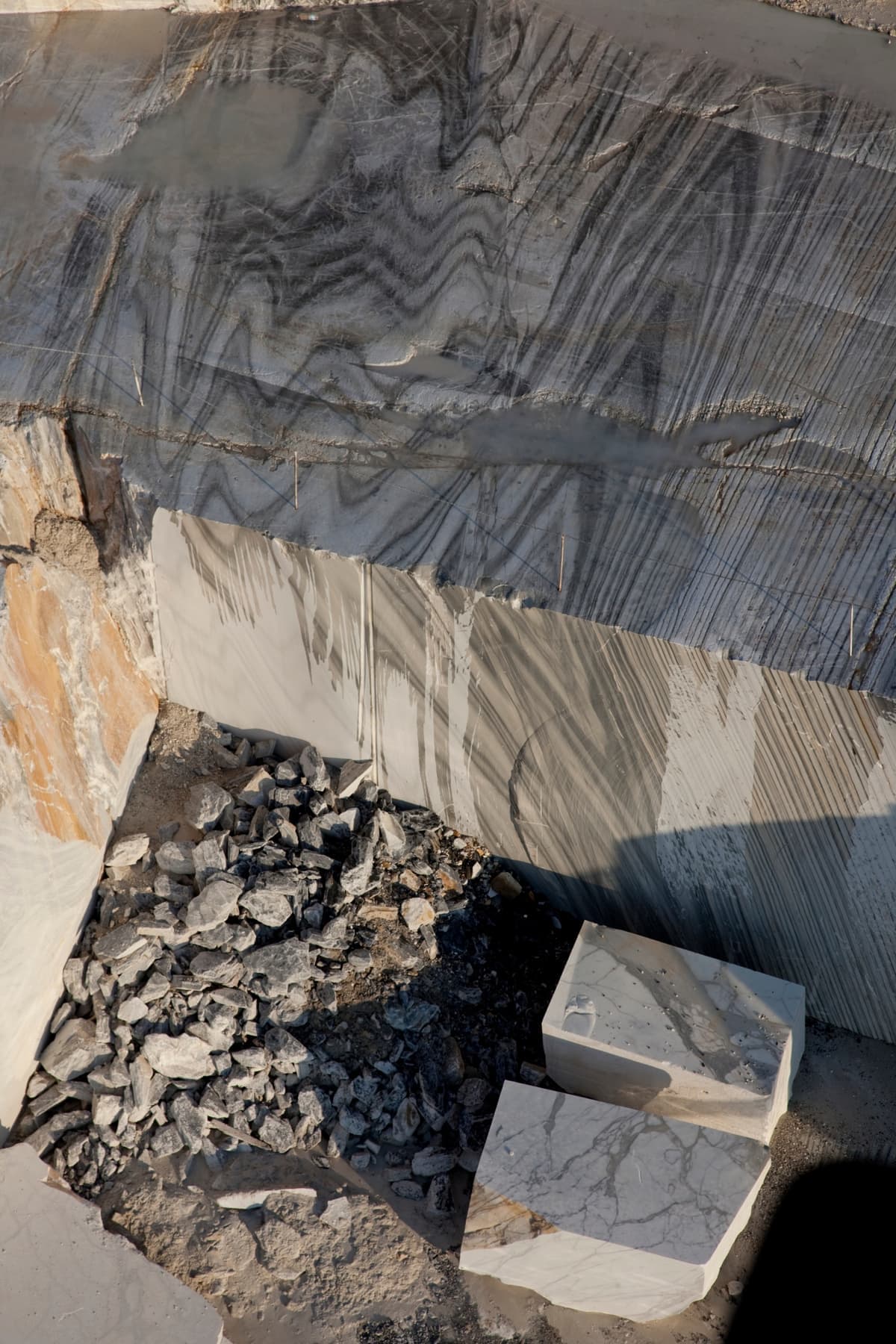
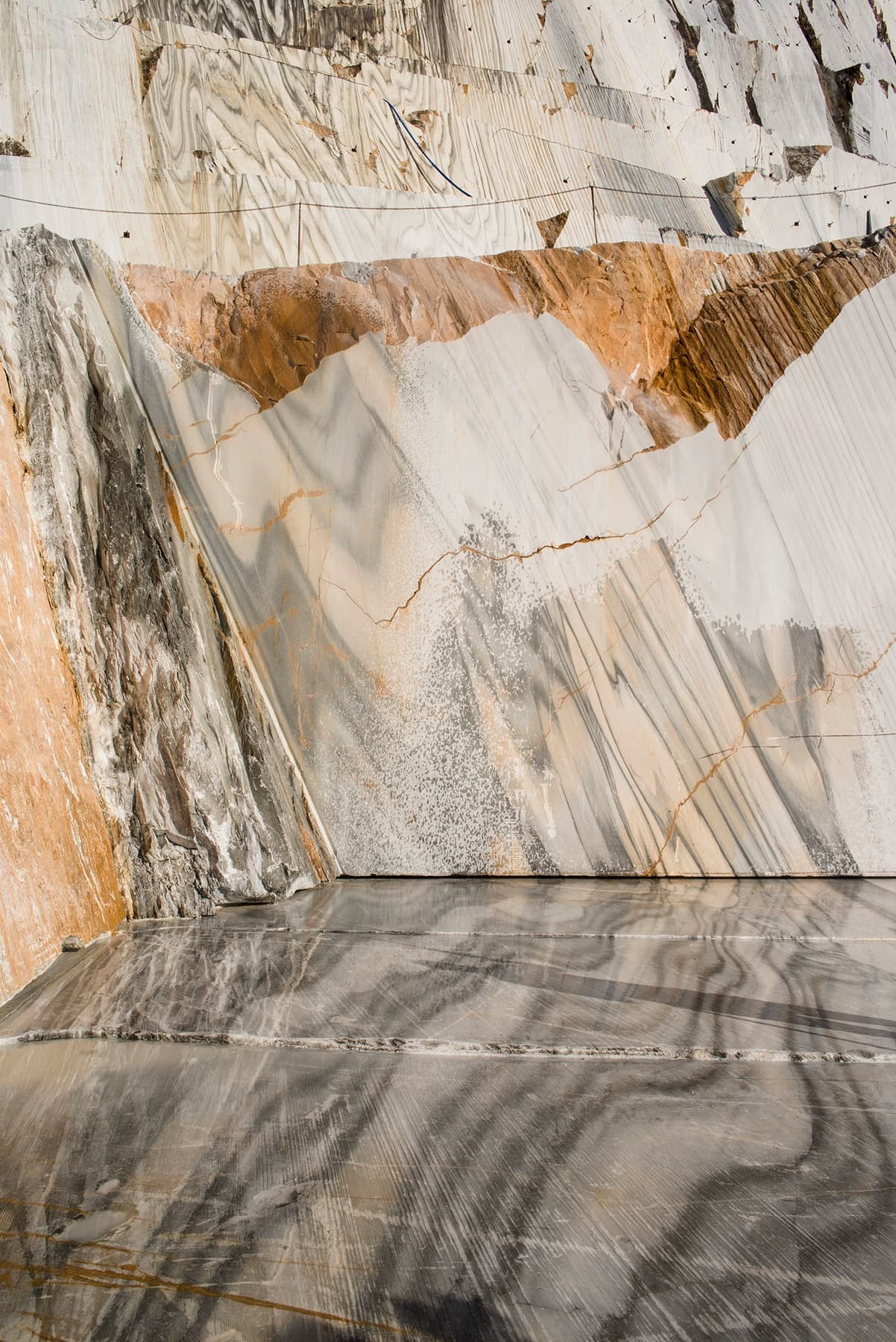
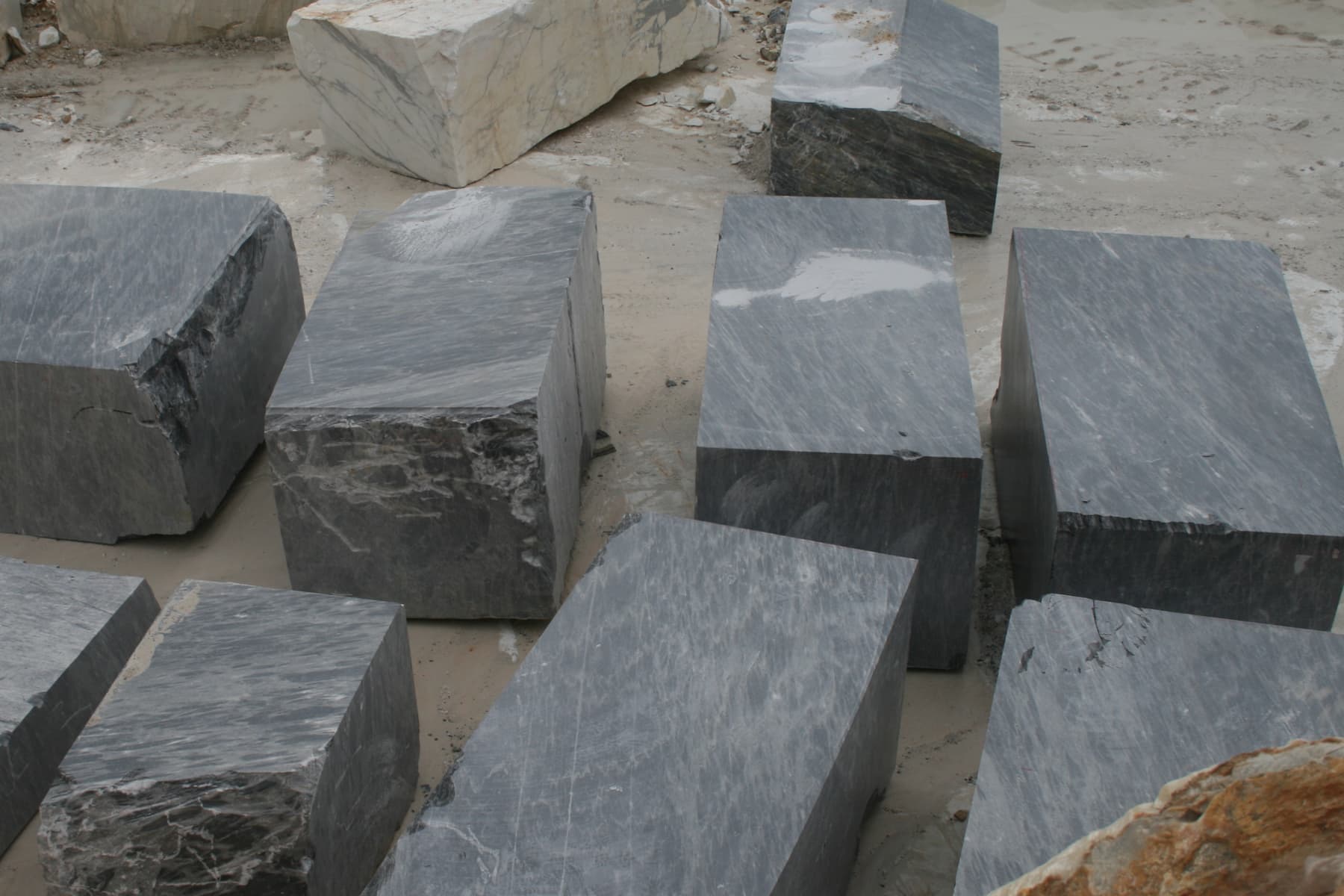
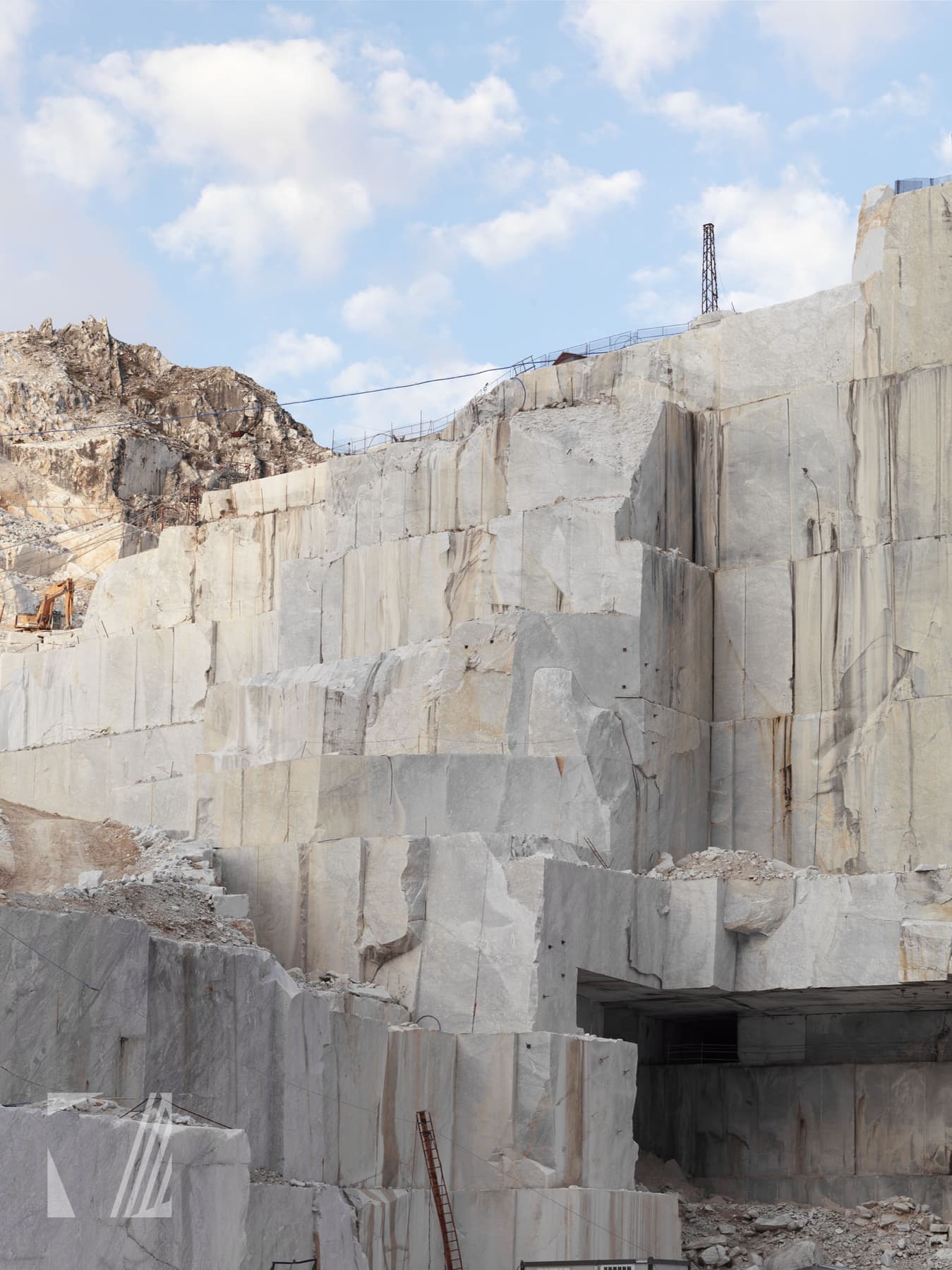
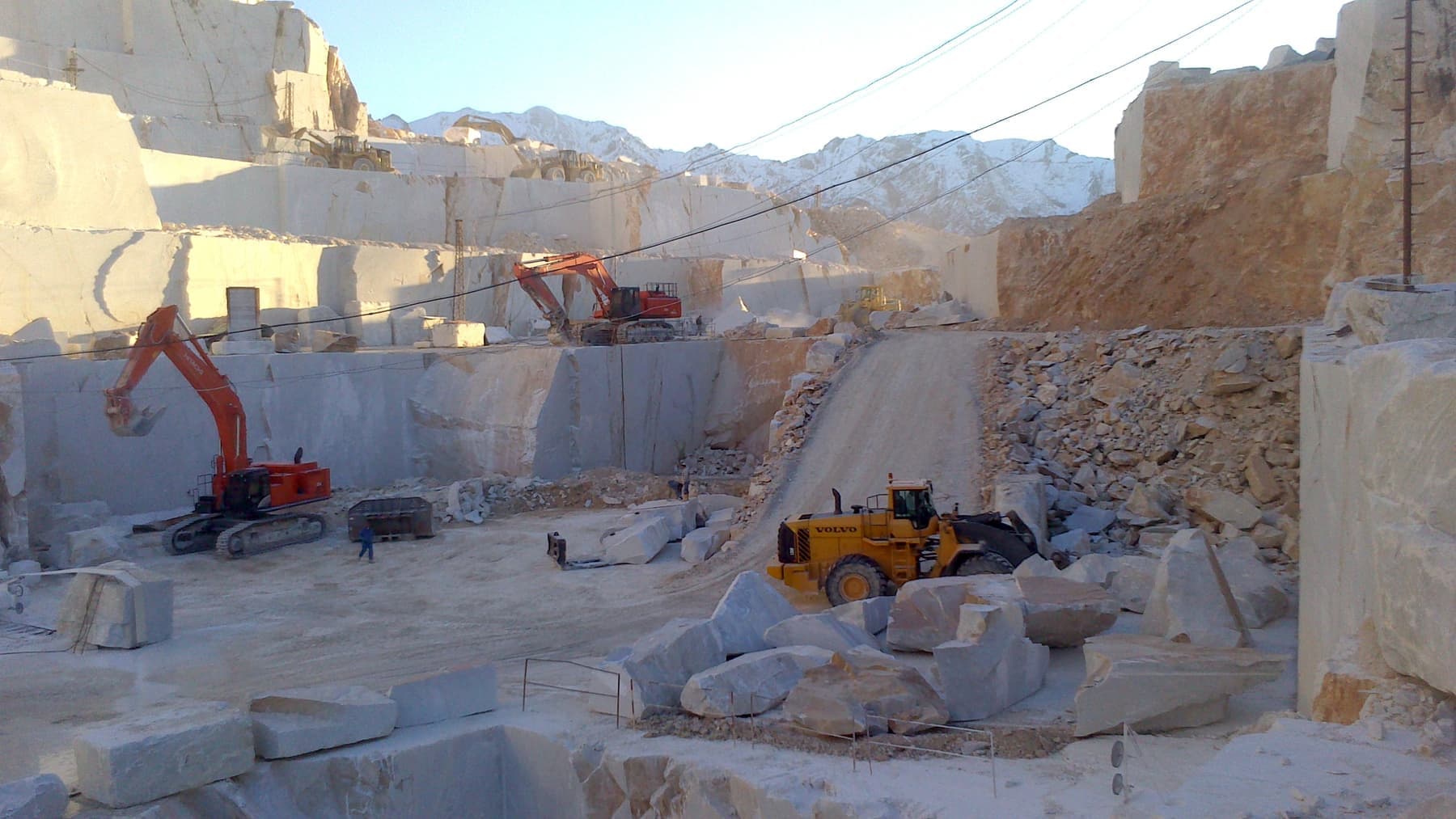
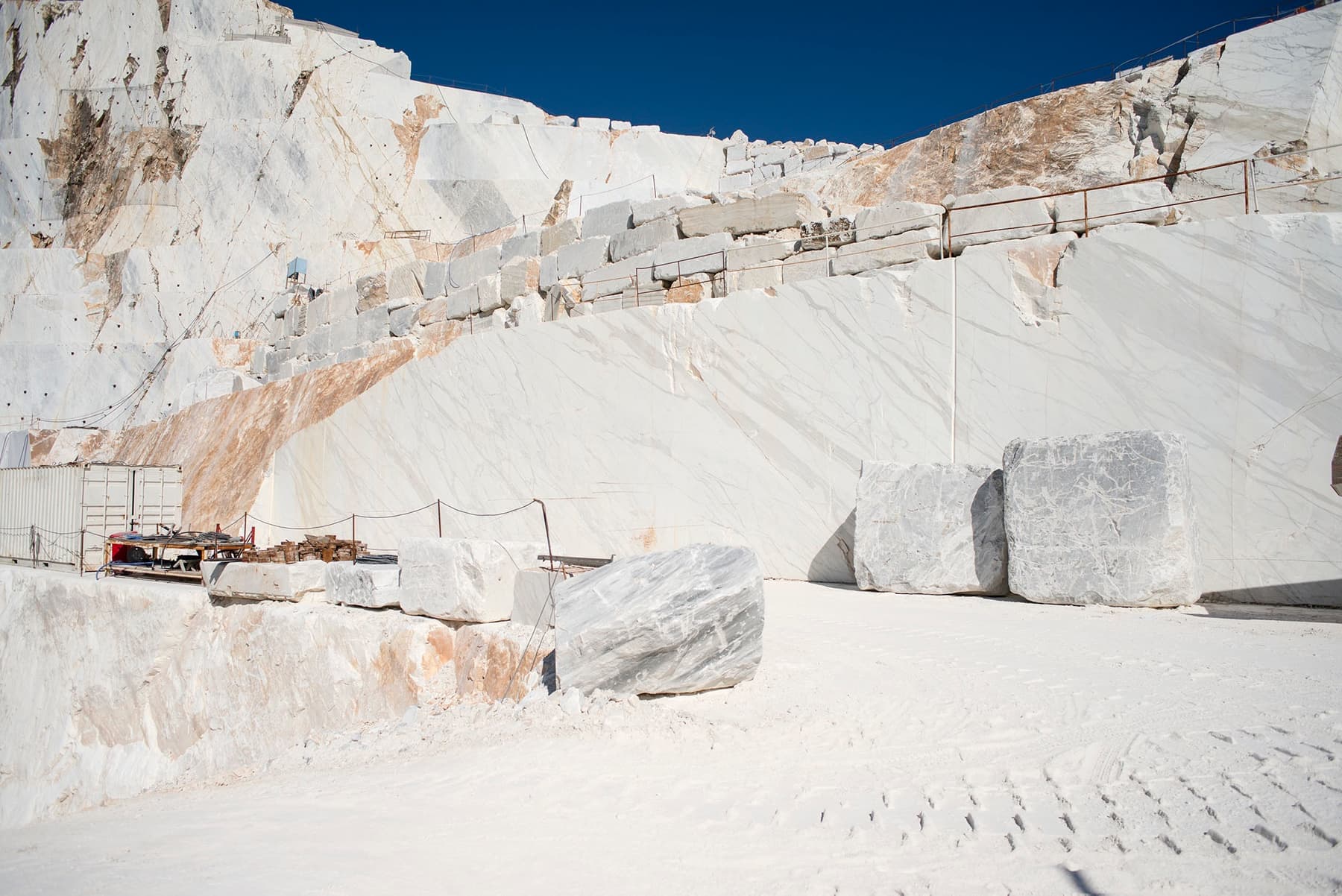
General description of the stages of marble quarrying; details change from quarry to quarry.
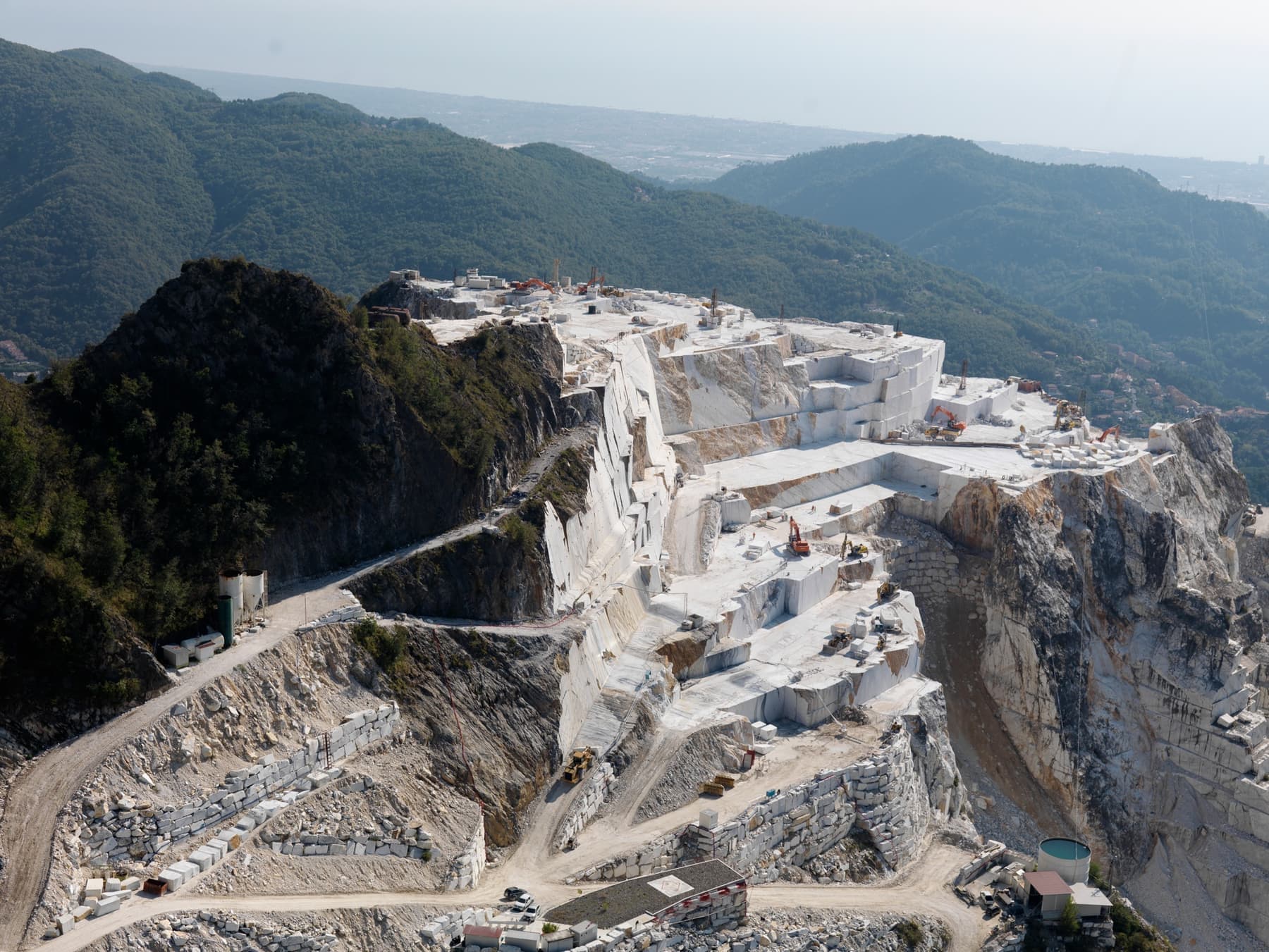
Apuan Alps
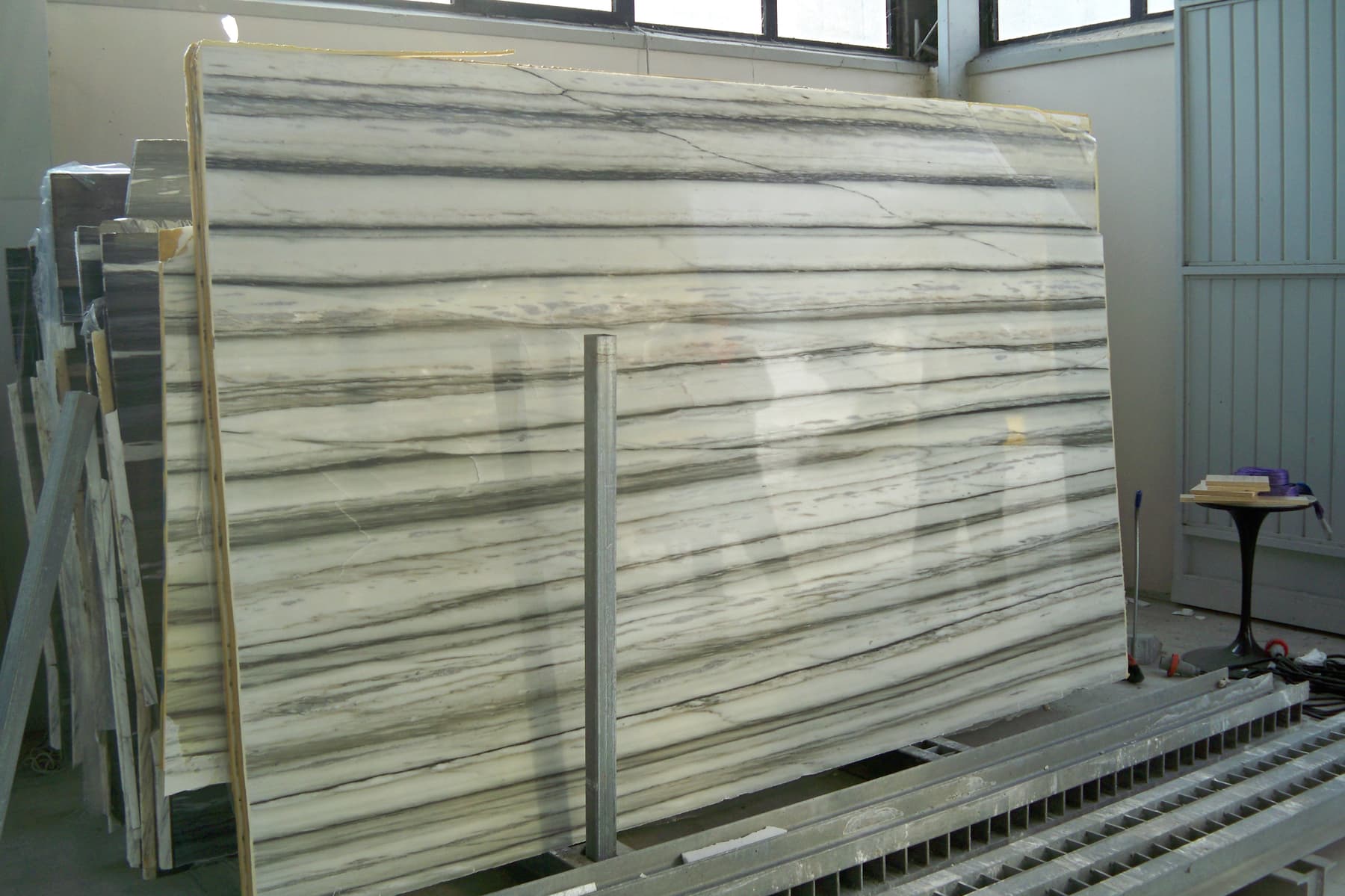
From block to slab From block to finished slab
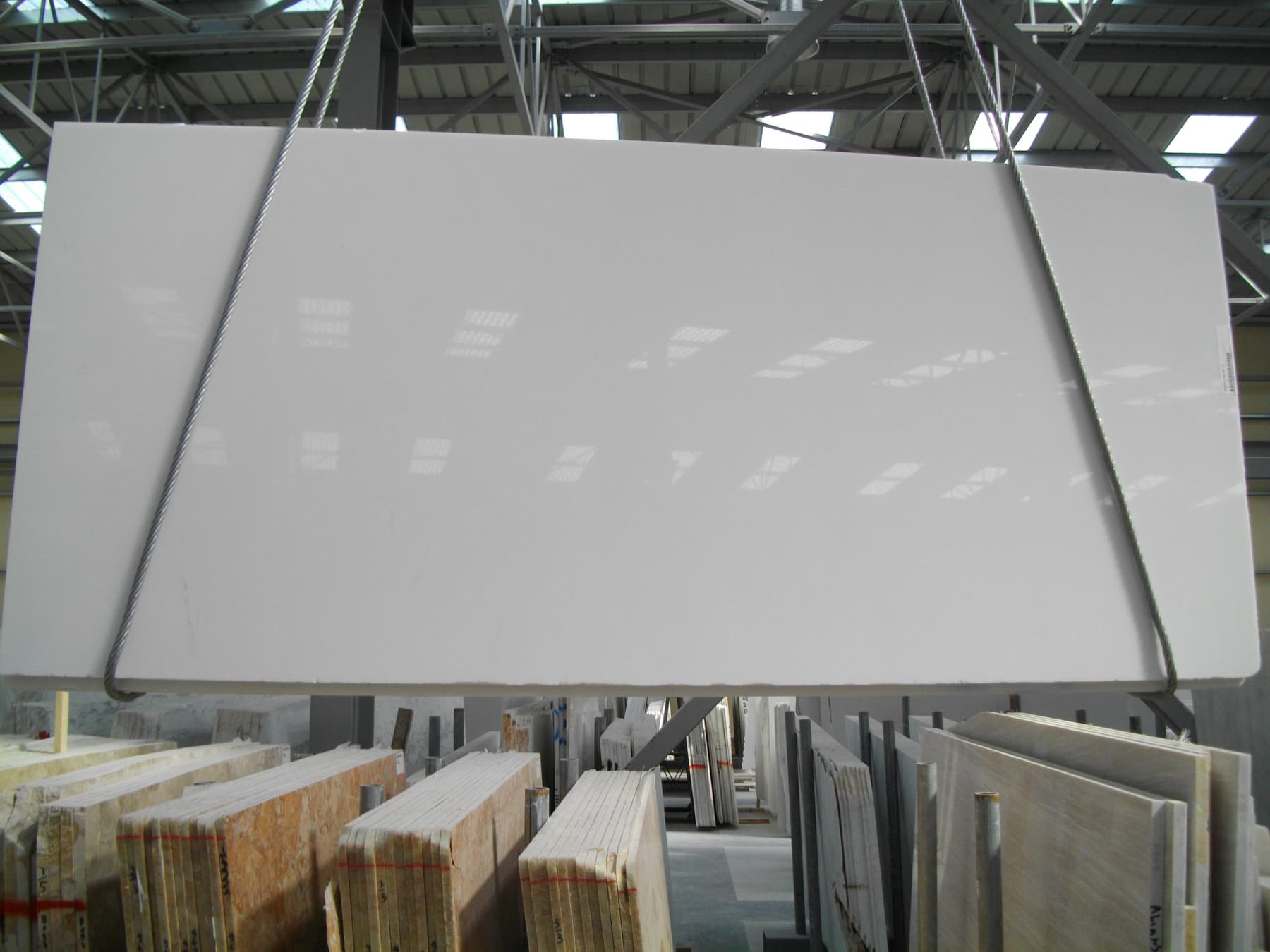
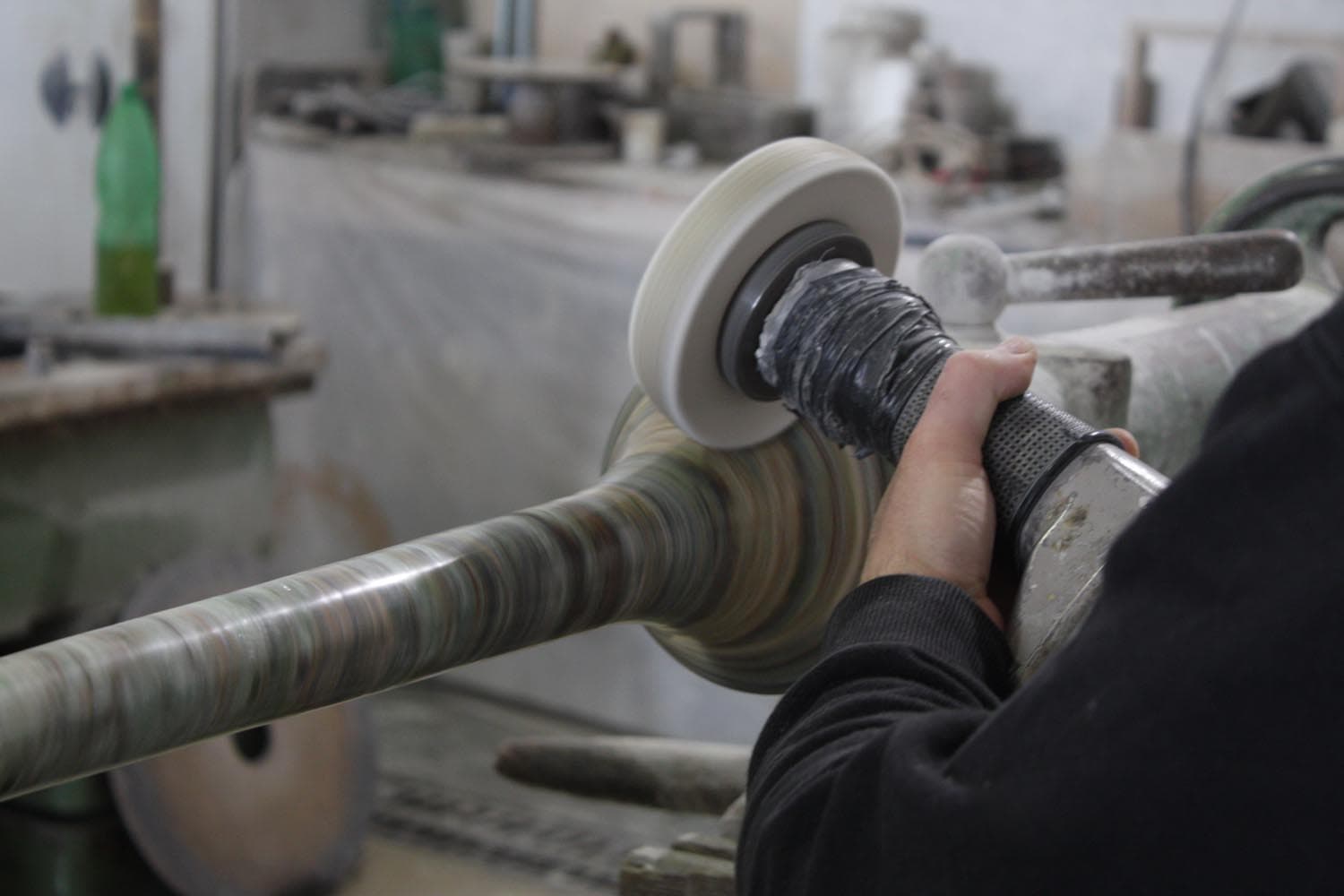
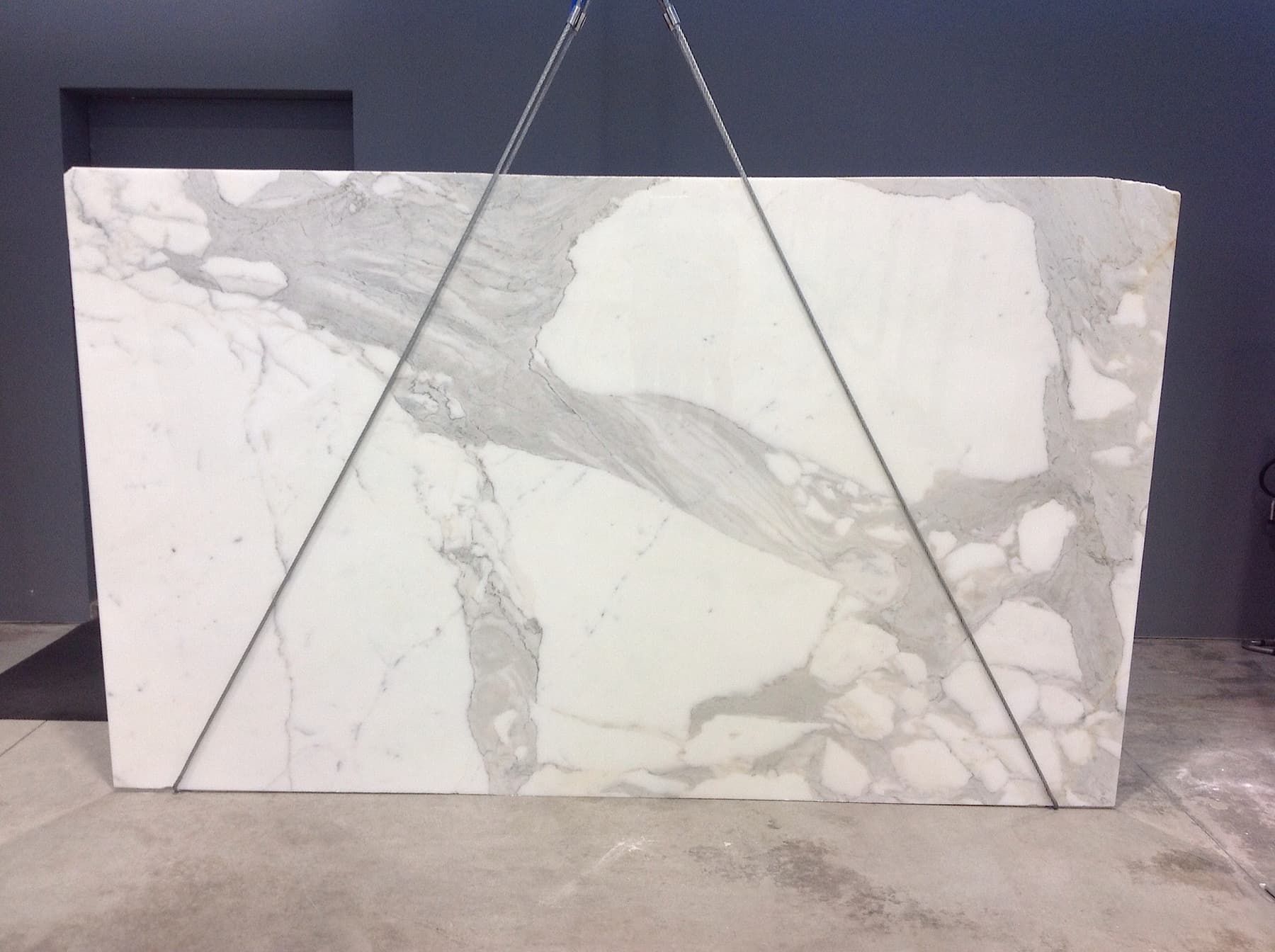
01
Sawing
The squared block goes to the gang saw (several blades in parallel, with water and abrasive) or to the diamond wire and becomes a series of consecutive slabs. Standard thicknesses of our Apuan marbles are 20 and 30 mm; other thicknesses on request.
02
Polishing
The slabs pass through the polishing line with ever finer abrasive heads. For brecciated marbles such as Arabescato Vagli the slab is first reinforced with fibreglass netting and resin.
03
Finishes
Polished, honed (matte) or brushed; then sandblasted, bush-hammered, antiqued. A honed finish hides micro-scratches better on heavily used floors; brushing brings out the structure of Arabescato Vagli. The finish is chosen on the sample and on the real slab.
04
Checking and numbering
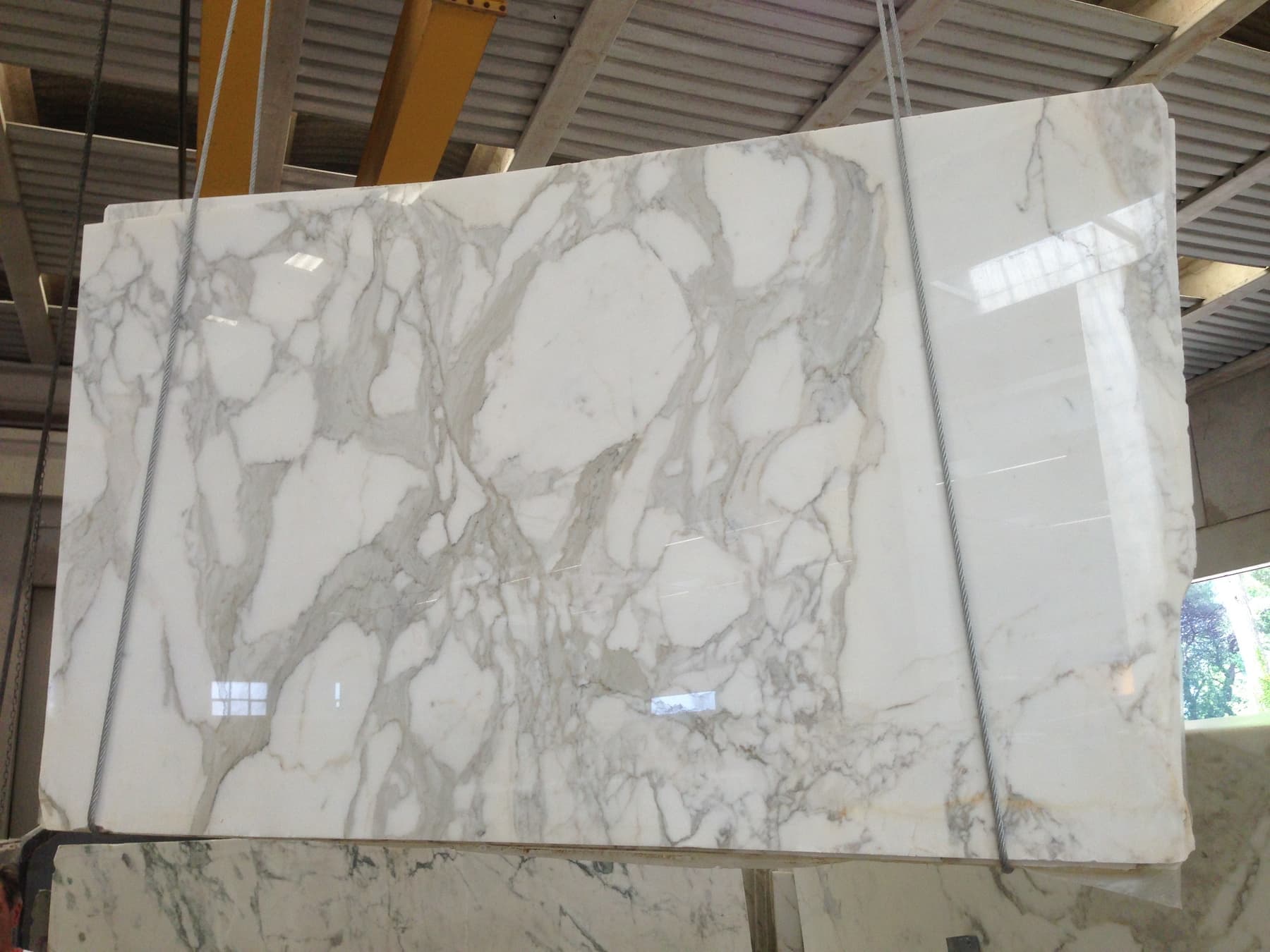
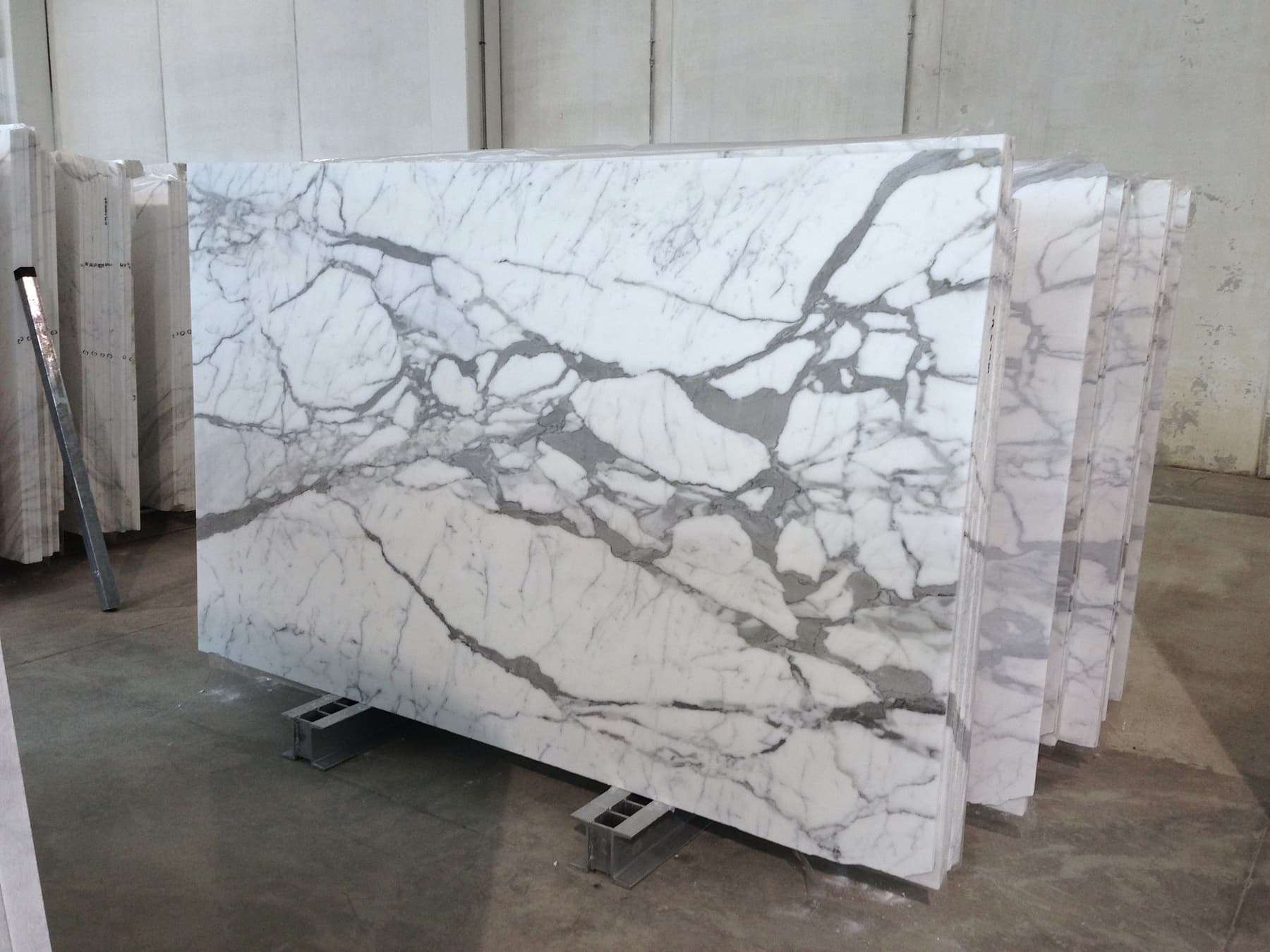
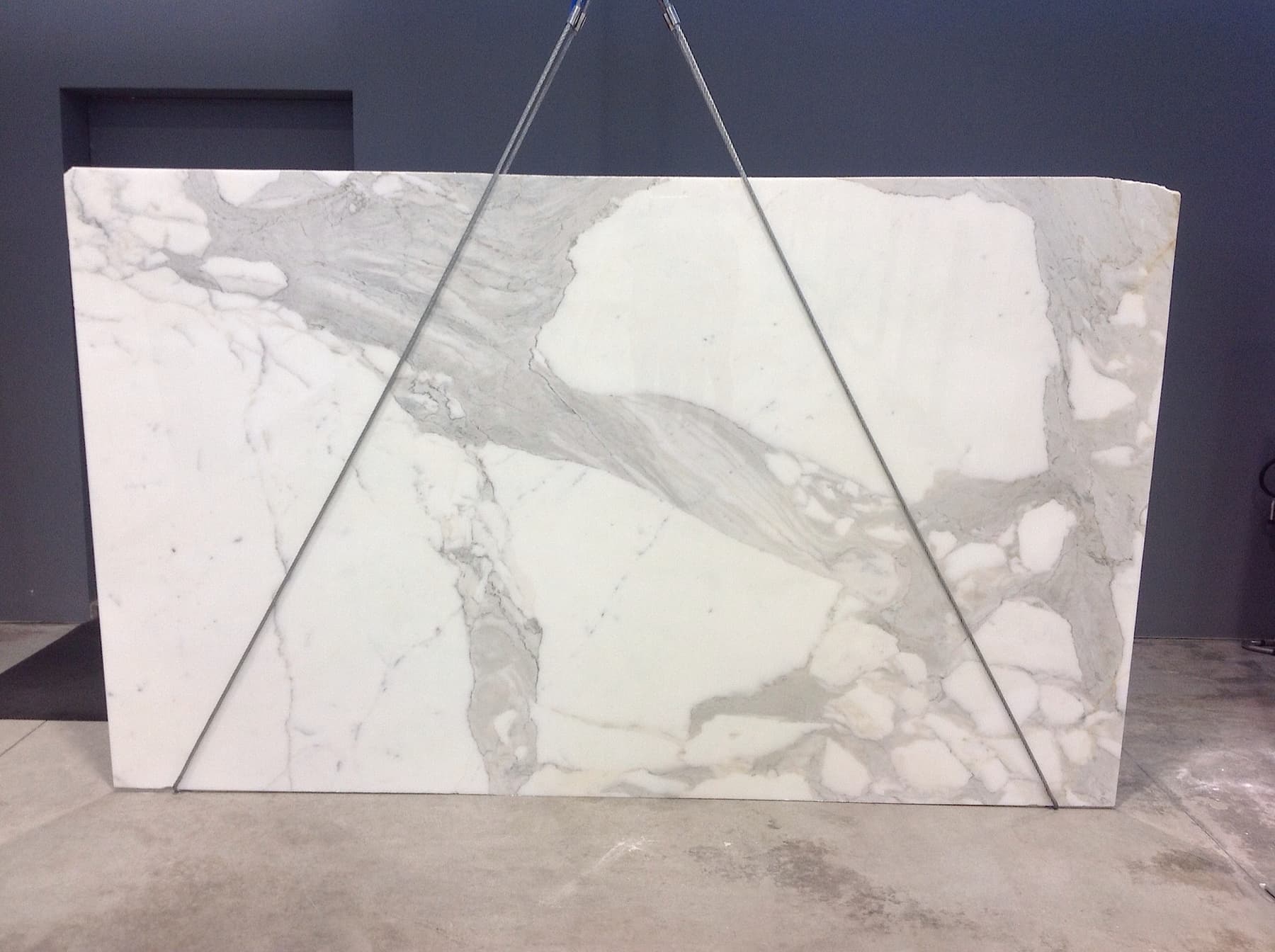
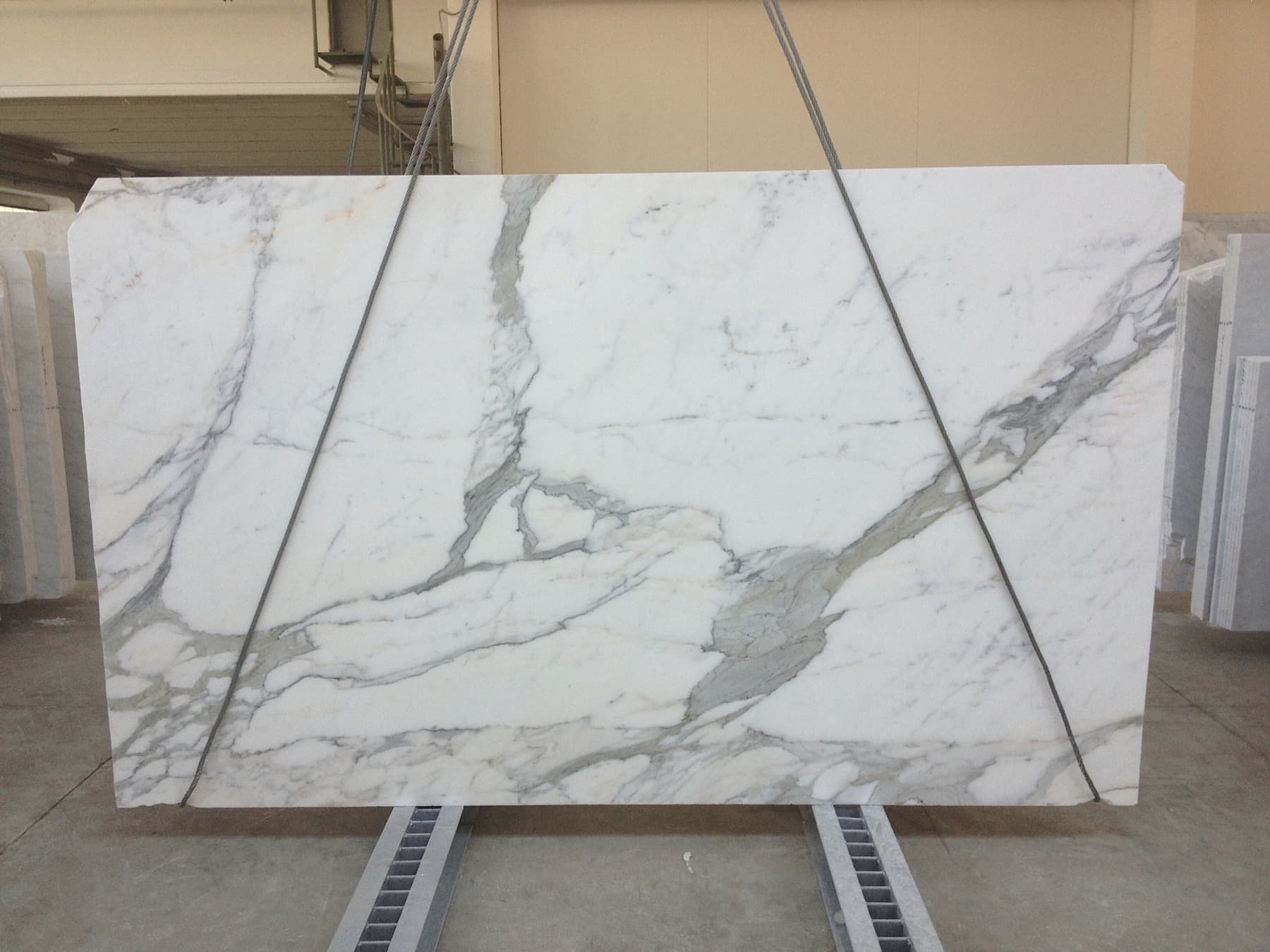
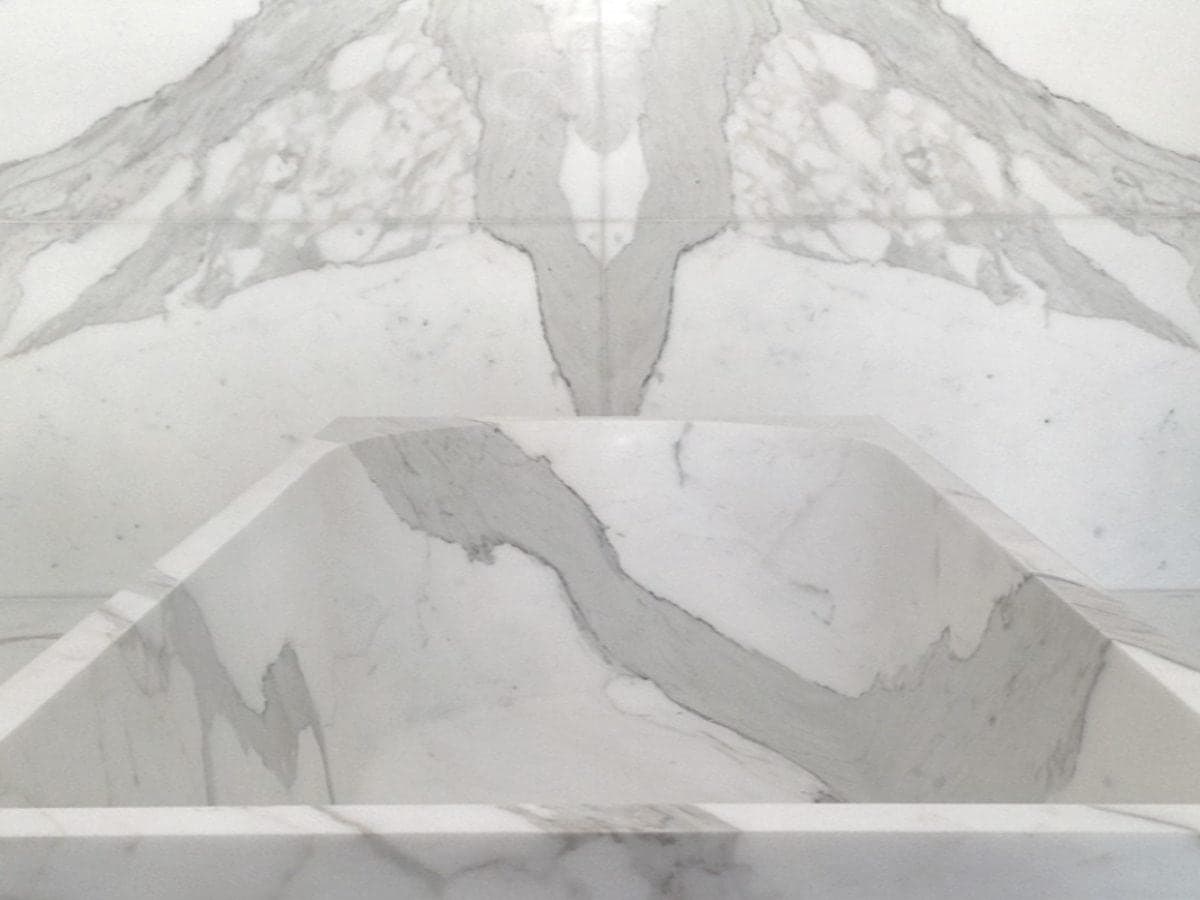
Every slab is checked, photographed and numbered: these are the photos you see in the online Inventory. Consecutive slabs stay in order, so bookmatching is possible, and for the more variable marbles the photos of the lot are approved before fabrication.
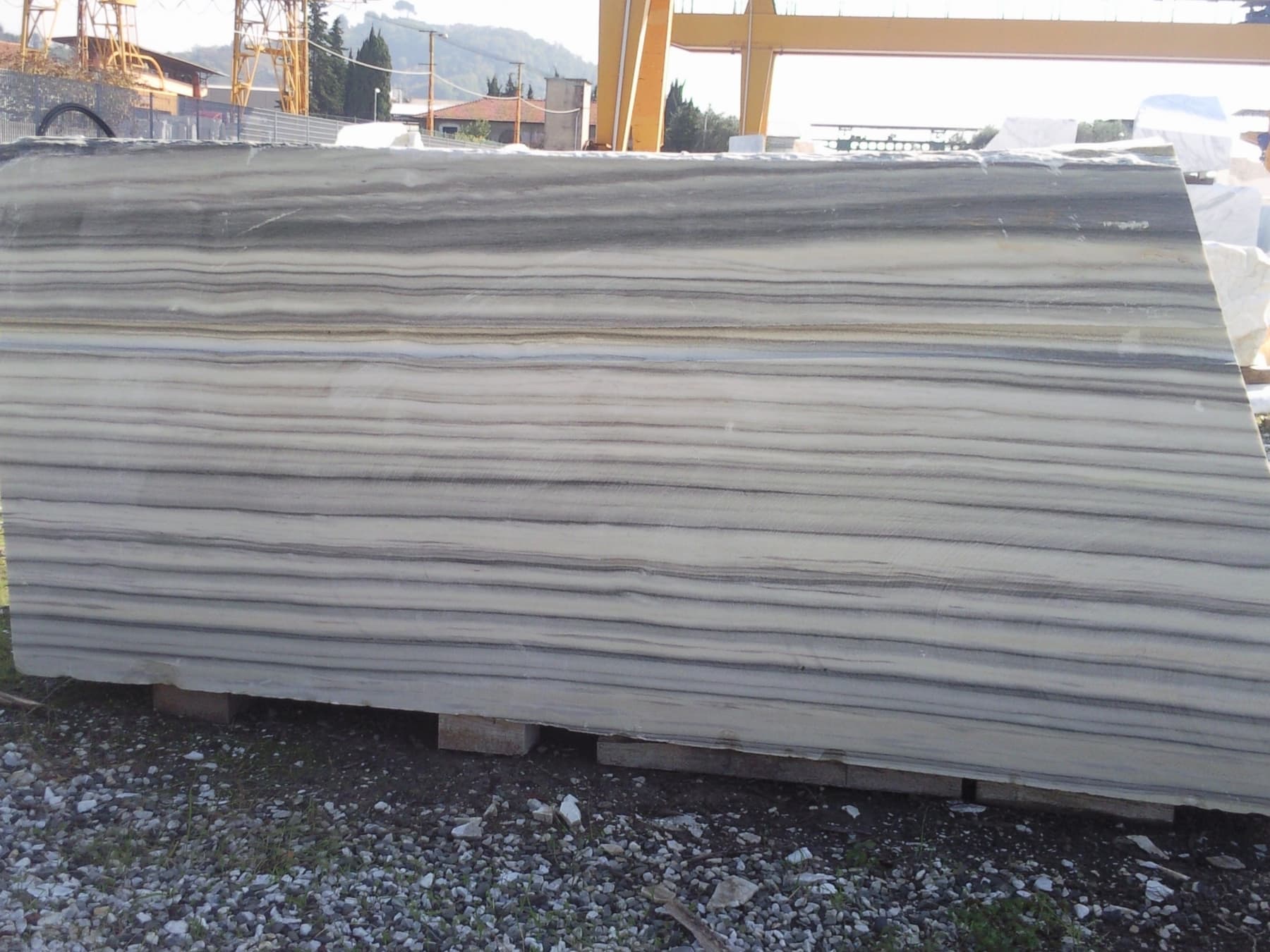
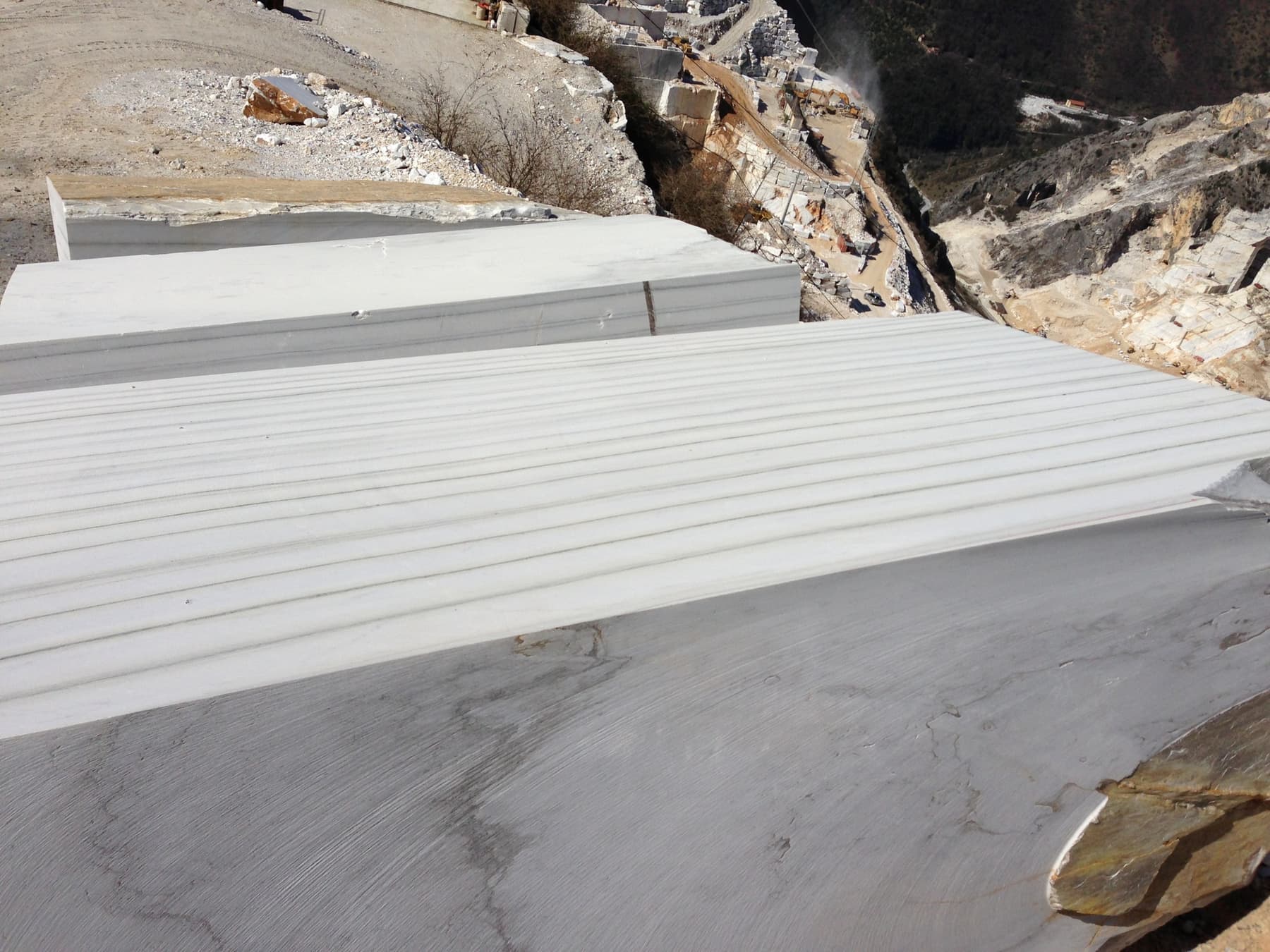
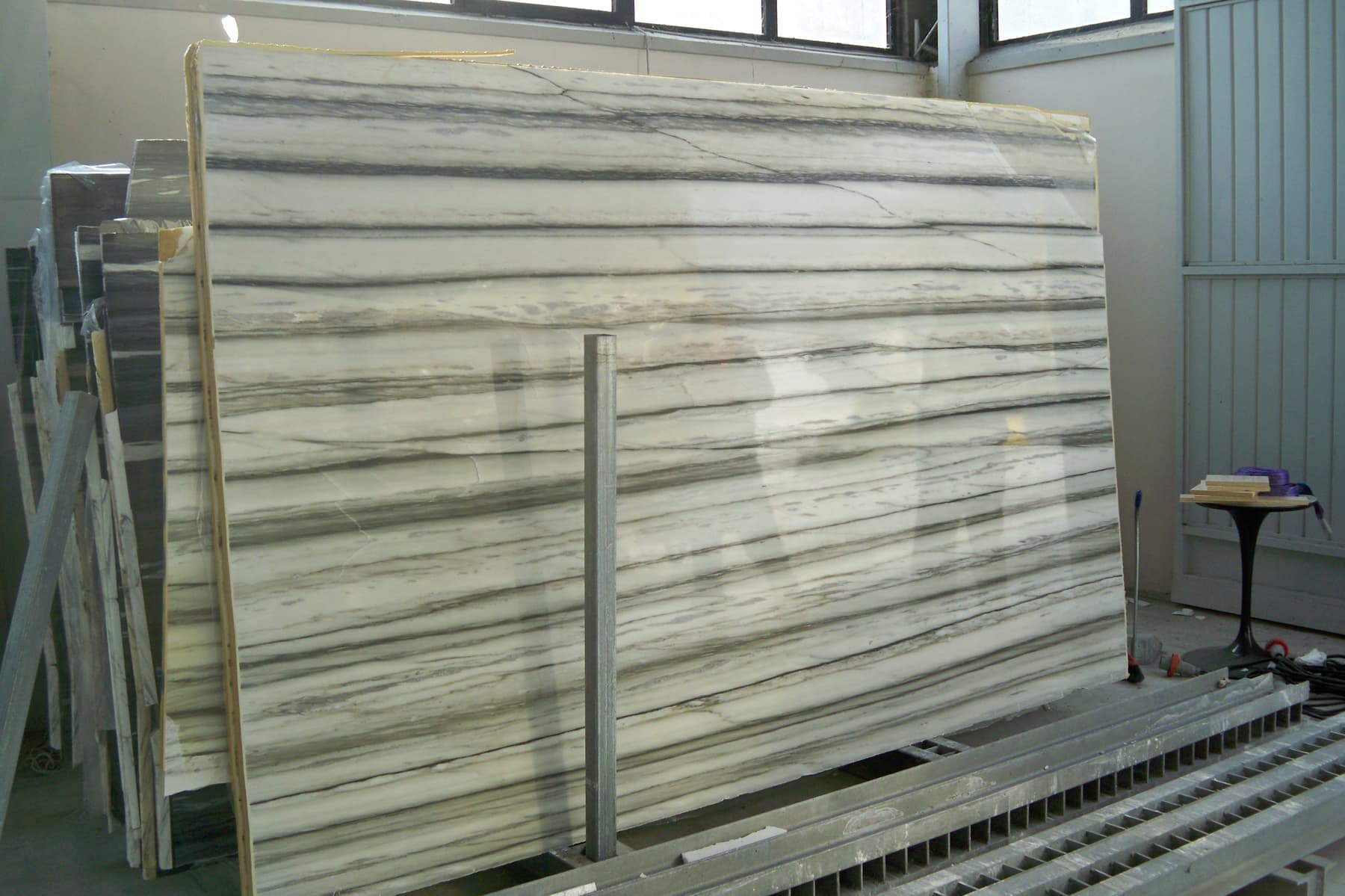
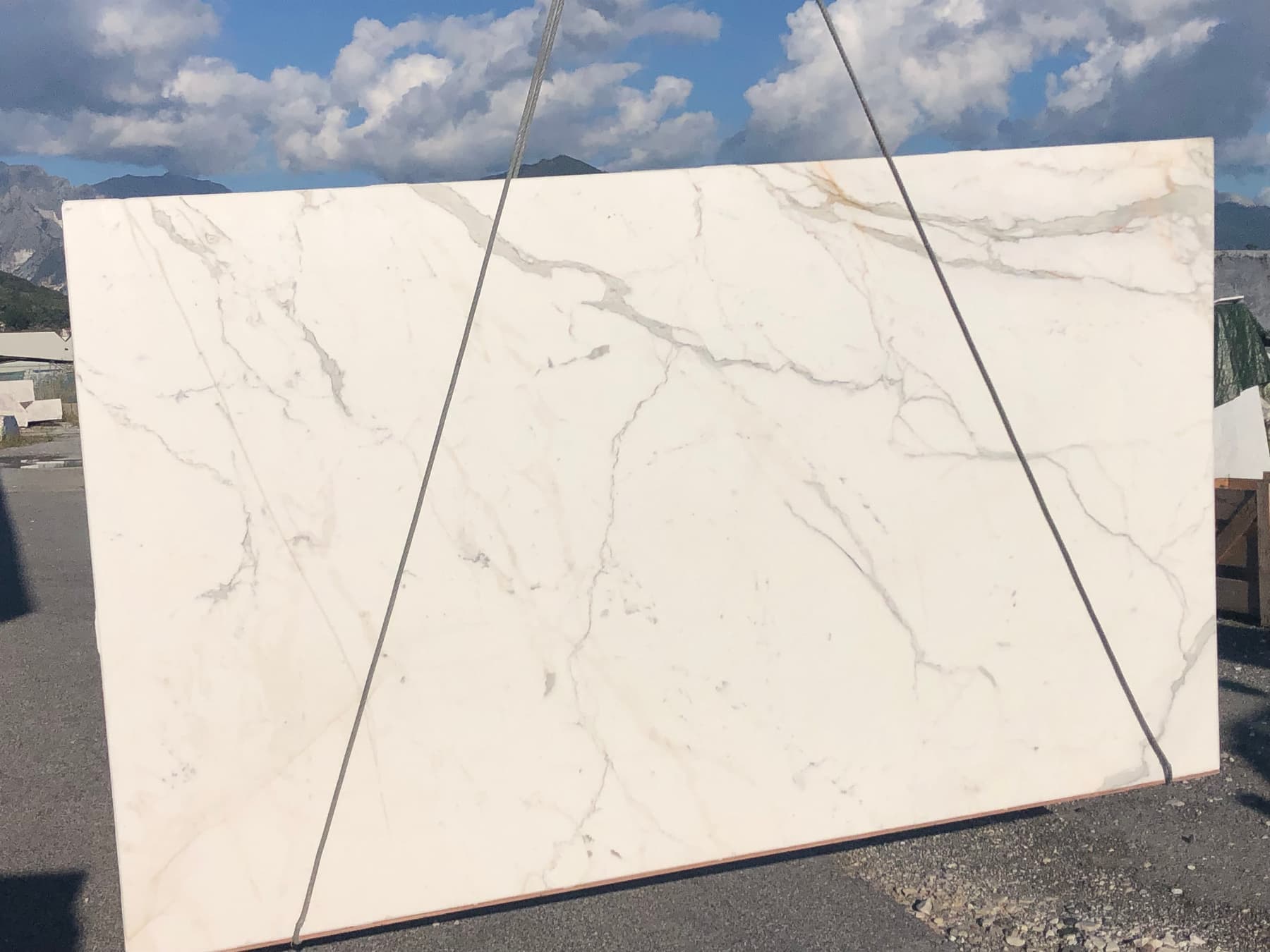
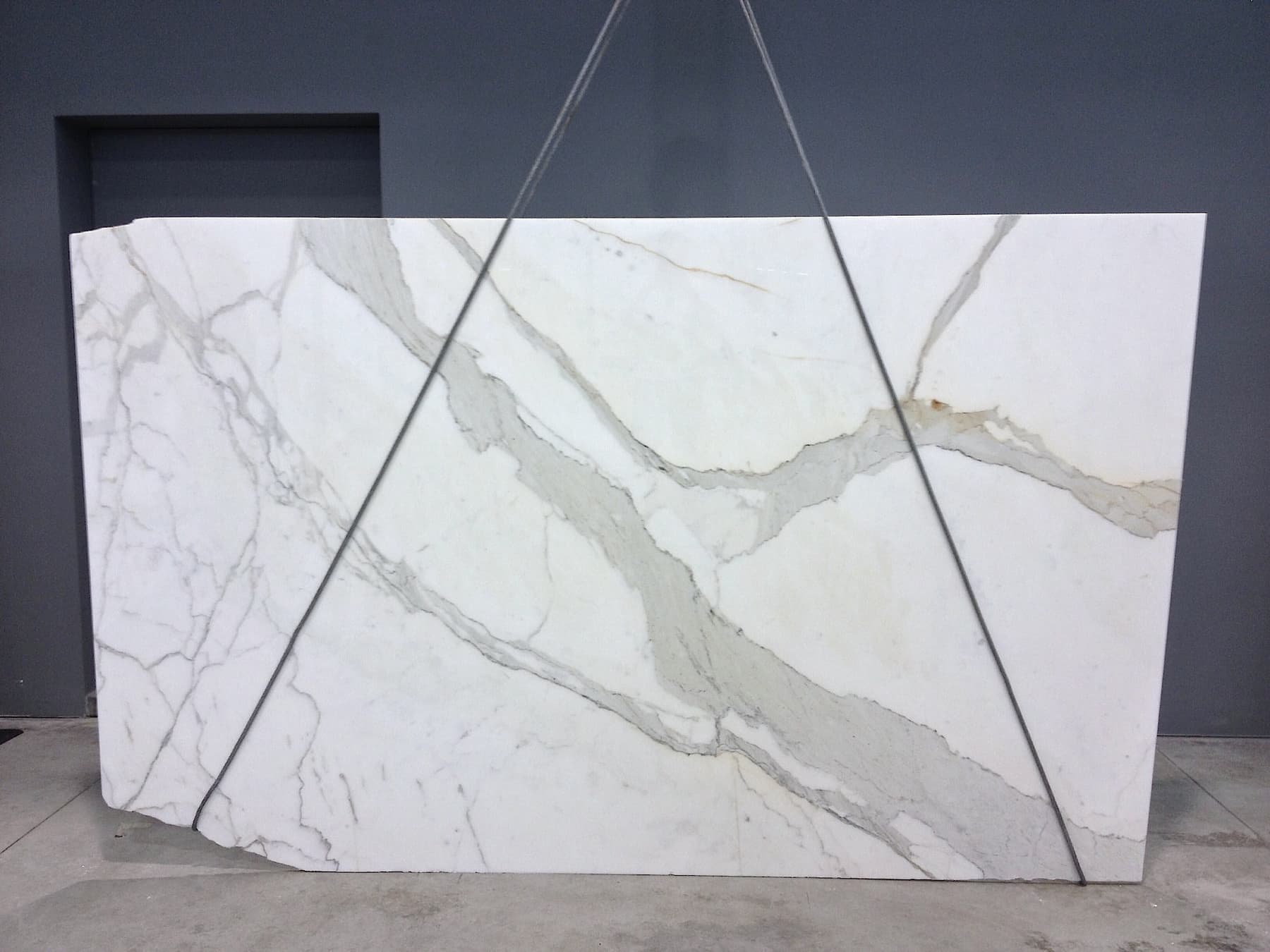
From quarry to home
Tap to reveal
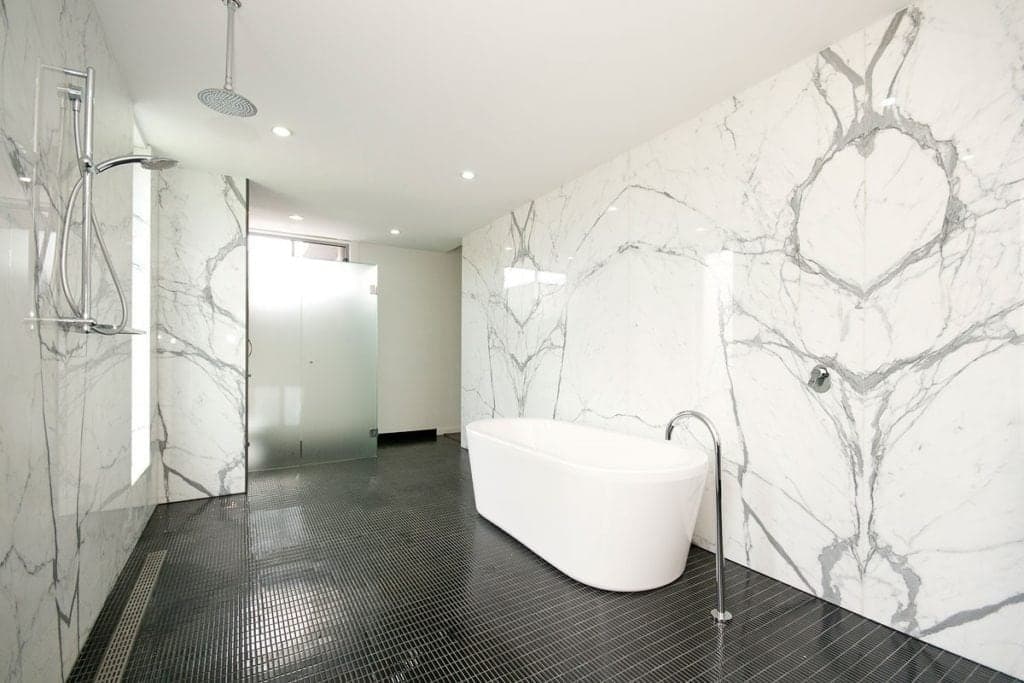
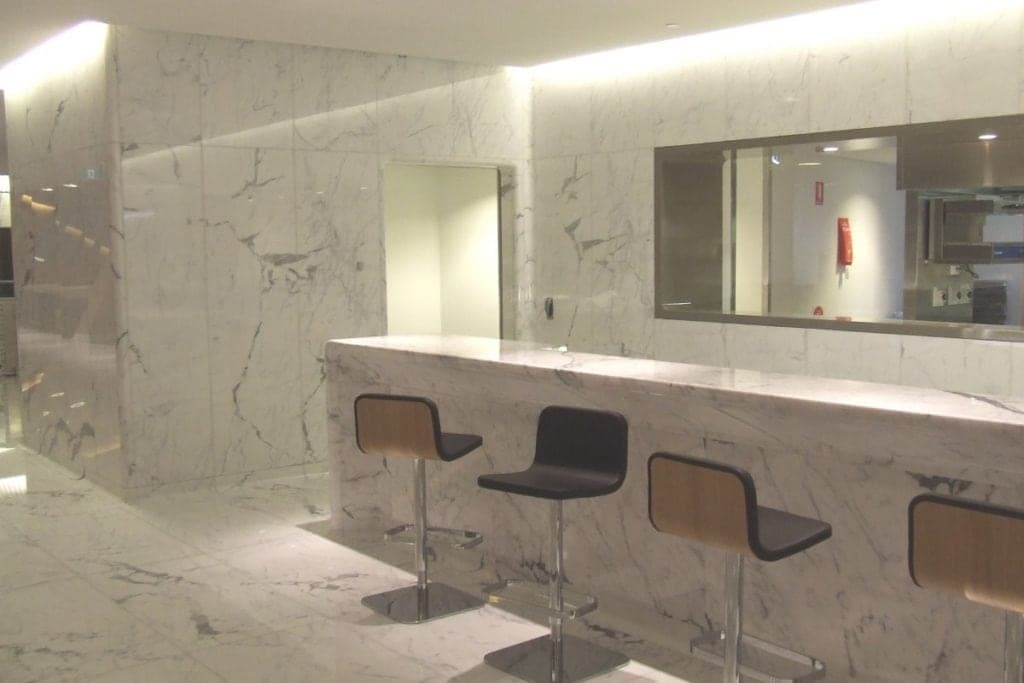
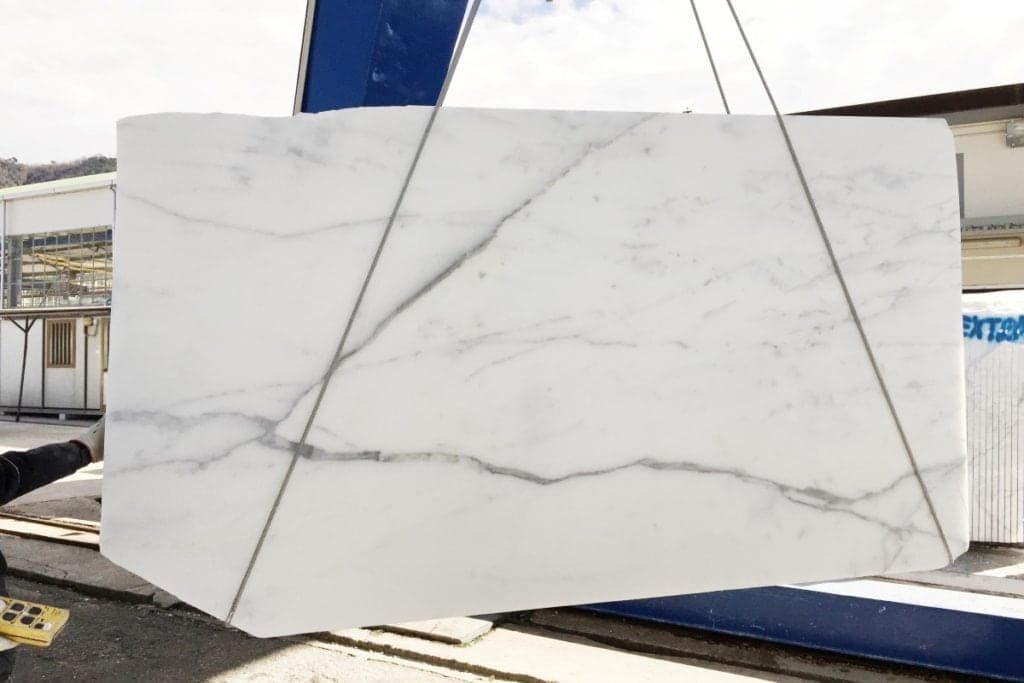
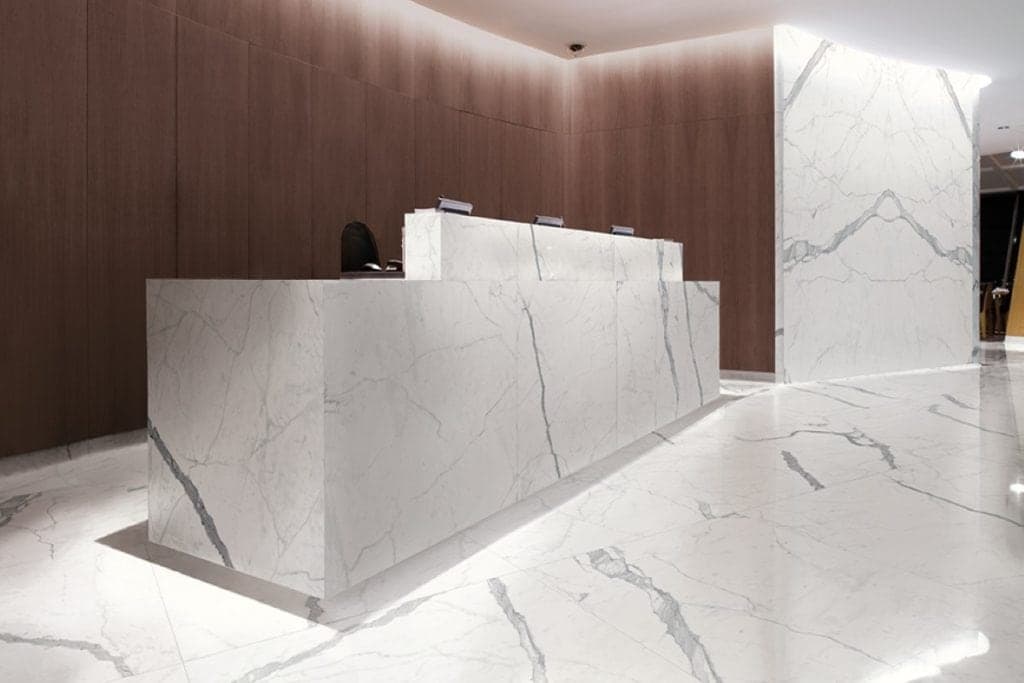
 Tap to reveal
Made-to-measure workshop what we do for your project
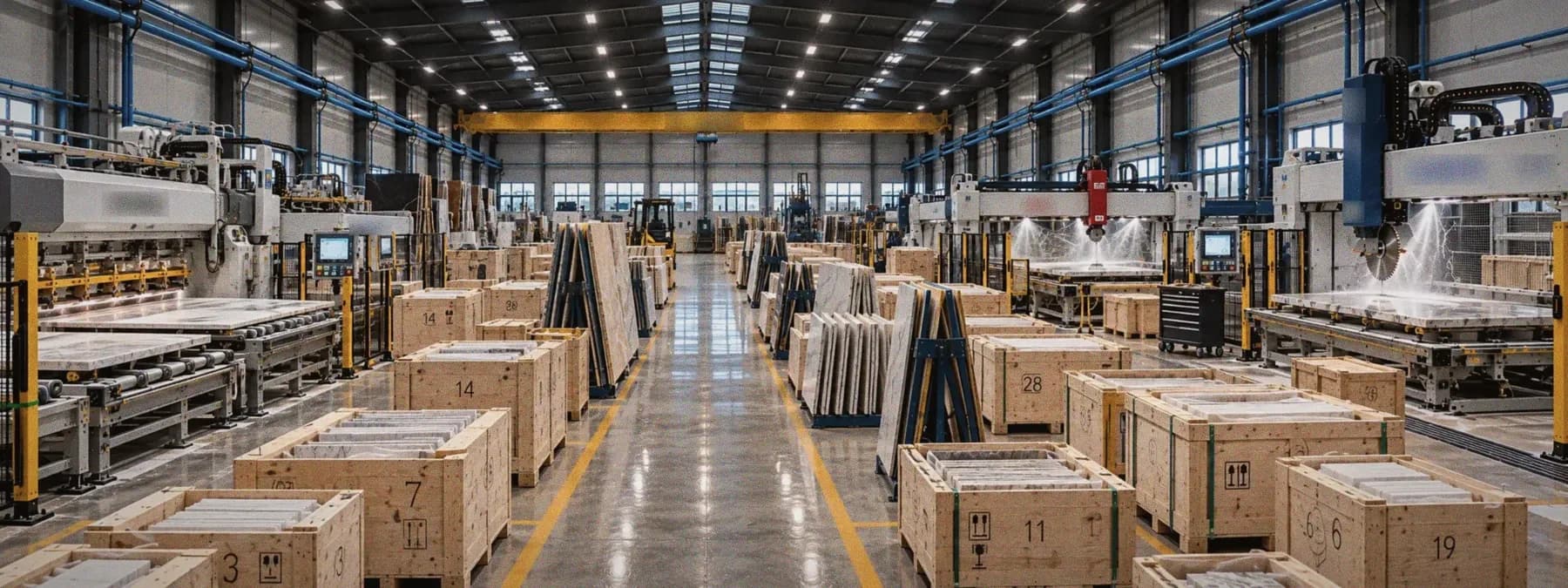
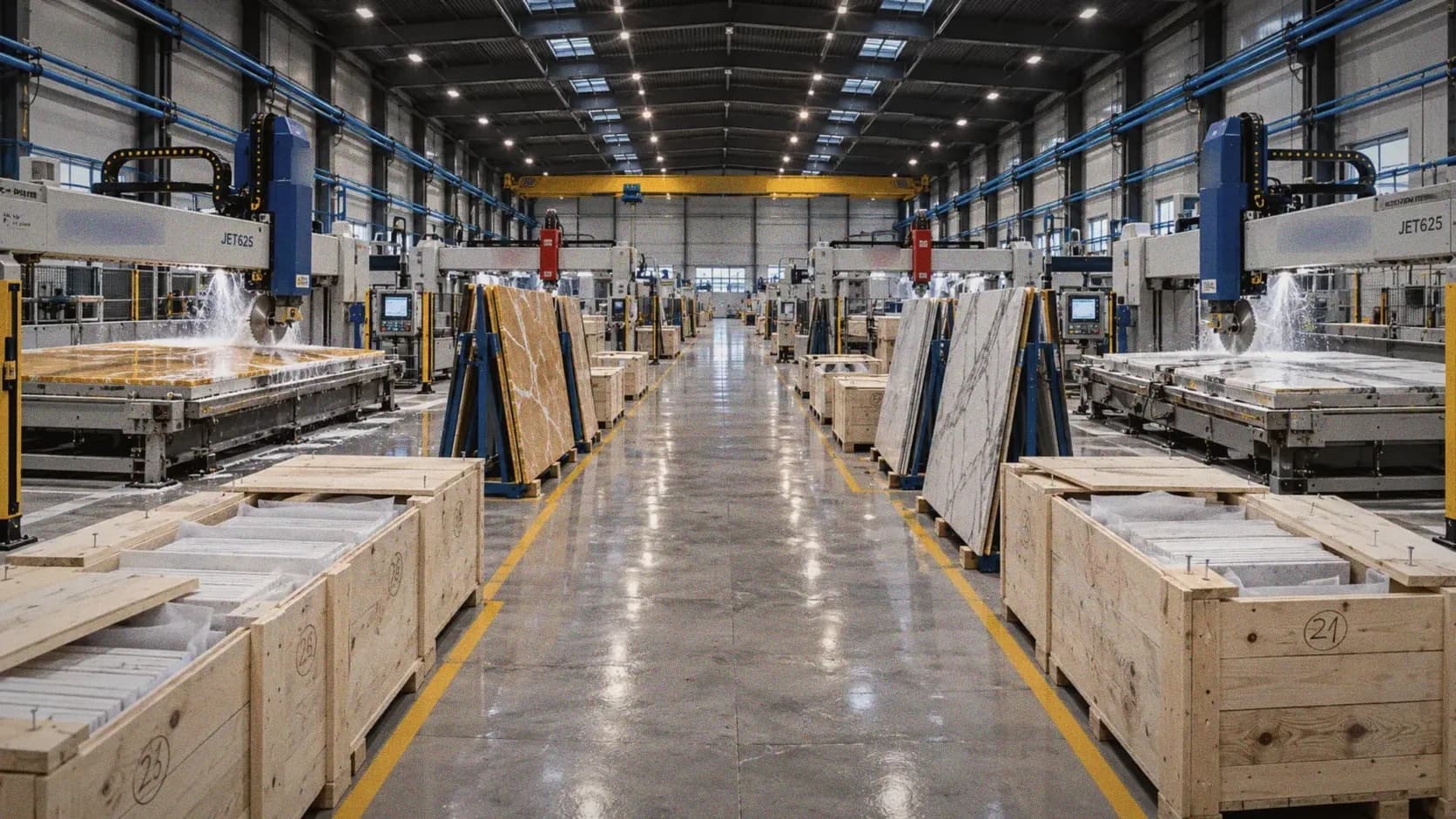
Bridge saws and waterjet for floors, claddings, stairs, inlays and solid pieces, starting from the site drawings. For complex projects our technical office prepares CAD shop drawings and cutting lists.
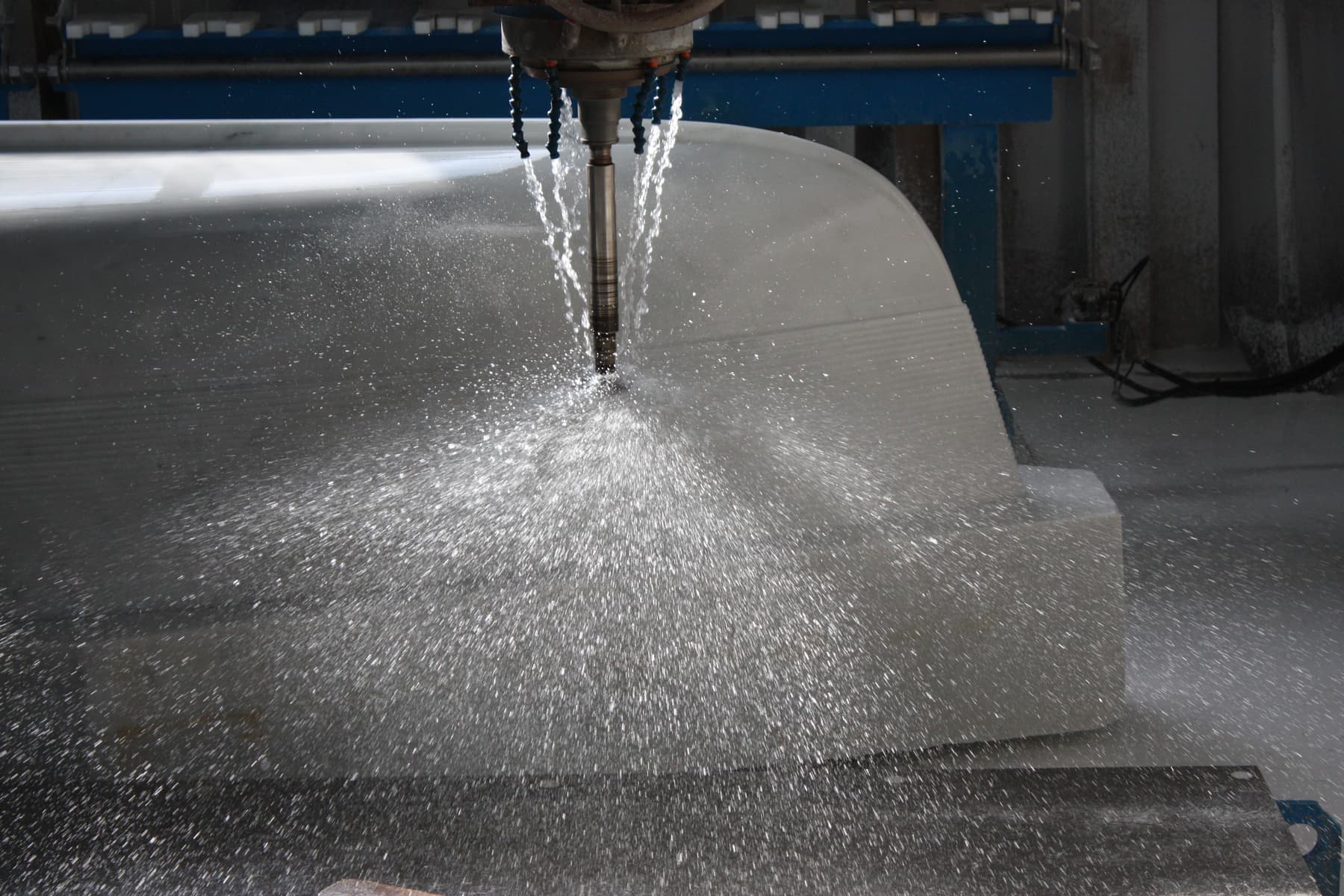
For solid pieces the full block is carved with 5-axis CNC robots, then finished by hand. Statuario, Bianco Carrara C, Gioia, Calacatta, Statuarietto and Arabescato Vagli lend themselves to this work.
Polished edges and made-to-measure profiles for kitchen worktops, vanity tops and stairs, with sink and tap cut-outs made by numerical control.
Washbasins and bathtubs carved from a single block. The compactness of Bianco Carrara C, Gioia, Calacatta, Statuarietto, Bardiglio and Arabescato Vagli makes them suitable.
Floor inlays in marbles of different colours and veining, cut with the workshop’s numerically controlled machines and waterjet, from the project drawings.
Herringbone, hexagon and basketweave mosaics, geometric or floral: the fine grain of Statuarietto and the range of greys of Bardiglio are suitable.
Thin slabs of Statuario (1–2 cm) and Calacatta Oro (about 1 cm or less) let light through and are used backlit. Marbles with dense dark veining (Arabescato Vagli, Gioia, Statuarietto, Bardiglio) are not recommended.
For yachts and lightweight interiors the marble is reduced to about 5 mm and bonded to aluminium honeycomb panels, to meet maritime weight limits.
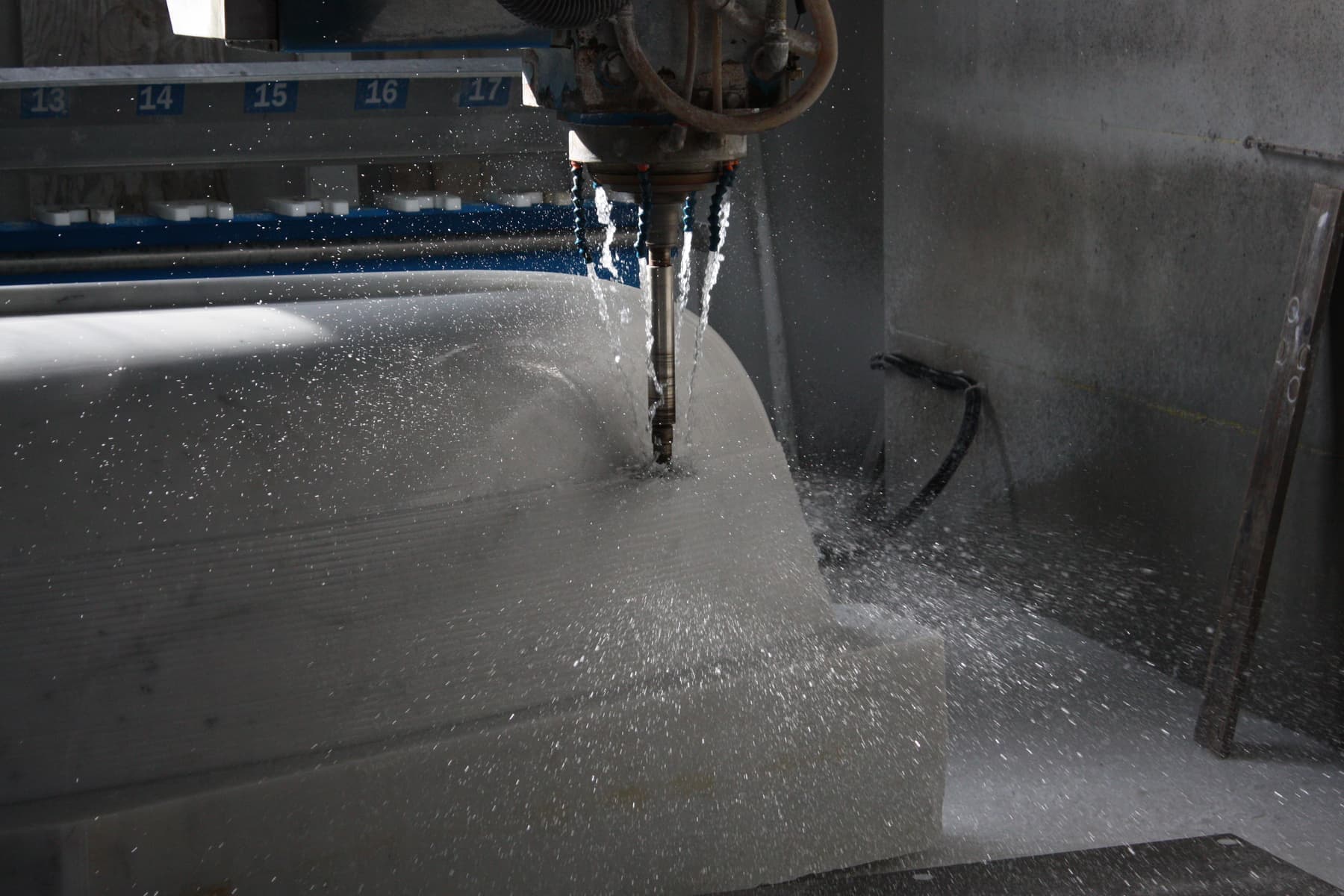
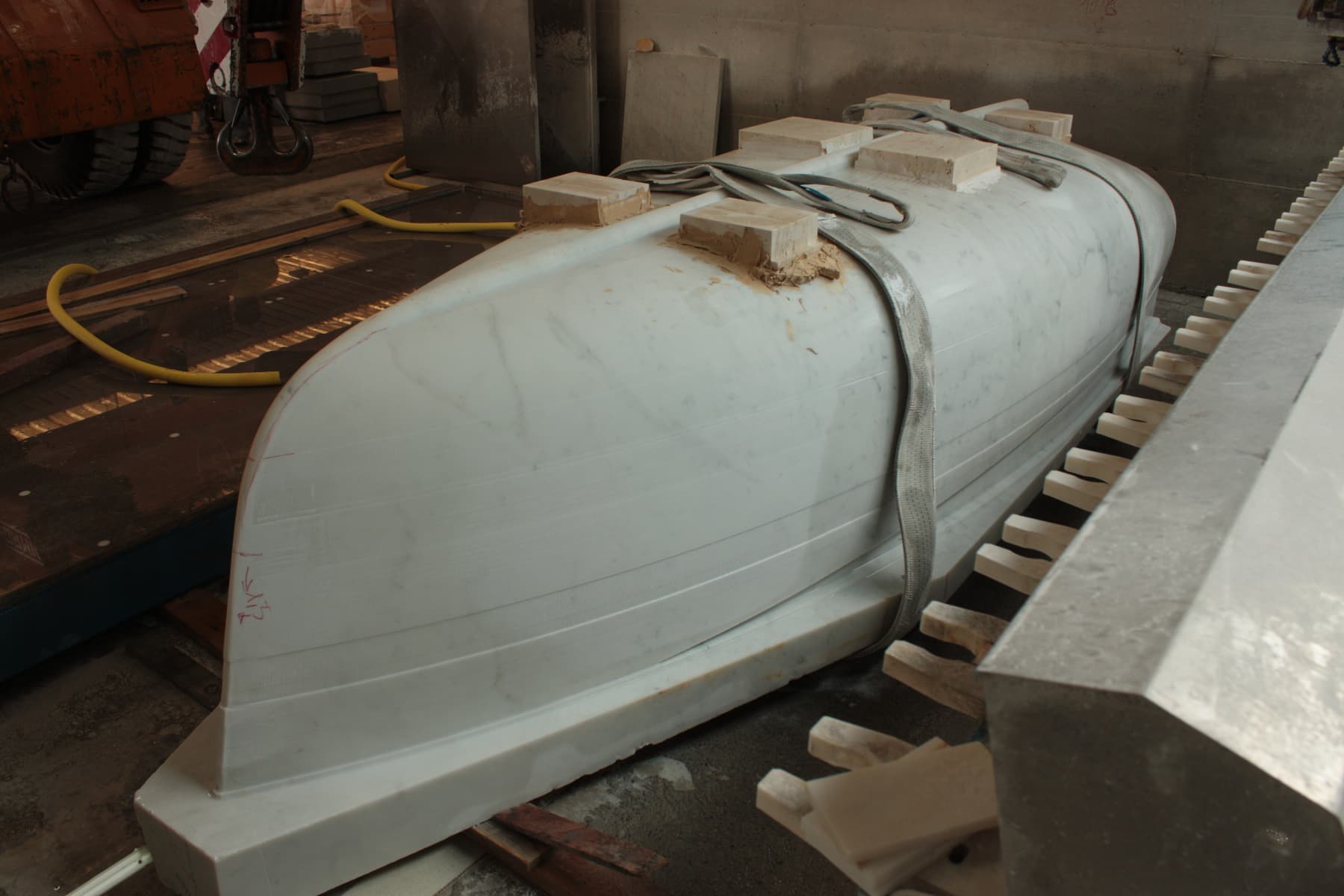
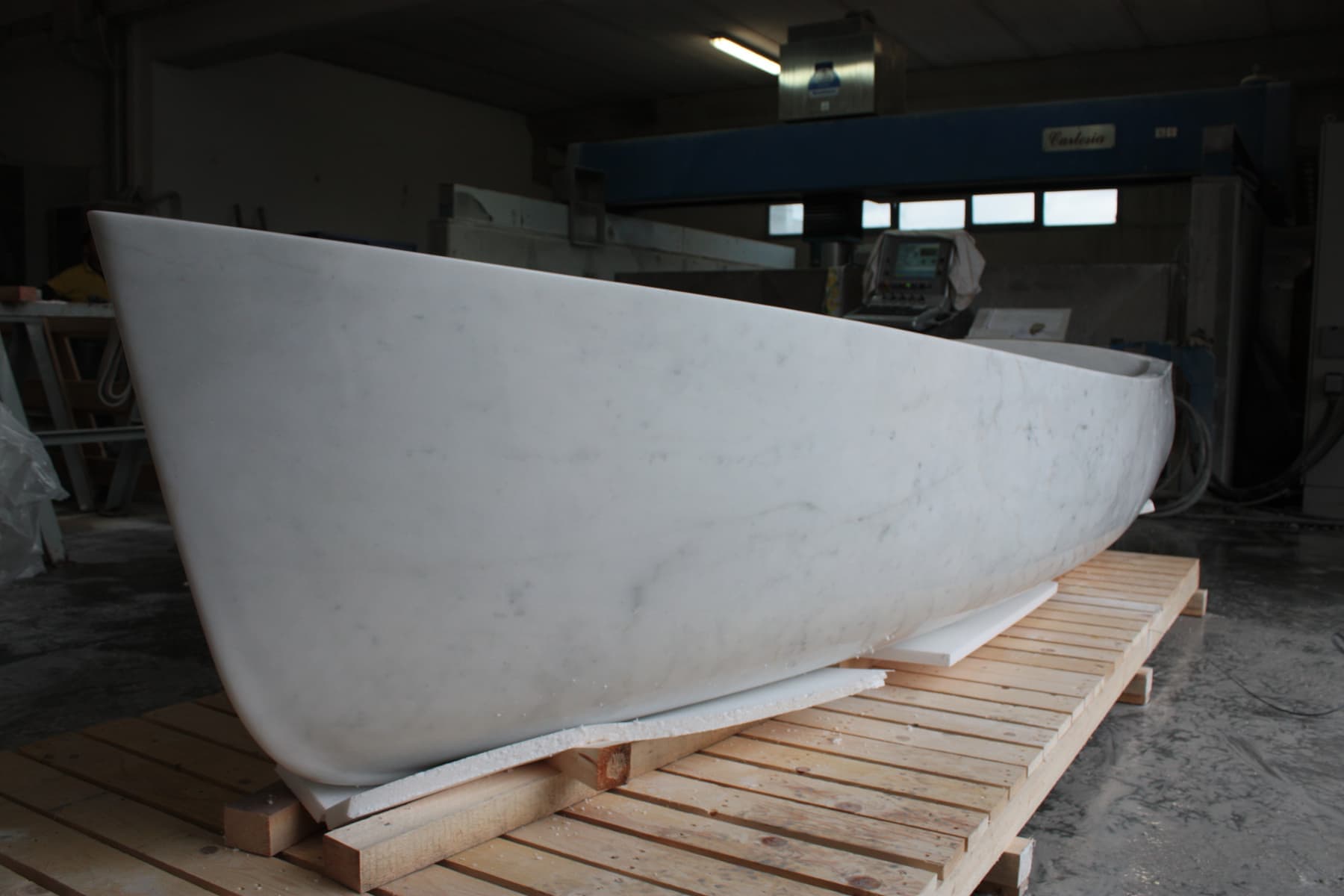
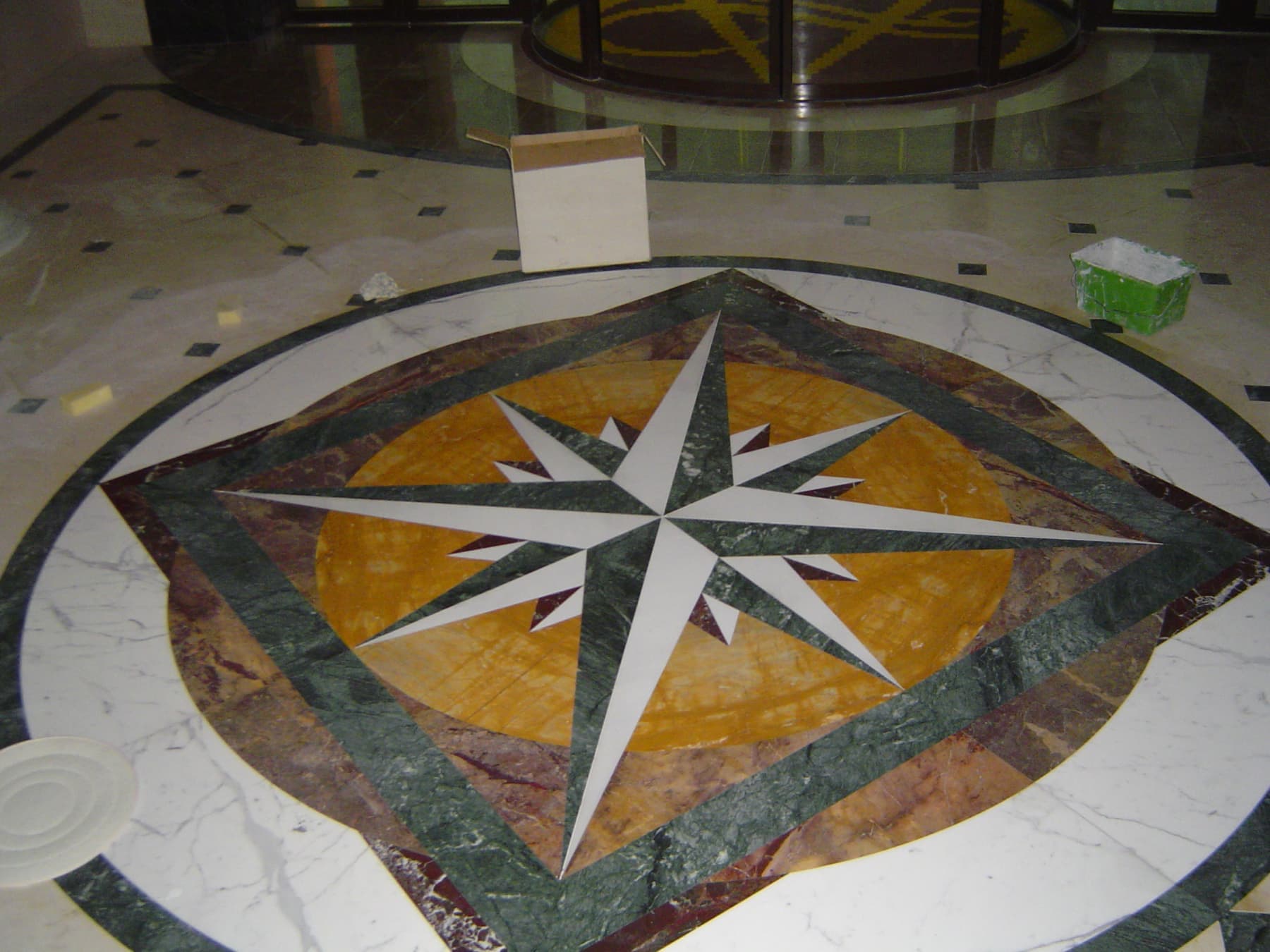
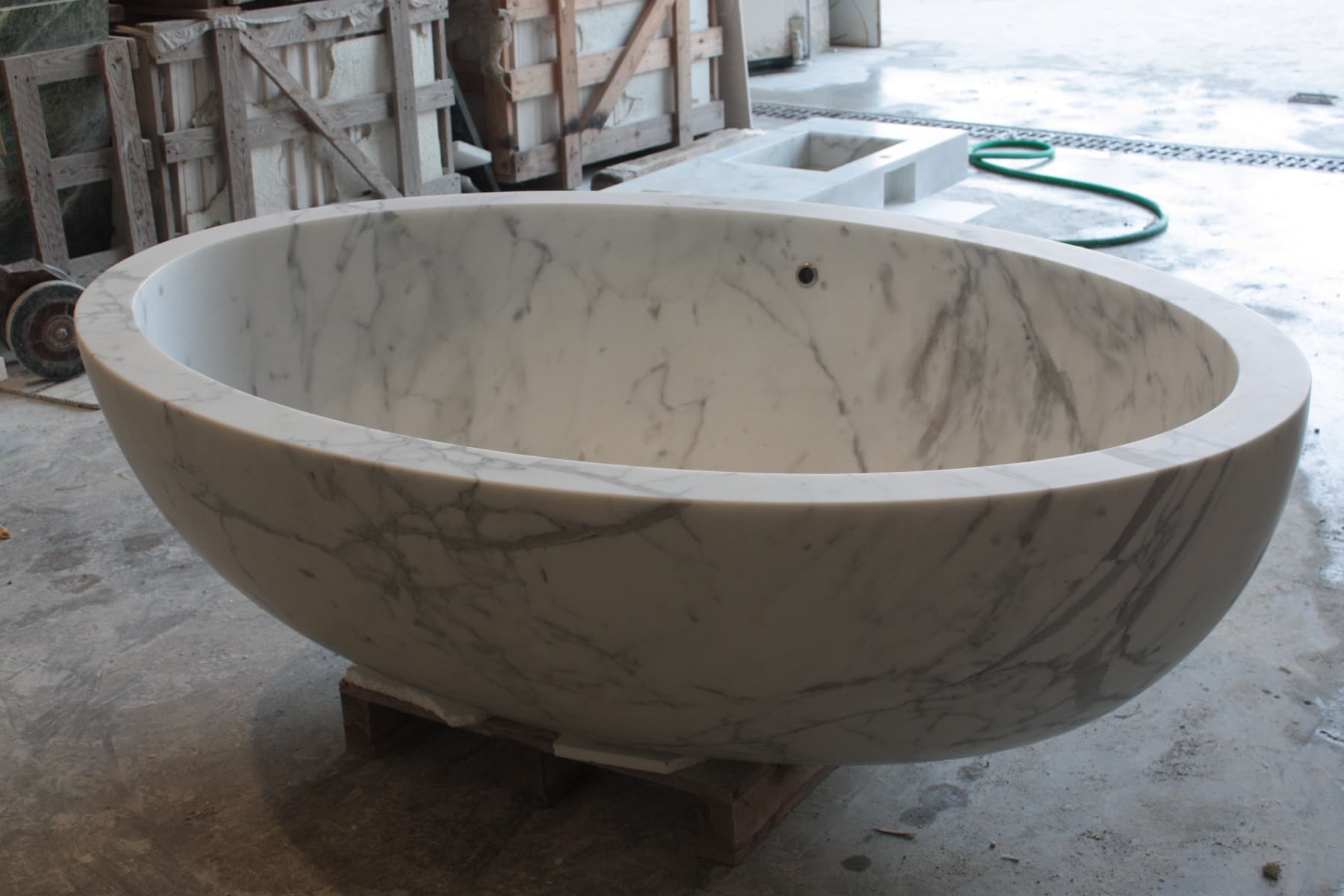
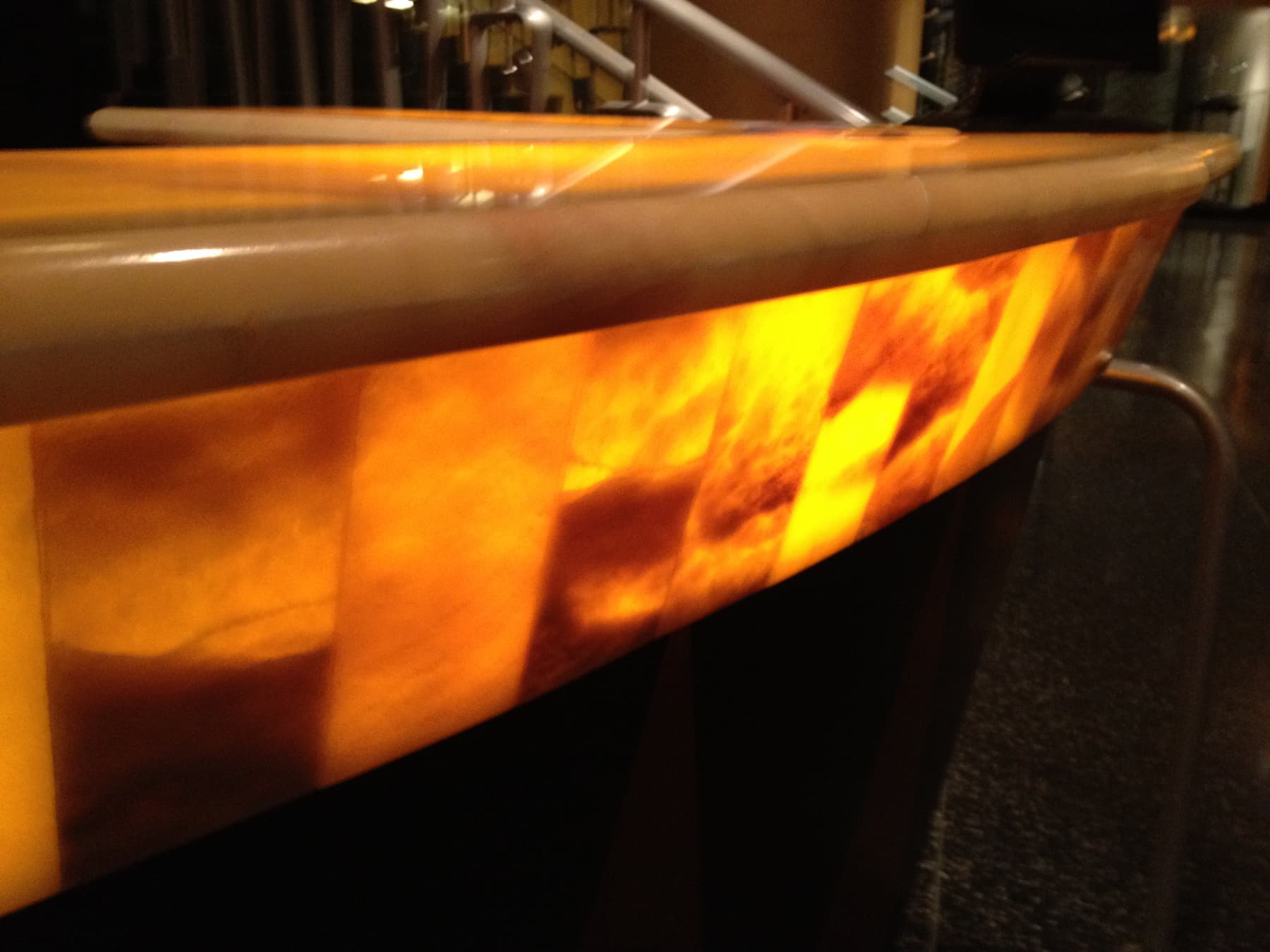
From quarry to project: from cutting the block to the ship
The eight stages, one after the other, with real photos of our work.
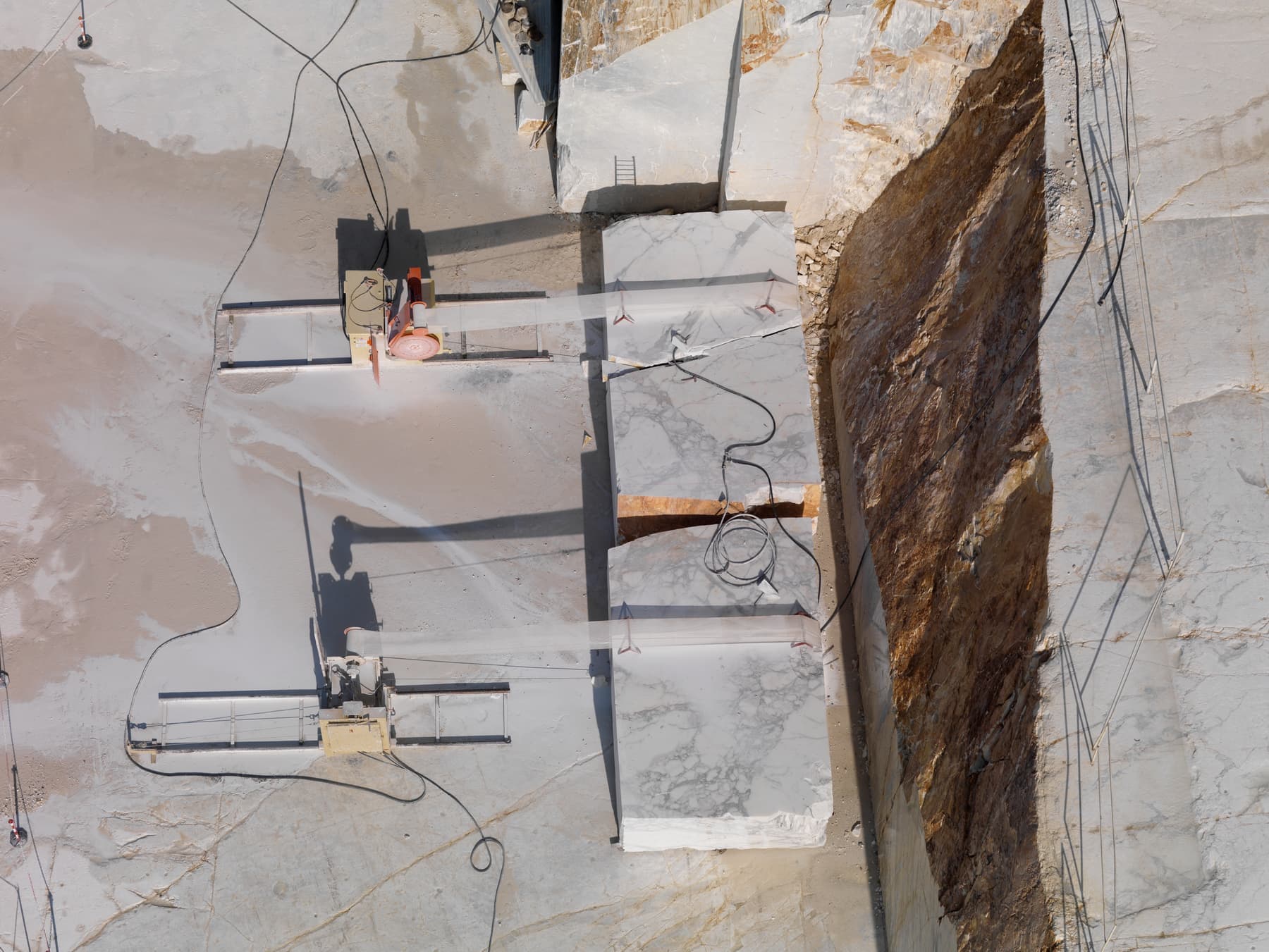
01Cutting the block in the quarry 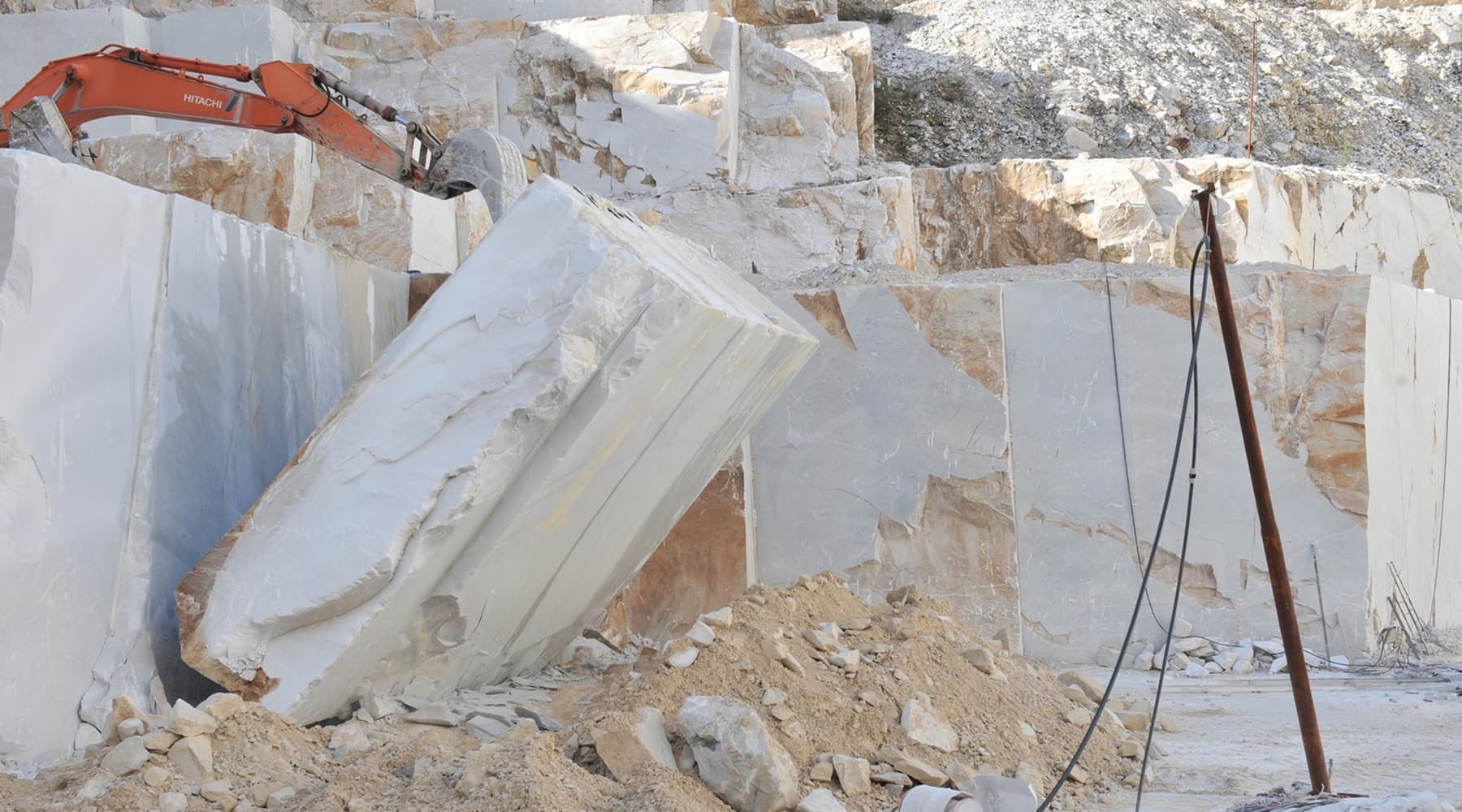
02The block detached and toppled 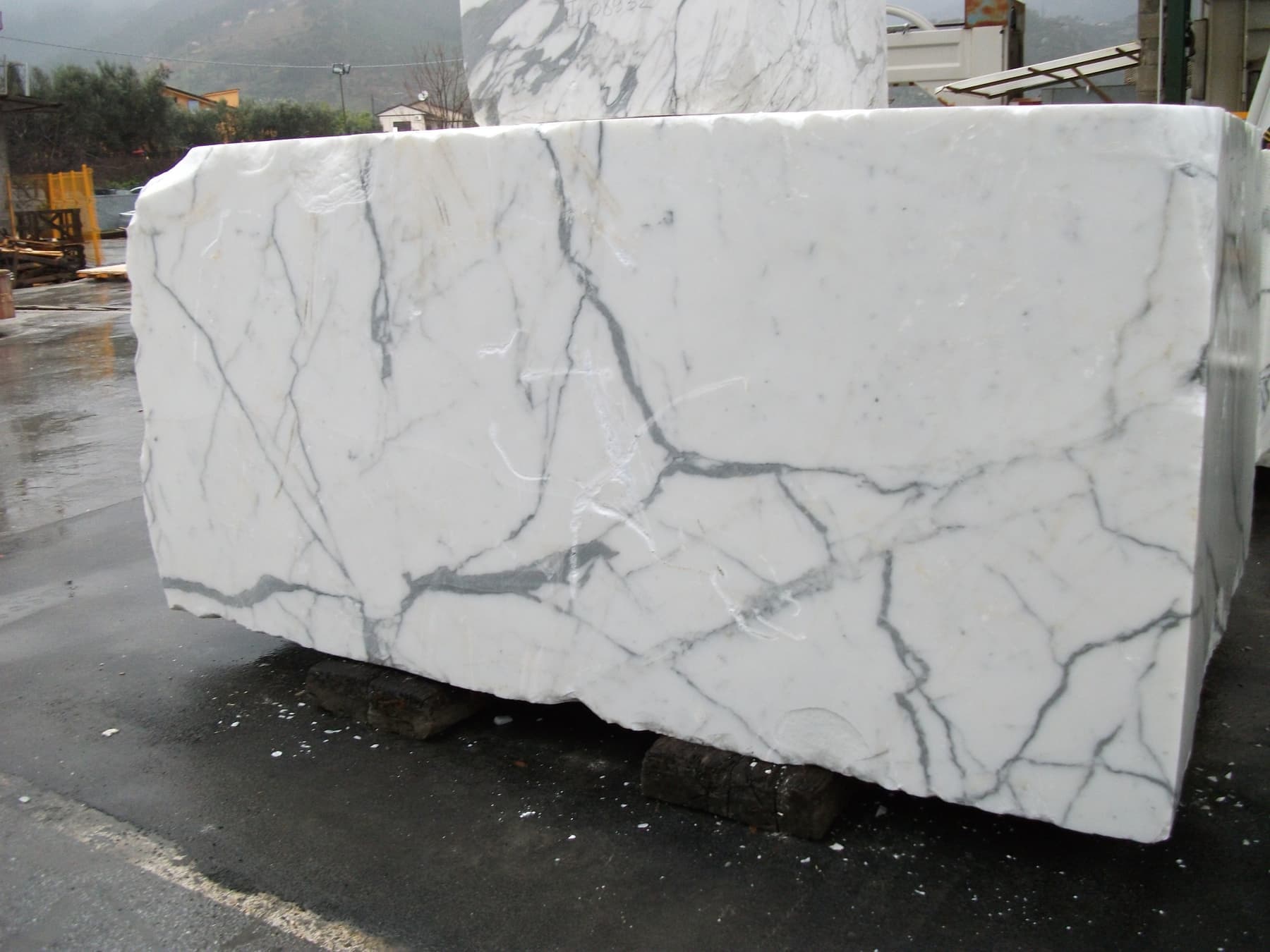
03The block in the Carrara yard 04Sawing into numbered slabs 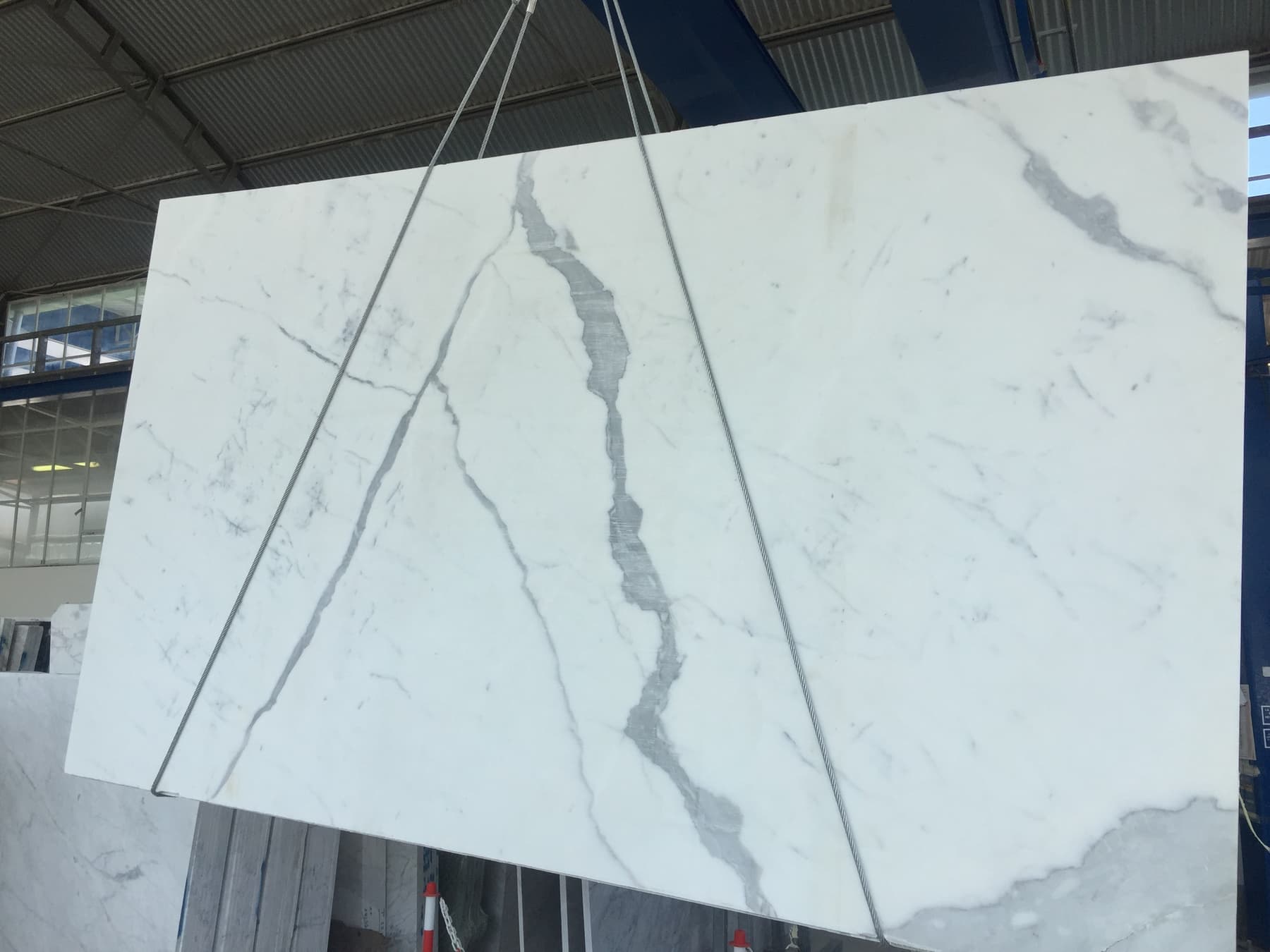
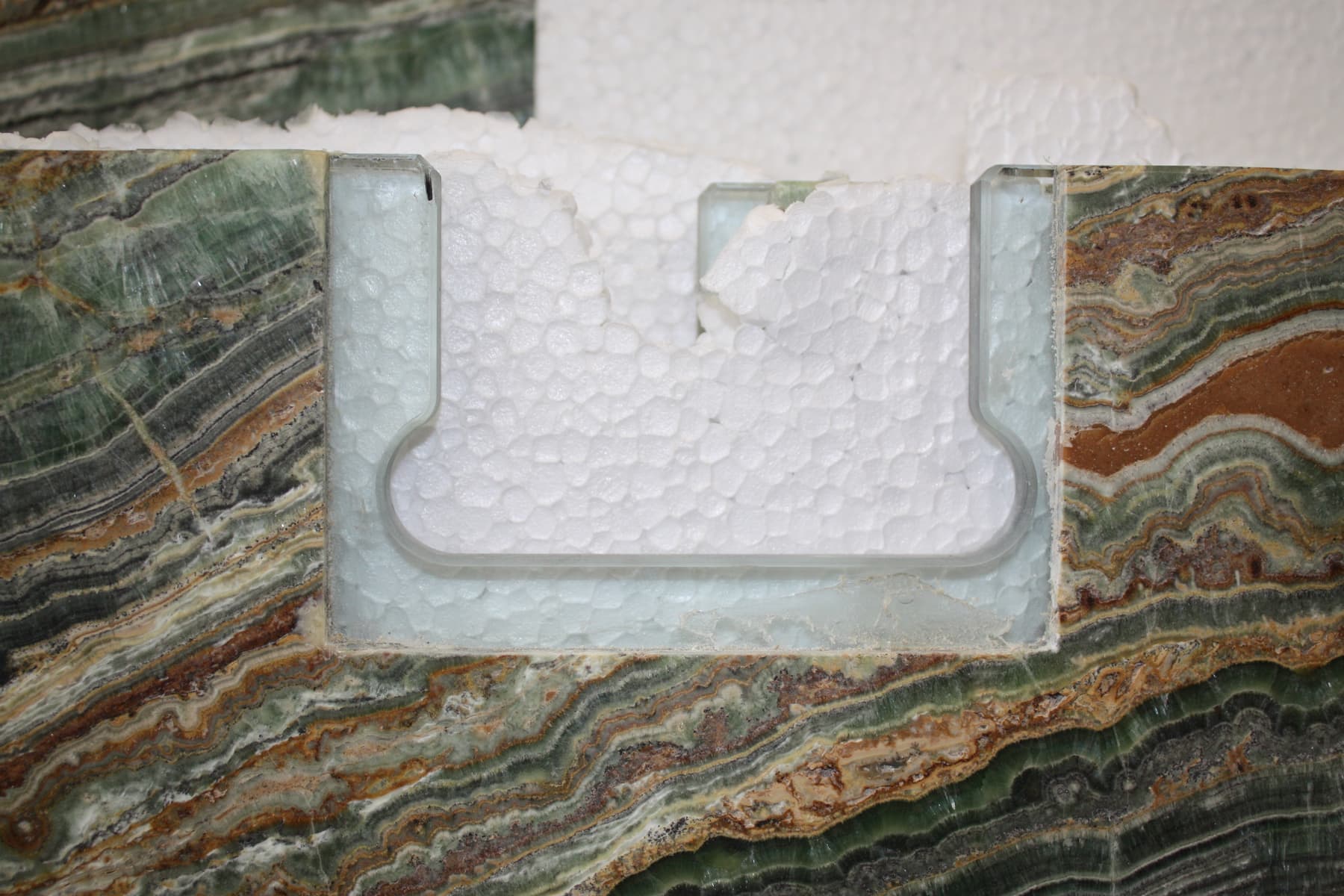
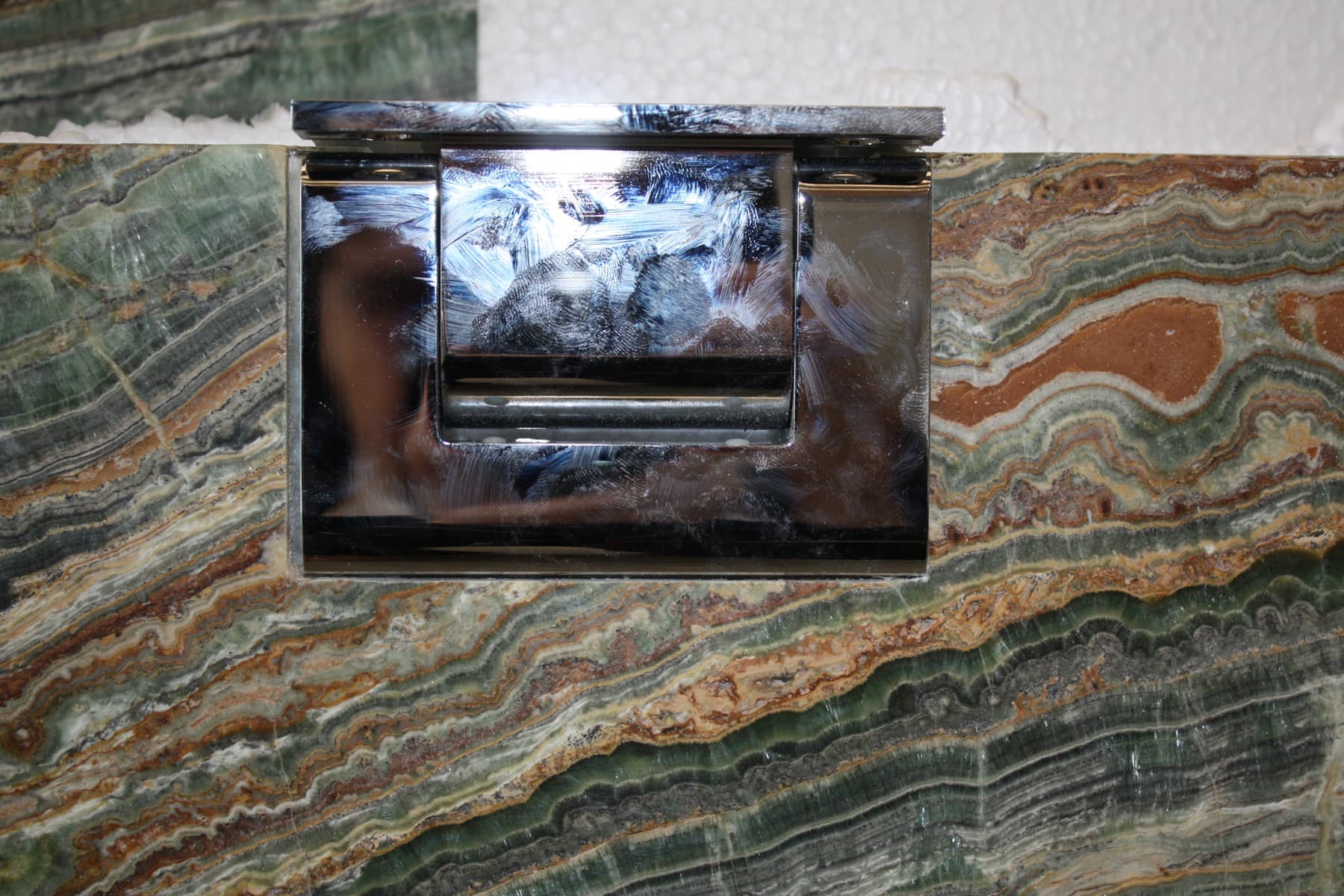
05The polished, checked slab 06Made-to-measure work in the workshop 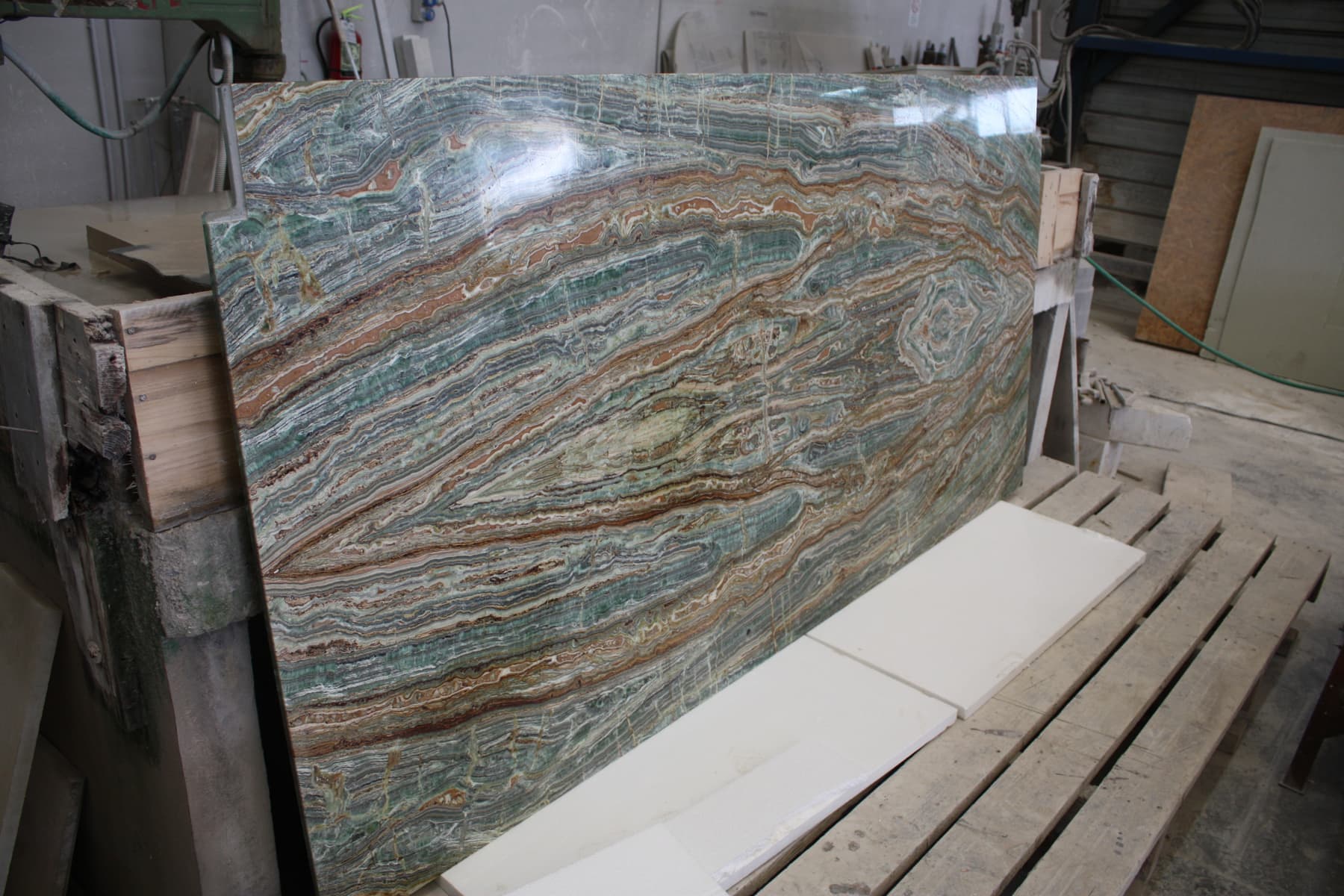
07The finished piece, ready to be installed 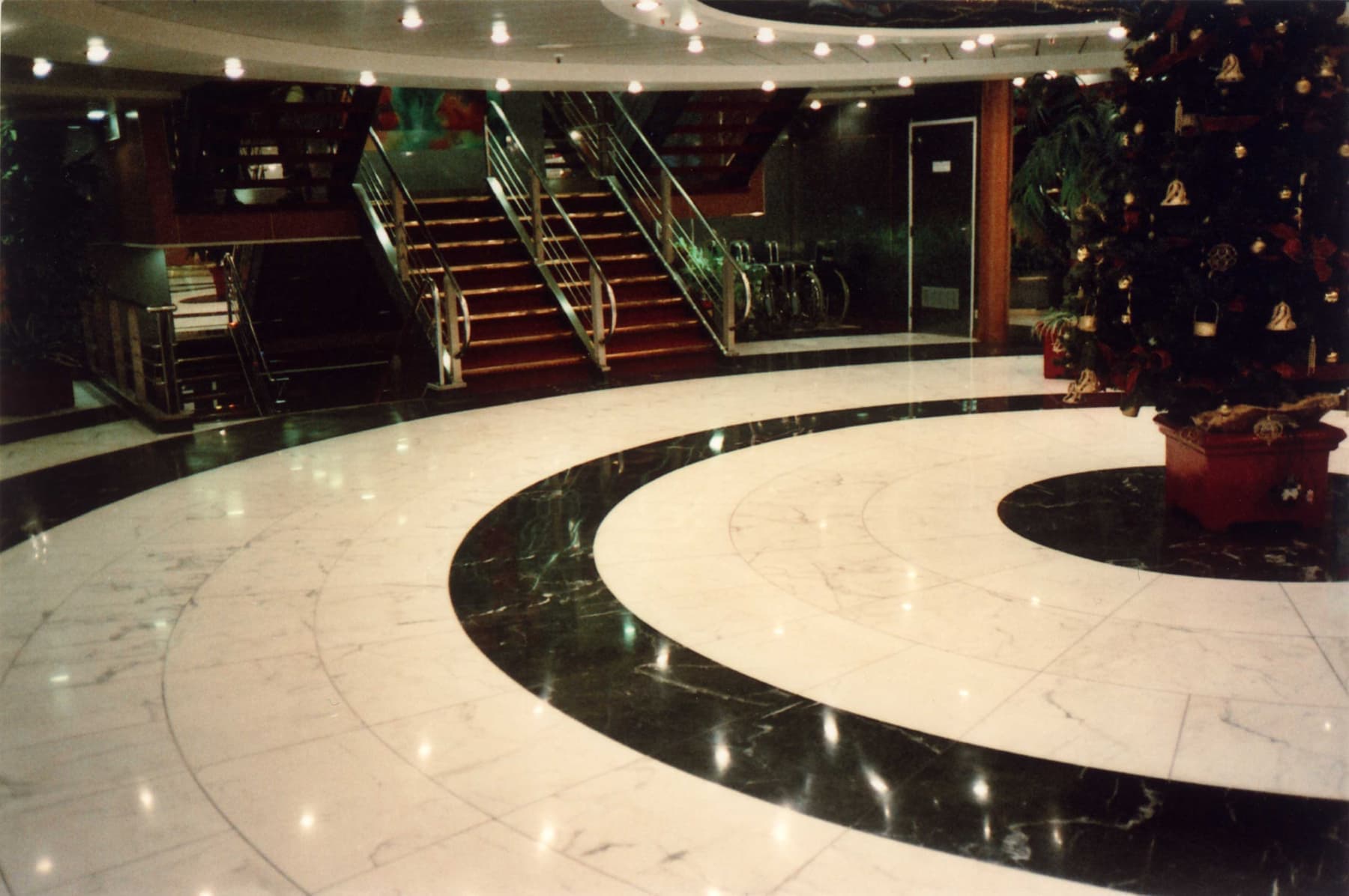
08On board: marble for ships and yachts
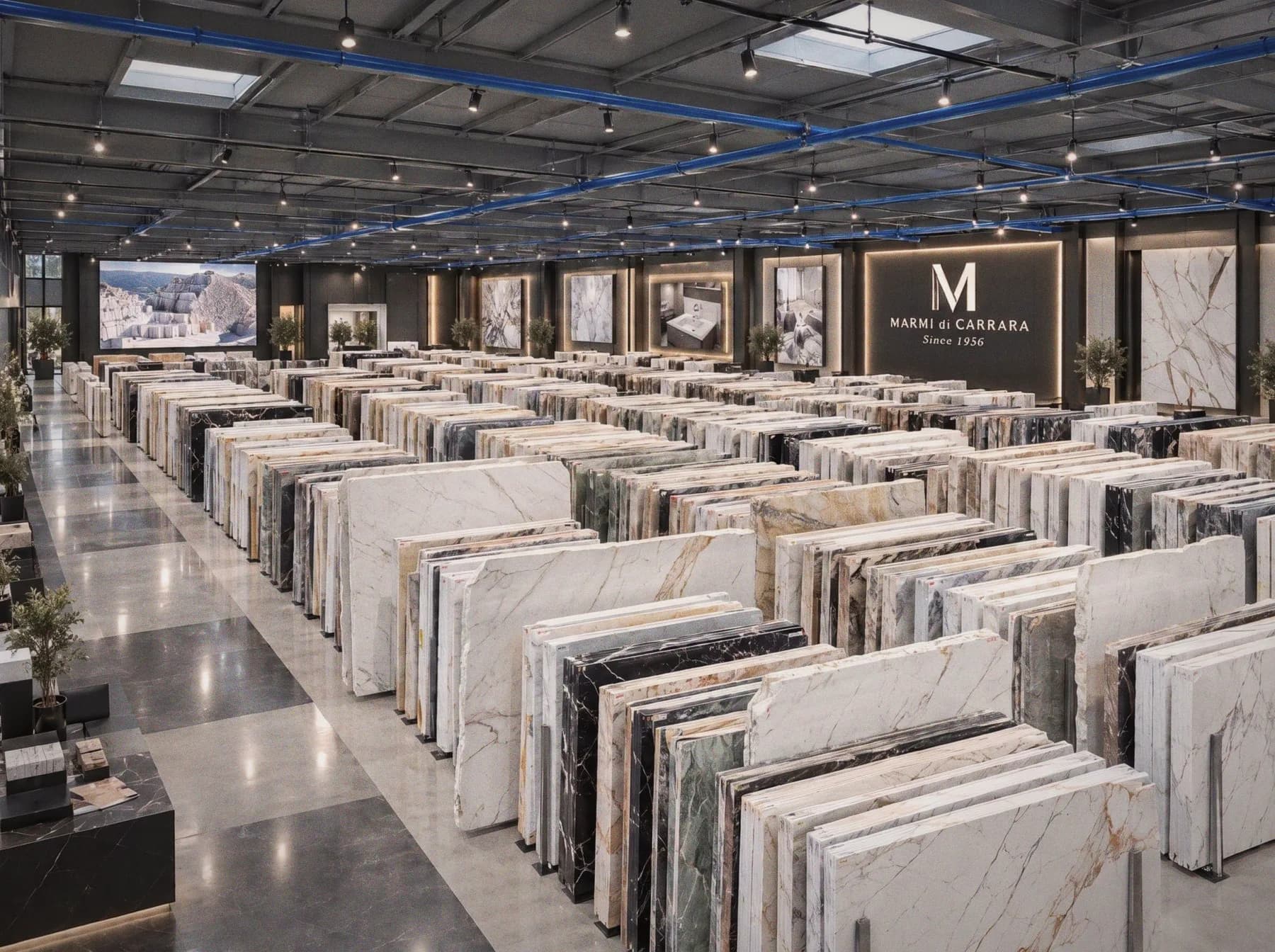
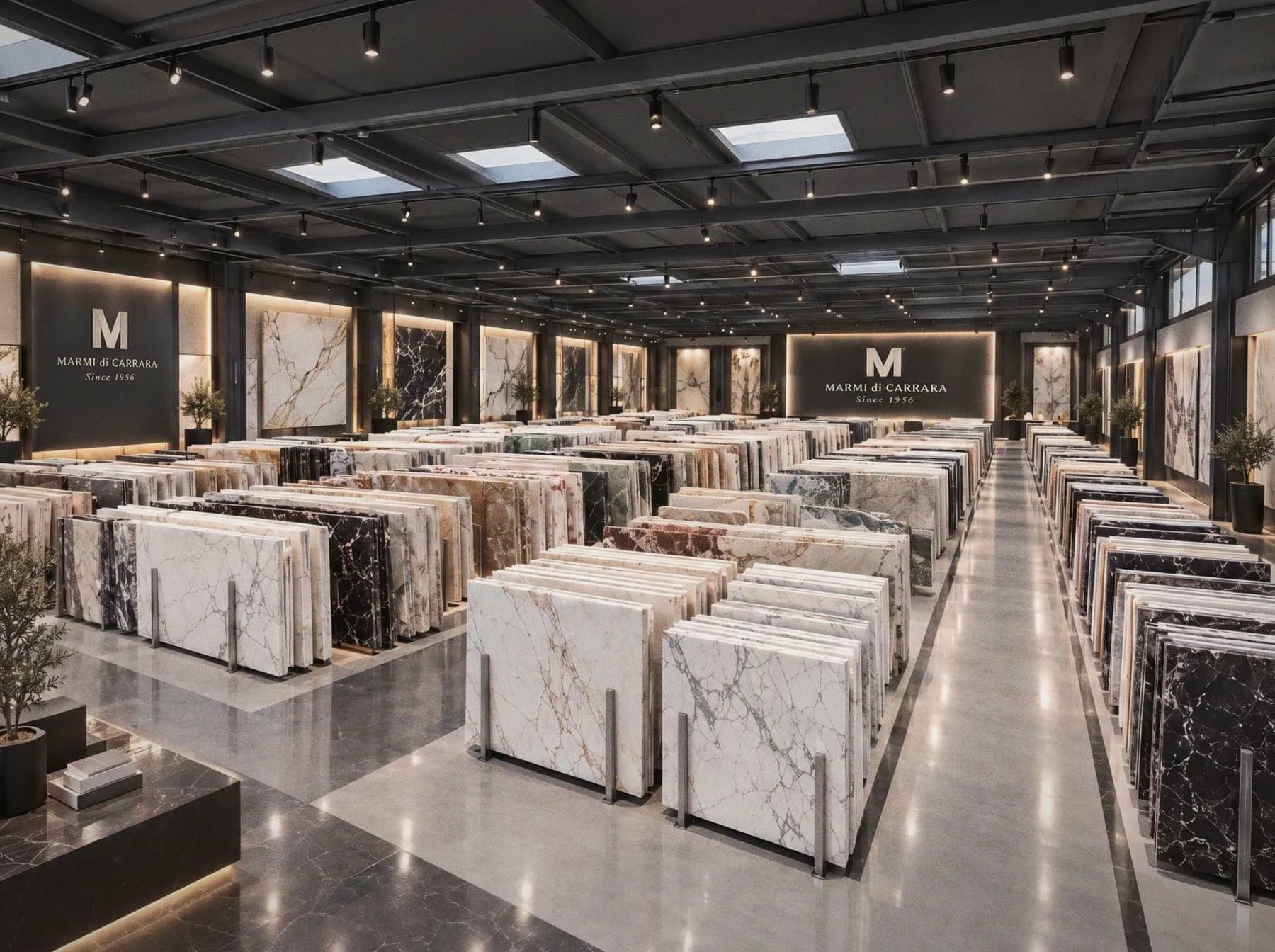
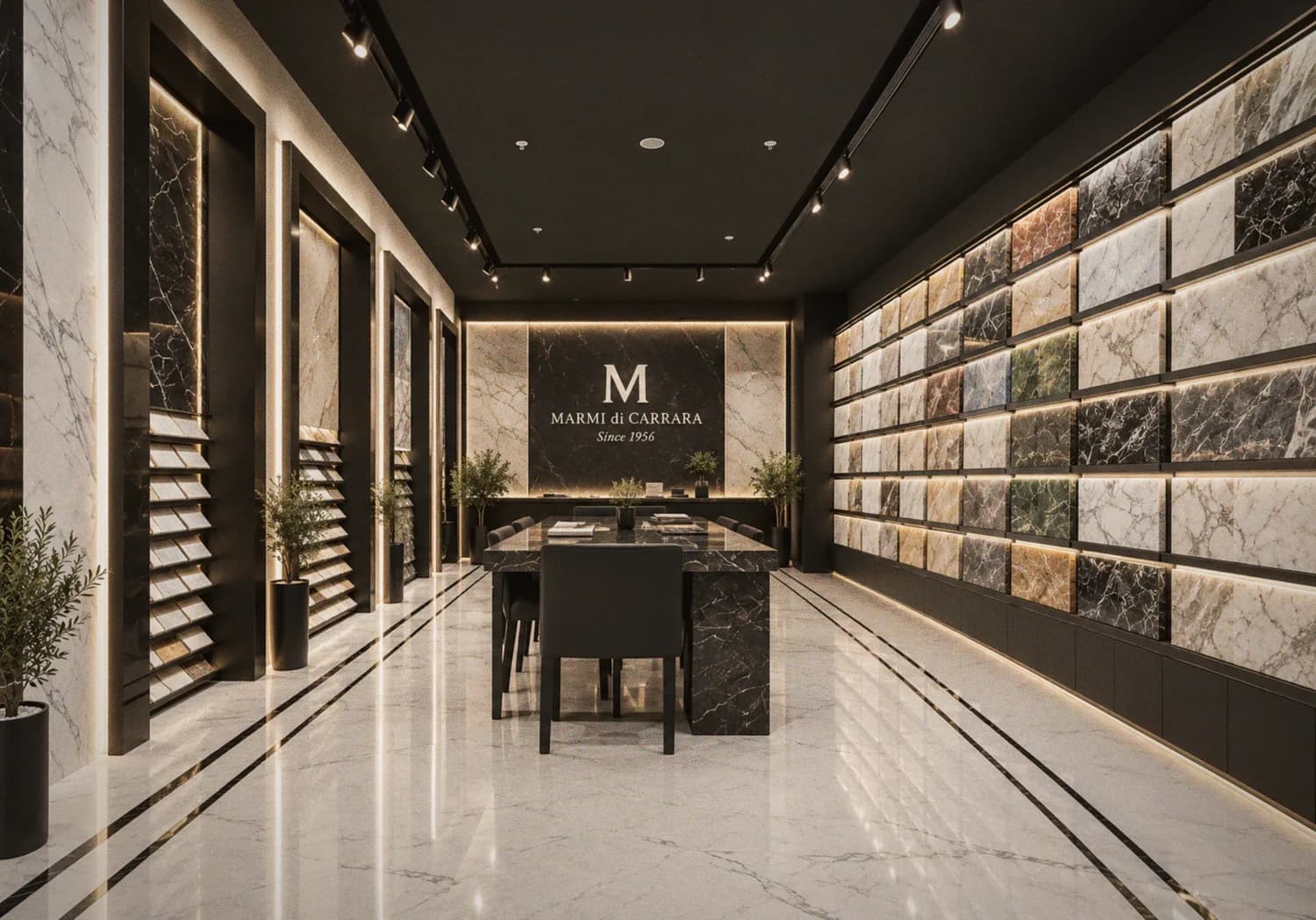
Why buy from those who choose the block at the quarry
Sustainability
We source from Italian quarries that comply with national environmental, safety and labour laws.
- Italian regulationsModern Carrara quarries operate under strict Italian environmental regulations, for responsible extraction.
- Less dustDust control in the atmosphere.
- Recycled waterRecycling of process water.
- LandscapeResponsible management of the basins and landscape restoration.
Come and choose your block
We arrange quarry tours in Carrara for architects and private clients who want to choose their own block in person before cutting, by appointment: a day with quarry, yard, workshop and showroom. Those who cannot come can have a video call from the yard, in front of the slabs.
- Quarry tours by appointment, for architects and private clients
- Choosing the block before it is cut
- Yard, workshop and showroom in the same day
- Alternatively: a video call from the yard
Quarry visit
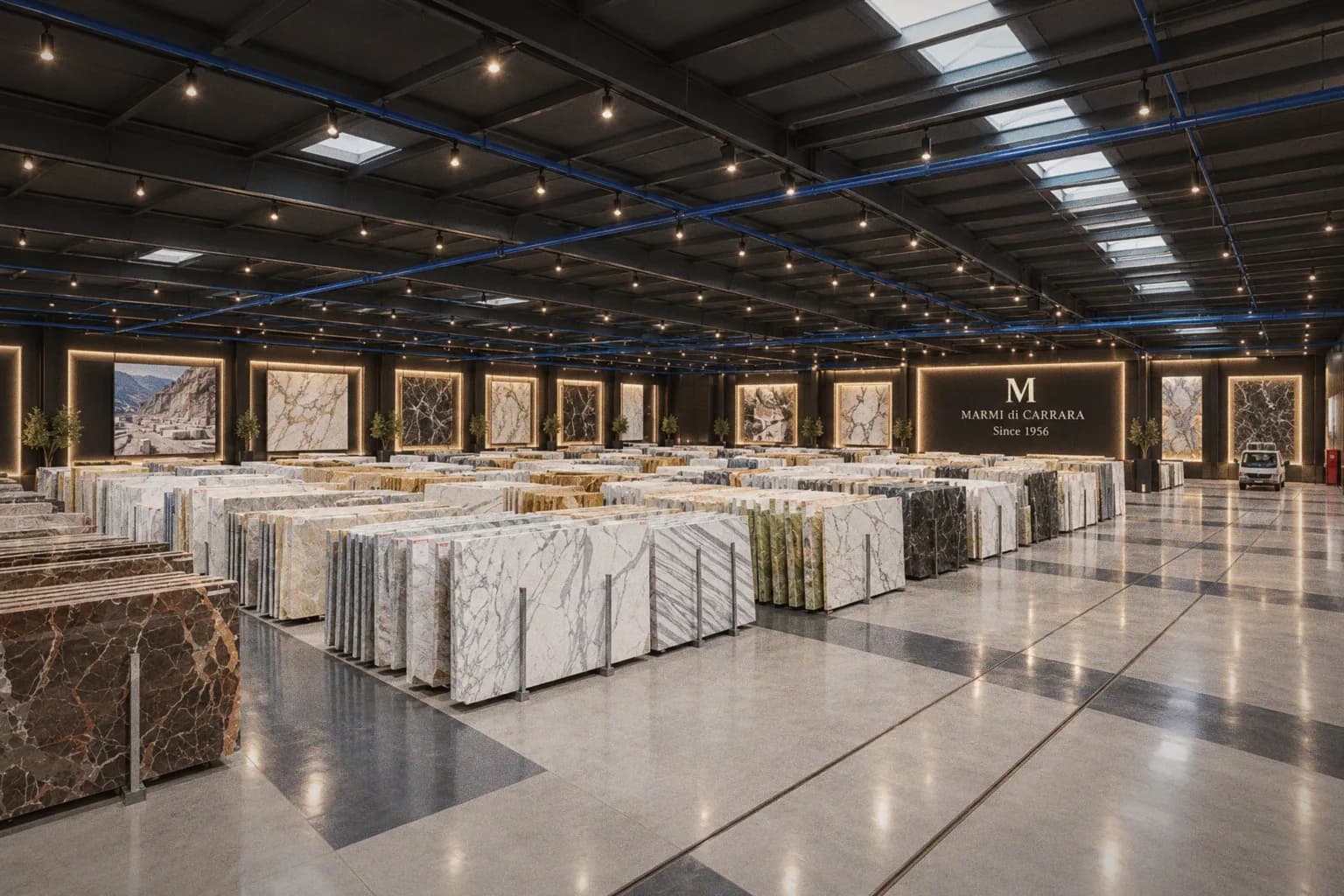
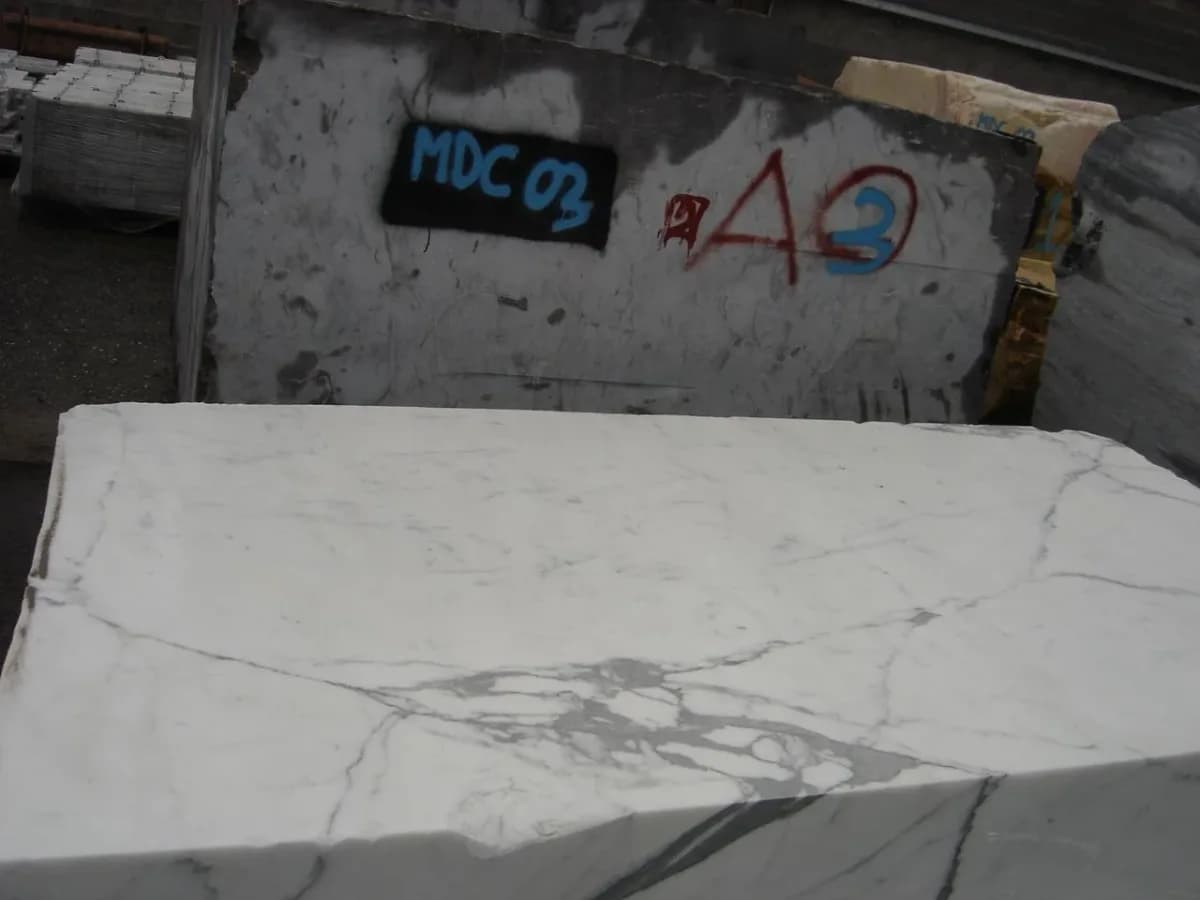
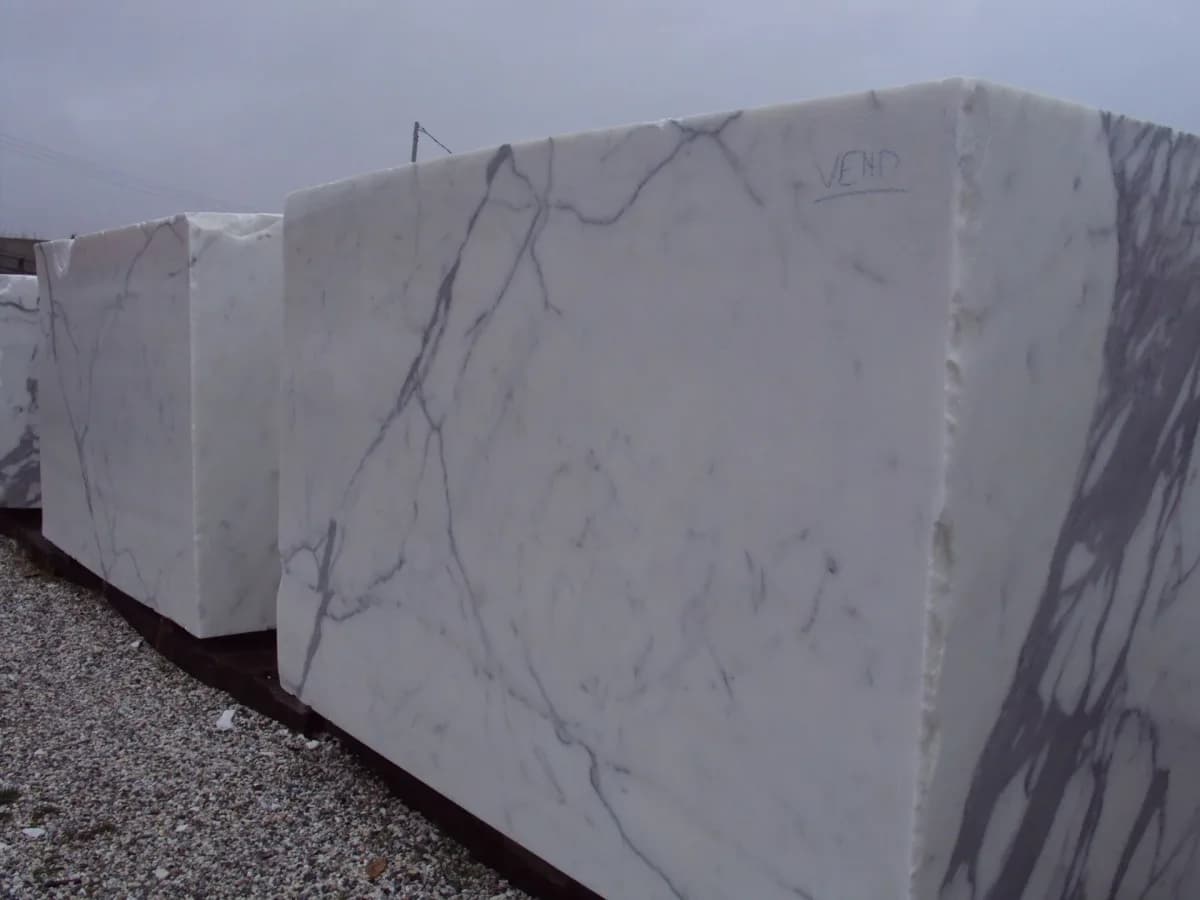
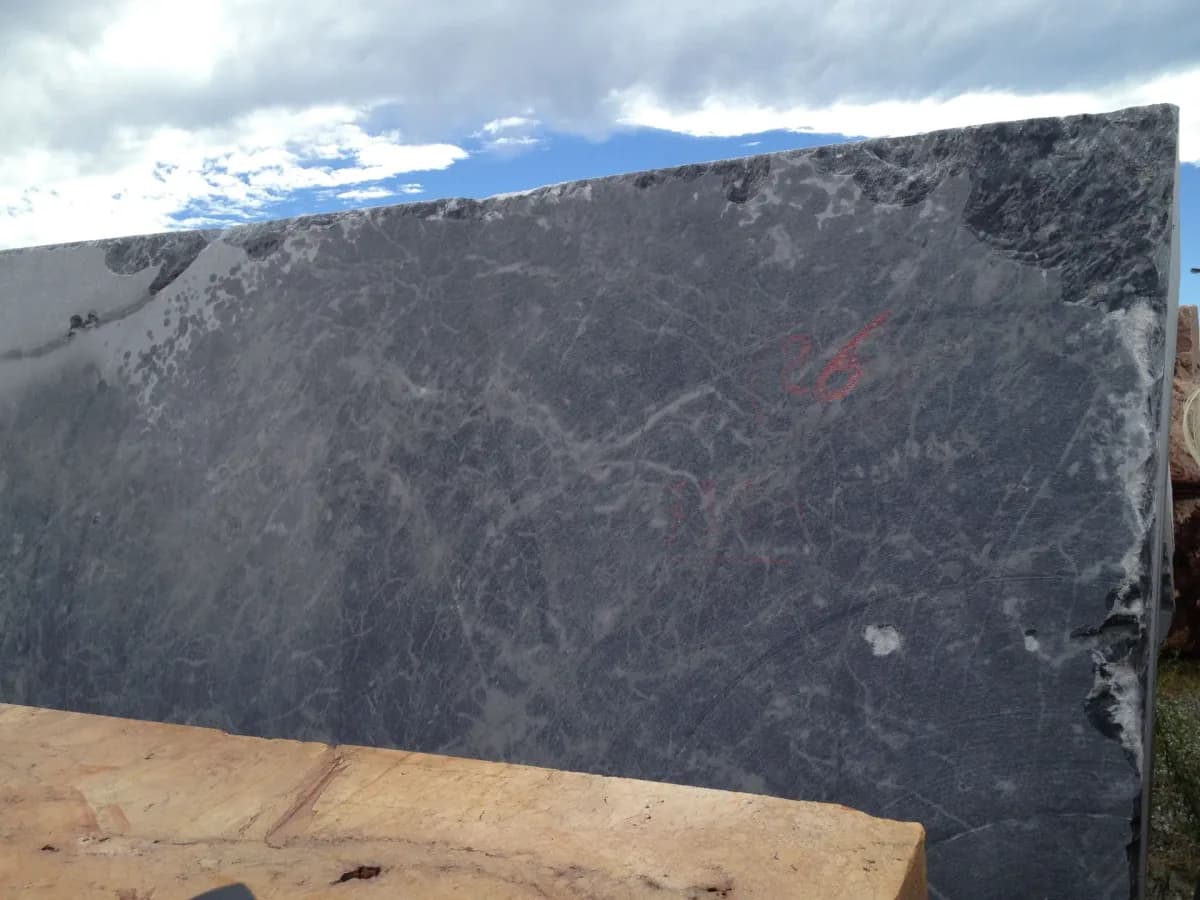
Blocks in the yard today
Updated from our management system. 175 blocks · 310 slab lots.
Frequently asked questions
- Can I visit the quarry and choose the block in person?
- Yes. We arrange quarry tours in Carrara for architects and private clients who want to select their own block in person before cutting, by appointment: a day with quarry, yard, workshop and showroom.
- Which basins do your marbles come from?
- From the marble basins of the Apuan Alps. Our texts name Bettogli, Fantiscritti and Colonnata as basins we choose from; Bianco Carrara C comes from Miseglia, Torano and Colonnata; Bianco Carrara Gioia from the Cave di Gioia in the Colonnata basin; Arabescato Vagli from Vagli di Sotto, in Garfagnana; for Calacatta Oro the texts indicate high-altitude basins such as Borghini or Bettogli.
- Do you own quarries?
- We choose the blocks directly in the Carrara basins with our own team; yard, gang saws and workshop are ours in Carrara.
- Can I inspect blocks and slabs remotely?
- Yes. We provide high-resolution photography and live video walkthroughs from the yard for international clients; for the more variable marbles we ask you to approve the photos of the lot before fabrication.
- How do you ship the marble?
- In reinforced, fumigated (ISPM 15) wooden crates with internal padding, designed to absorb shock and vibration in sea or road transport.
- What is a dry-lay?
- We lay the finished pieces out on our workshop floor before shipping, so the architect can approve the vein progression and the colour matching.
- Do you provide shop drawings?
- Yes: our technical office prepares CAD shop drawings and cutting lists for complex projects.
- Is the extraction sustainable?
- We source from Italian quarries that comply with strict national environmental, safety and labour laws: responsible management of the basins, dust control and recycling of process water.
See also